
Description
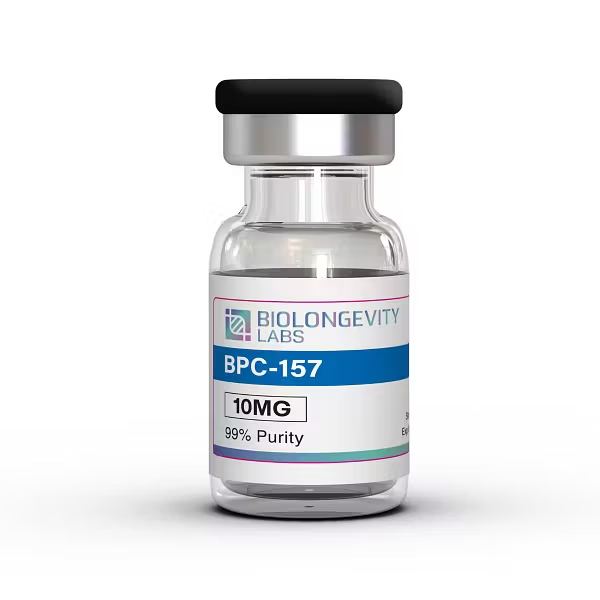
BPC-157 Peptide is a synthetic 15–amino acid peptide modeled after a protective protein originally found in human gastric juice. Its amino acid sequence is Gly–Glu–Pro–Pro–Pro–Gly–Lys–Pro–Ala–Asp–Asp–Ala–Gly–Leu–Val. It is noted for its stability in harsh conditions, including resistance to enzymatic breakdown and stomach acid.
Although it does not occur naturally as an isolated fragment, its parent protein is associated with gastrointestinal protection and tissue maintenance. Research suggests the peptide may influence multiple biological pathways involved in repair processes, including mechanisms linked to growth hormone receptor activity and signaling pathways such as JAK2, which are associated with collagen production and fibroblast function.
BPC-157 Injection Dosage (Subcutaneous)
Most users take between 250 µg and 500 µg once or twice daily for 4–6 weeks, often injected near the injured area.
Subcutaneous (SubQ) injections deliver peptides directly into the tissue, improving absorption.
- Start low:Begin around 250 µg daily for 1–2 weeks
- Increase gradually:Up to 500 µg twice daily if tolerated
- Cycle:4–6 weeks on, then take 2–4 weeks off
This approach supports tendon, muscle, or ligament healing without overloading the system.
Oral or Sublingual BPC-157 Dosage
Sublingual or oral BPC-157 may work well for gut health, though absorption is lower than injections.
Typical oral or sublingual dosage:
- 200–500 µg once or twice per day
- 6–8 week cycles
- Take on an empty stomach for better absorption
This route is often chosen for gut inflammation, leaky gut, or ulcer recovery, since the peptide interacts locally with digestive tissue.
BPC-157 Specifications
| Property | Value |
|---|---|
| Peptide Sequence | Gly-Glu-Pro-Pro-Pro-Gly-Lys-Pro-Ala-Asp-Asp-Ala-Gly-Leu-Val |
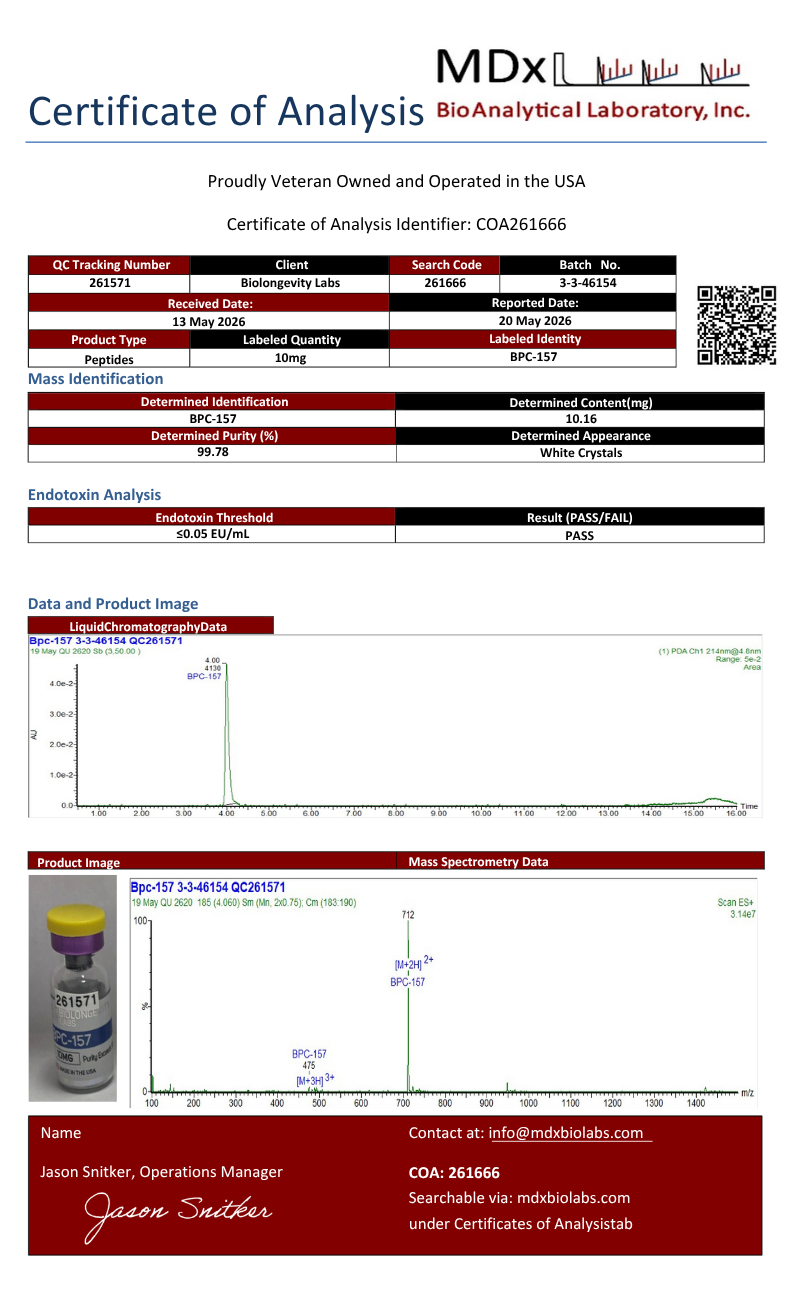
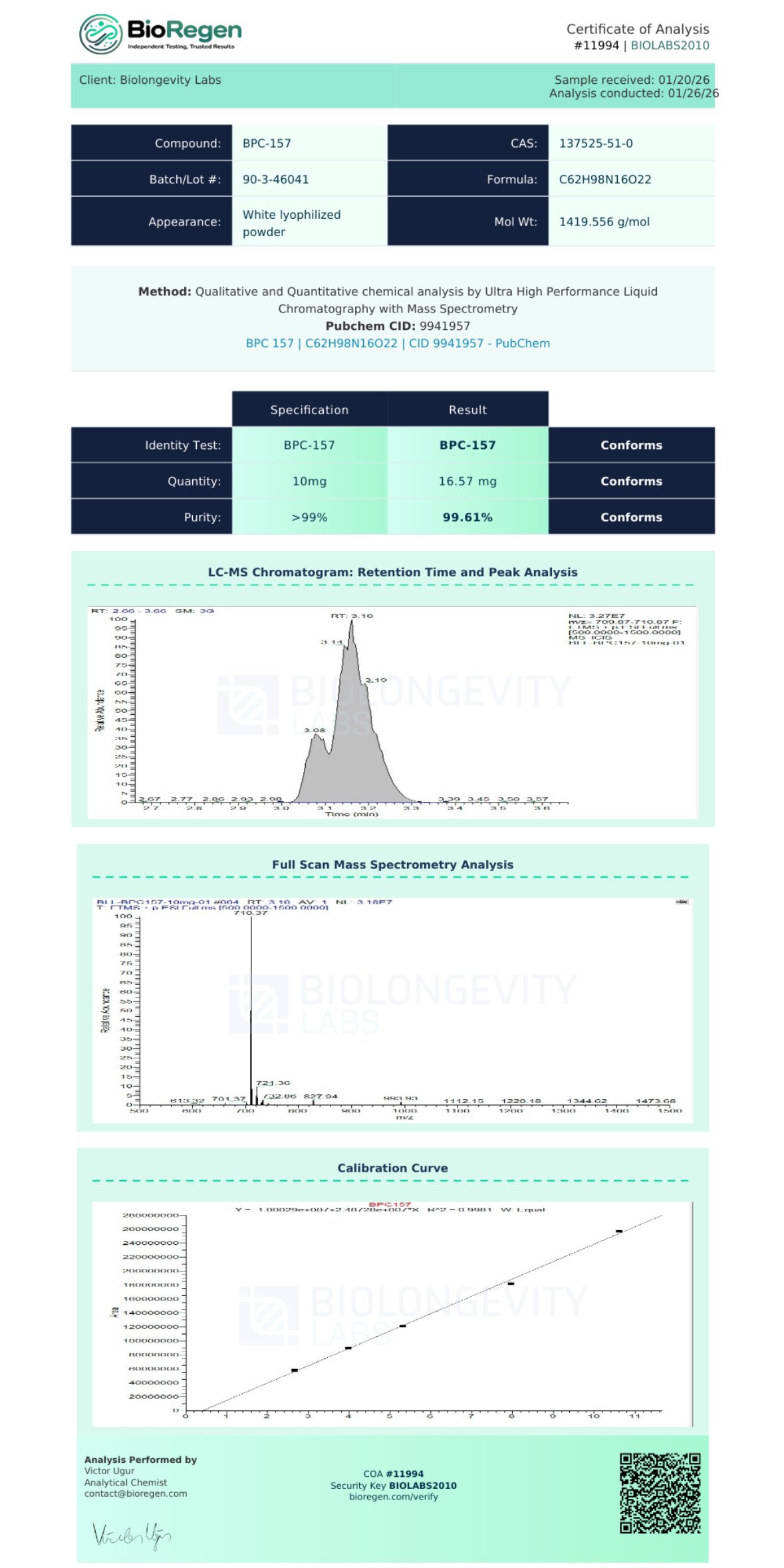
| Molecular Formula | C62H98N16O22 |
| Molecular Weight | 1419.5 g/mol |
| CAS Number | 137525-51-0 |
| PubChem CID | 108101 |
| Synonyms | A886440, L-Valine, glycyl-L-a-glutamyl-L-prolyl-L-prolyl-L-prolylglycyl-L-lysyl-L-prolyl-L-alanyl-L-a-aspartyl-L-a-aspartyl-L-alanylglycyl-L-leucyl- Acetate |
Frequently Asked Questions About BPC-157
What is BPC-157 used for?
BPC-157 has been investigated for its potential role in supporting the body’s natural tissue repair processes. Preclinical research has explored its effects on wound healing, musculoskeletal recovery, gastrointestinal health, and other regenerative mechanisms. However, its safety and effectiveness have not been established in large human clinical trials.
Are there any side effects associated with BPC-157?
Human safety data remain limited. Reported side effects are generally mild and may include nausea, headache, fatigue, dizziness, or temporary irritation at the injection site. Because clinical research is still ongoing, the long-term safety profile of BPC-157 has not been fully established.
Can BPC-157 be used every day?
Daily administration has been explored in experimental and research settings, but there is no standardized or clinically approved dosing schedule for BPC-157. Any use should be guided by qualified medical advice where appropriate.
Can too much BPC-157 be harmful?
The effects of higher doses have not been thoroughly evaluated in humans. Increasing the dose does not necessarily improve outcomes and may increase the likelihood of unwanted effects. As BPC-157 remains an investigational compound, an optimal dosage has not been established.
Is BPC-157 suitable for long-term use?
Long-term use of BPC-157 has not been adequately studied in humans. Current research does not provide sufficient evidence regarding the safety or effectiveness of prolonged administration, so its long-term effects remain unknown.
Since this is website copy you intend to publish, here’s a professionally rewritten, SEO-friendly version that avoids overstating findings while accurately reflecting the preclinical research.
Research and Preclinical Studies on BPC-157
BPC-157 and Wound Healing
BPC-157 has been extensively investigated in preclinical studies for its potential role in supporting tissue repair and wound healing. In one series of animal experiments involving skin wounds, colon anastomosis, and implanted tissue scaffolds, researchers observed that animals treated with BPC-157 demonstrated greater collagen formation, increased reticulin fiber development, and enhanced blood vessel growth compared with control groups.
Additional laboratory research has explored BPC-157’s influence on several stages of wound healing. Findings suggest the peptide may support the formation of granulation tissue, promote re-epithelialization, improve dermal remodeling, and encourage collagen deposition—processes that are essential for normal tissue repair.
Researchers have also reported increased expression of vascular endothelial growth factor (VEGF), a signaling protein involved in angiogenesis. In cell culture studies, BPC-157 appeared to promote endothelial cell proliferation and migration while enhancing vascular tube formation. These effects may be associated with activation of cellular signaling pathways, including ERK1/2 and downstream proteins involved in cell growth, migration, and blood vessel development.
BPC-157 and Tendon Repair
Several experimental studies have examined the effects of BPC-157 on tendon fibroblasts. Laboratory findings indicate the peptide may promote fibroblast migration, improve cell survival under oxidative stress, and stimulate tendon cell outgrowth.
Researchers also observed increased activation of focal adhesion kinase (FAK), paxillin, and PAK signaling without altering total protein expression. These pathways are involved in cytoskeletal organization, cell adhesion, and tissue remodeling, suggesting a possible mechanism through which BPC-157 may support tendon repair in preclinical models.
BPC-157 and Gastrointestinal Healing
Because BPC-157 originates from a gastric protein, much of the research has focused on gastrointestinal tissues. Experimental studies have compared the peptide with several well-known angiogenic growth factors, including EGF, FGF, and VEGF.
In animal models, BPC-157 demonstrated activity across multiple regions of the digestive tract, including the esophagus, stomach, duodenum, and lower gastrointestinal tract. Researchers proposed that its apparent ability to promote angiogenesis may contribute to tissue repair in both acute and chronic gastrointestinal injuries.
BPC-157 and Multi-Tissue Recovery
Beyond localized wound healing, preclinical investigations have explored BPC-157 in models involving the pancreas, liver, cardiovascular system, vascular endothelium, and bone tissue.
These studies suggest the peptide may influence multiple biological defense mechanisms associated with inflammation, tissue regeneration, and vascular function. Researchers have proposed that BPC-157 interacts with several signaling systems involved in maintaining tissue integrity, although these mechanisms continue to be investigated.
BPC-157 and Muscle Recovery
Animal studies examining muscle injuries have reported encouraging findings. In one experiment involving gastrocnemius muscle damage combined with corticosteroid administration, animals receiving BPC-157 demonstrated improved muscle repair and functional recovery compared with untreated controls.
These observations have led researchers to further investigate the peptide’s potential role in supporting skeletal muscle regeneration following injury.
BPC-157 and Dopamine Signaling
Experimental research has also evaluated BPC-157’s interaction with the dopamine system. In animal models exposed to amphetamine or haloperidol, investigators observed that the peptide appeared to reduce behavioral changes associated with altered dopamine activity.
Although these findings are preliminary, they have prompted additional interest in understanding BPC-157’s relationship with neurotransmitter regulation.
BPC-157 and Central Nervous System Research
Several preclinical studies have investigated BPC-157 in experimental models of traumatic brain injury (TBI). Researchers reported reductions in tissue damage, brain swelling, and hemorrhagic injury in treated animals compared with controls.
Additional observations suggested improvements in neurological outcomes and survival following experimental injury. While these findings are promising, they remain limited to animal research, and further investigation is required to determine whether similar effects occur in humans.
Current Research Status
The majority of evidence supporting BPC-157 comes from laboratory and animal studies. Although these findings have generated considerable scientific interest, well-designed human clinical trials remain limited. As a result, additional research is necessary to better understand the peptide’s safety profile, biological mechanisms, and potential therapeutic applications.
Reviews
There are no reviews yet.