Description
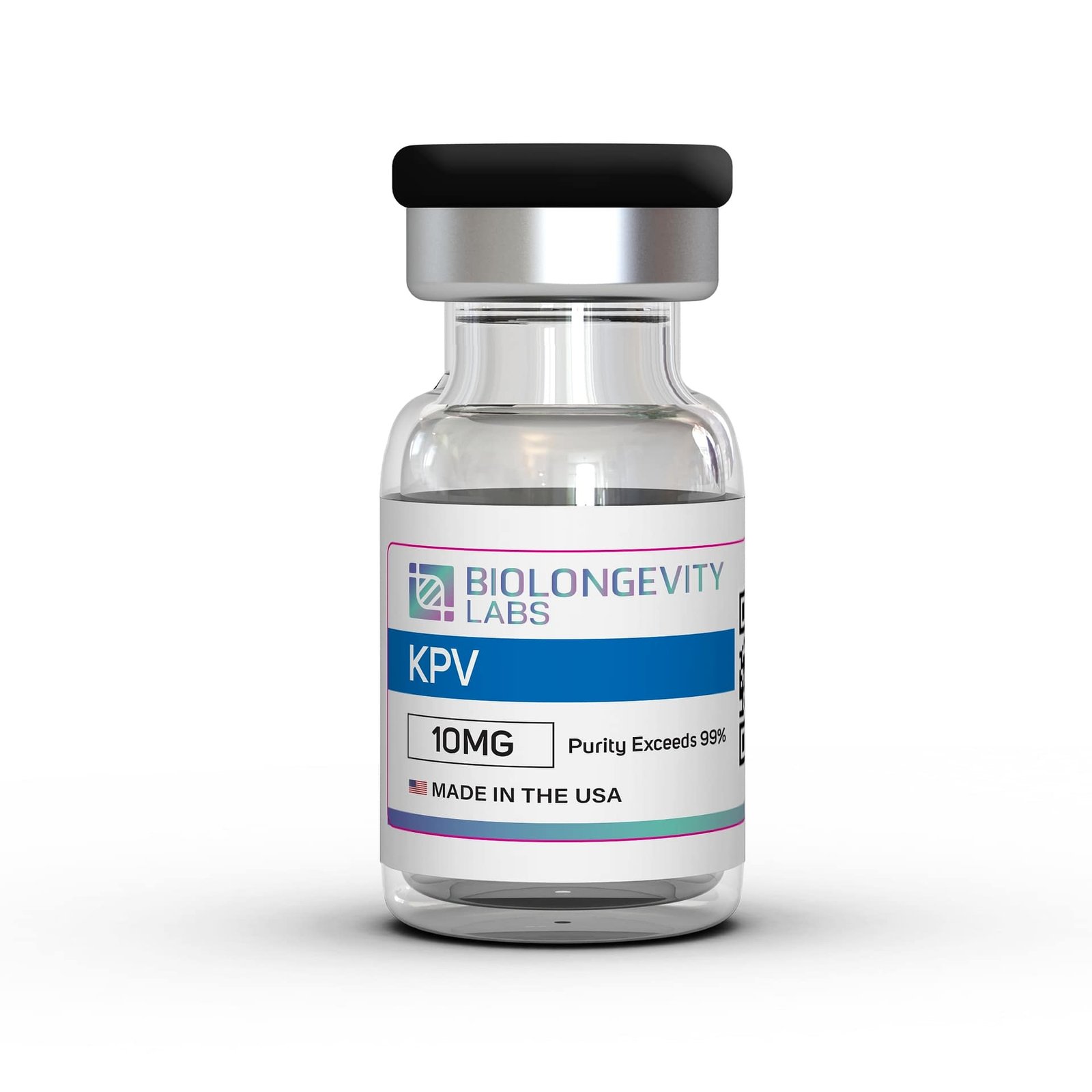
KPV Peptide Product Description
KPV peptide (Lys–Pro–Val) is a tripeptide fragment derived from the C-terminal portion of α-melanocyte stimulating hormone (α-MSH). This small bioactive peptide reproduces several anti-inflammatory, antimicrobial, and tissue-protective properties of α-MSH, while it does not fully activate melanocortin receptor pathways in certain contexts.
In research environments, scientists have investigated KPV for the following potential effects:
- Anti-inflammatory activity — KPV may reduce pro-inflammatory cytokines and limit immune cell activation
- Antimicrobial properties — research reports activity against certain bacteria and Candida species, consistent with α-MSH C-terminal fragment studies
- Epithelial protection and wound healing support — studies show improved recovery and repair of mucosal and epithelial tissues, including corneal models
- Immunomodulatory and anti-fibrotic effects — KPV may influence macrophage behavior and reduce fibrotic signaling in preclinical models
KPV Peptide Specifications
| Property | Value |
|---|---|
| Peptide Sequence | Lys-Pro-Val (H-Lys-Pro-Val-OH) |
| Molecular Formula | C16H30N4O4 |
| Molecular Weight | 342.43 g/mol |
| CAS Number | 67727-97-3 |
| PubChem CID | 125672 |
| Synonyms | α-MSH(11-13), ACTH(11-13), MSH(11-13) |
KPV Peptide Dosage
The KPV peptide can be administered through several routes, including oral, topical, or subcutaneous injection, depending on the intended target and application.
No standardized medical dosing guidelines exist, as no FDA-approved KPV product is available. A qualified healthcare provider should determine all dosing and administration methods.
For injectable use, users reconstitute the lyophilized peptide with bacteriostatic water and then measure doses with an insulin syringe. This step requires precision because dosing errors commonly occur.
A peptide dosage calculator helps convert a target dose into accurate syringe units based on vial concentration.
KPV Peptide Benefits
KPV is a tripeptide that researchers study mainly for its anti-inflammatory and tissue-protective effects. Most available data comes from preclinical cell and animal research.
Gut and digestive support (most studied area)
KPV reduces intestinal inflammation in models of inflammatory bowel conditions and supports healing of the gut lining.
Immune system modulation
KPV regulates inflammatory signaling pathways and acts as a broad anti-inflammatory agent across multiple systems.
Skin and wound healing support
Topical studies show that KPV reduces skin inflammation and supports tissue repair in wound-healing models.
General anti-inflammatory effects
Across multiple studies, KPV consistently reduces pro-inflammatory activity, which makes it a candidate of interest in inflammation-related research.