Description
Vilon Peptide Product Description
Vilon peptide is a synthetic dipeptide bioregulator composed of Lysine (Lys) and Glutamic Acid (Glu). As one of the shortest known Khavinson peptides, Vilon has become an important research compound for investigating immune regulation, cellular aging, gene expression, and chromatin remodeling. Laboratory studies suggest that Vilon interacts directly with DNA and chromatin structures, potentially influencing gene activity involved in cellular repair and immune function.
Researchers continue to investigate Vilon across multiple experimental models due to its potential role in regulating cytokine signaling, thymus-derived immune responses, cellular longevity, and age-related biological pathways. Its small molecular size and unique mechanism make it an attractive tool for studies involving epigenetics, regenerative biology, and healthy aging research.
Vilon Peptide Benefits
Current preclinical and laboratory research has investigated Vilon for its potential to:
- Support immune system regulation through thymic signaling pathways
- Investigate age-related cellular and genetic mechanisms
- Study chromatin remodeling and gene expression
- Examine cytokine regulation and inflammatory signaling
- Explore cellular regeneration and tissue maintenance
- Evaluate DNA-binding peptide bioregulator activity
- Research oxidative stress and cellular resilience
- Investigate mechanisms involved in healthy aging and longevity
Vilon Peptide Effects
Experimental research suggests Vilon may influence several important biological pathways, including:
- Regulation of chromatin organization and DNA accessibility
- Modulation of interleukin-2 (IL-2) synthesis
- Support of T-cell differentiation and immune cell maturation
- Regulation of genes involved in cellular aging
- Modulation of oxidative stress response pathways
- Investigation of cardiovascular and metabolic signaling
- Potential influence on tissue regeneration mechanisms
- Cellular homeostasis and epigenetic regulation
Vilon Peptide Dosage
Common research protocol (experimental use only):
- Dose: 5–10 mg per day
- Administration: Typically investigated via subcutaneous injection
- Research Cycle: 10–20 days
- Rest Period: 2–4 weeks before beginning another experimental cycle
These protocols are derived from experimental research practices and are not established medical dosing recommendations.
Vilon Peptide Information
| Property | Value |
|---|---|
| Peptide Name | Vilon |
| Peptide Sequence | Lys-Glu |
| Molecular Formula | C11H21N3O5 |
| Molecular Weight | 257.30 g/mol |
| Synonyms | Lysylglutamic Acid, Lysylglutamate, KE Peptide, Normophthal |
| Peptide Class | Khavinson Peptide Bioregulator |
| Appearance | Lyophilized Powder |
Lyophilized Peptides
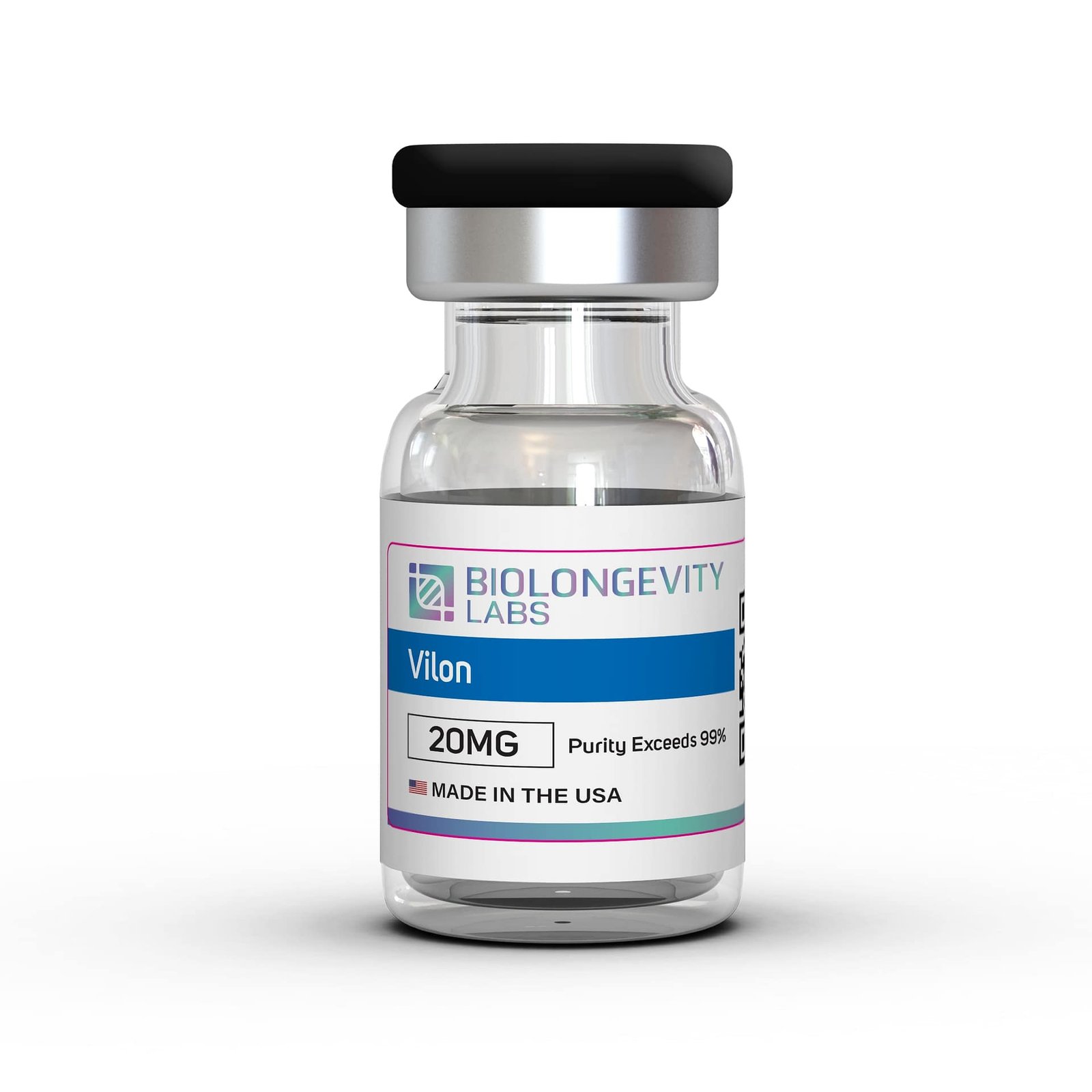
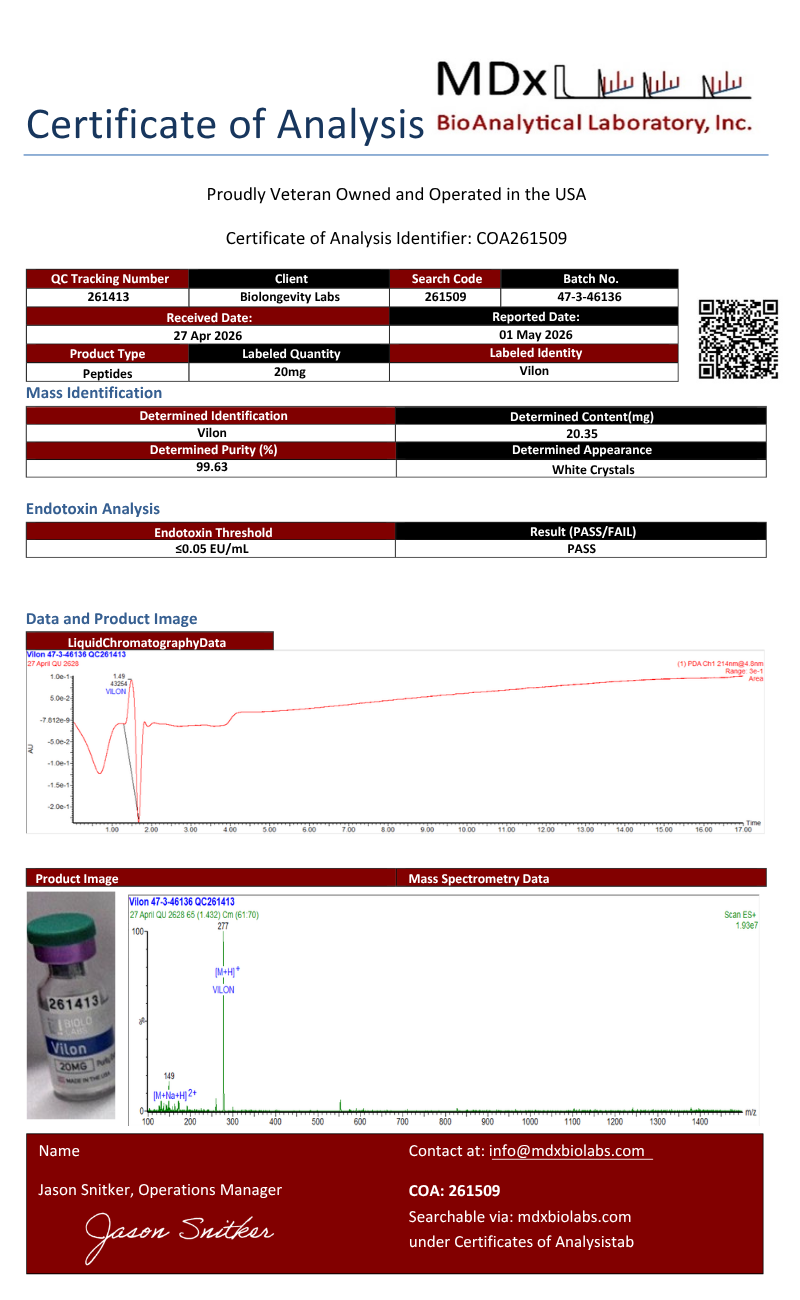
Our Vilon peptide is supplied as a highly purified, lyophilized powder without fillers or unnecessary additives. Freeze-drying helps preserve peptide stability, purity, and long-term storage integrity for laboratory applications.