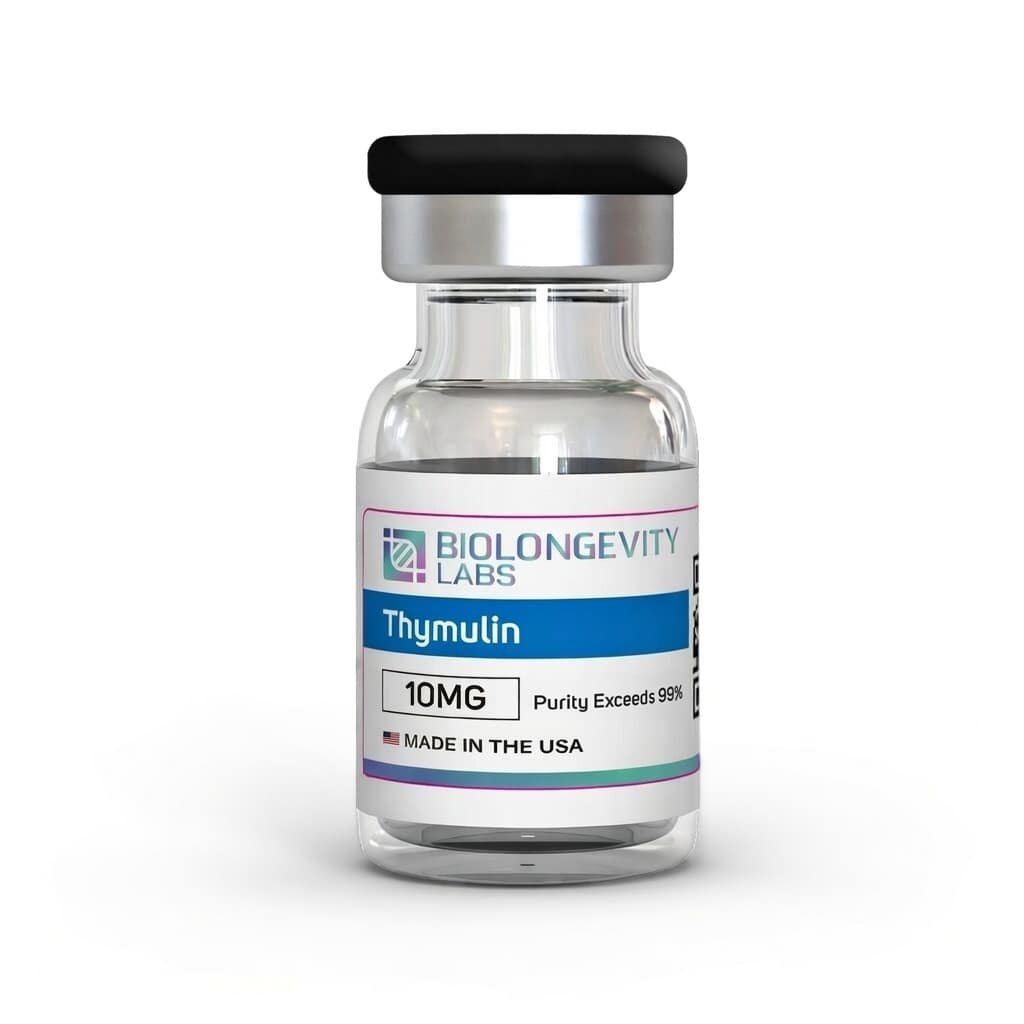
Description
Premium Thymulin Peptide for Advanced Immunology & Cellular Research
Thymulin Peptide is a research-grade nonapeptide bioregulator extensively studied for its role in immune system regulation, T-cell differentiation, cytokine signaling, and neuroendocrine communication. Naturally produced by thymic epithelial cells, Thymulin requires zinc binding to achieve biological activity and has become an important research molecule for investigating immune homeostasis, inflammatory signaling, and age-related thymic function.
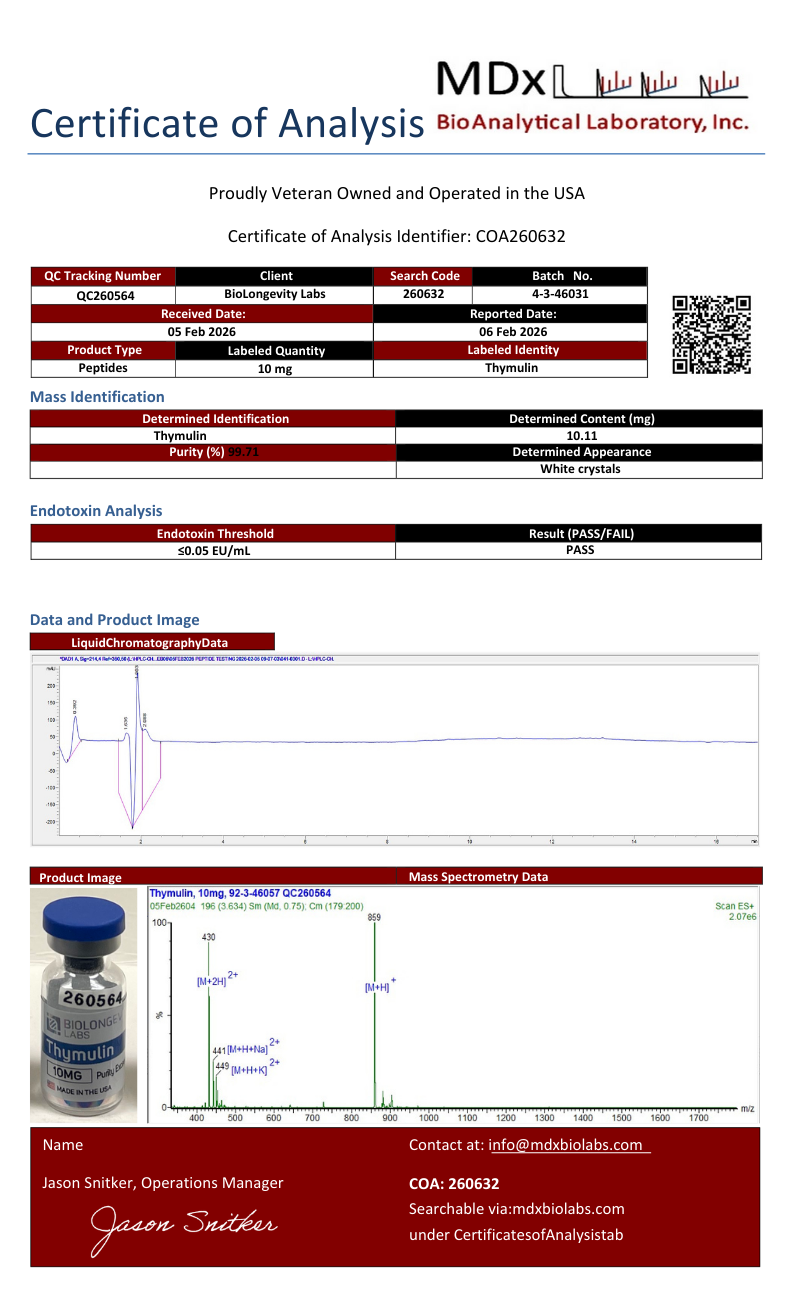
Our high-purity Thymulin Peptide is supplied as a lyophilized powder to maximize stability during storage and transport. Every production batch undergoes rigorous analytical testing for purity, identity, and consistency, providing researchers with a dependable peptide for advanced laboratory investigations.
Thymulin continues to attract interest in immunology, molecular biology, aging research, and endocrine science due to its documented interactions with multiple cellular signaling pathways involved in immune regulation and inflammatory control.
This product is intended strictly for research use only and is not intended for human or veterinary use.
Thymulin Peptide Benefits
Researchers investigate Thymulin Peptide for its potential involvement in numerous biological processes, including:
- Immune system regulation
- T-cell maturation and differentiation
- Th1/Th2 immune balance
- Cytokine signaling pathways
- Neuroendocrine communication
- Cellular stress response
- Inflammatory pathway modulation
- Healthy aging research
- Thymic function studies
- Cellular signaling mechanisms
- Epigenetic regulation
- Metabolic pathway research
Thymulin Peptide Effects
Immune System Regulation
Thymulin is widely recognized as one of the primary thymic peptides involved in immune system development. Laboratory studies suggest it supports T-cell maturation while influencing communication between thymic epithelial cells and developing immune cells.
Researchers continue investigating its ability to regulate adaptive immune responses and maintain immune homeostasis.
T-Cell Differentiation
Experimental models indicate Thymulin influences both intrathymic and peripheral T-cell differentiation.
Published research demonstrates potential effects including:
- Increased IFN-γ expression
- Reduced IL-13 production
- Improved Th1/Th2 balance
- Reduced eosinophil infiltration
- Enhanced immune cell maturation
These findings make Thymulin valuable for immunology and autoimmune disease research.
Anti-Inflammatory Activity
One of Thymulin’s most extensively researched mechanisms involves modulation of inflammatory signaling pathways.
Laboratory investigations suggest Thymulin may regulate several important inflammatory mediators, including:
- TNF-α
- IL-1β
- IL-6
- NF-κB
- COX-2
- Prostaglandin E₂ (PGE₂)
Researchers continue studying these mechanisms for their potential role in inflammatory disease models.
Neuroendocrine Research
Thymulin functions as an important communication molecule between the immune and endocrine systems.
Experimental studies indicate potential interactions with:
- Growth hormone (GH)
- Prolactin (PRL)
- Thyroid stimulating hormone (TSH)
- ACTH
- LH
- FSH
These properties have made Thymulin an important peptide for neuroendocrine research.
Neurological Research
Preclinical investigations have explored Thymulin’s potential neuroprotective properties.
Current laboratory research focuses on:
- Neuroinflammatory signaling
- Brain immune responses
- Cytokine regulation
- Cellular stress responses
- Pain signaling pathways
Its ability to regulate inflammatory mediators has generated interest in experimental neuroscience.
Fibrosis Research
Experimental studies indicate Thymulin may influence pathways involved in tissue remodeling.
Researchers continue investigating potential regulation of:
- TGF-β
- VEGF
- Collagen deposition
- Airway remodeling
- Pulmonary fibrosis pathways
These mechanisms remain active areas of laboratory investigation.
Metabolic Research
Animal studies suggest Thymulin may influence metabolic signaling through interactions involving:
- Glucose metabolism
- Insulin sensitivity
- Cholesterol regulation
- Hepatic lipid metabolism
- HMG-CoA reductase activity
Additional research is needed to better understand these observations.
Healthy Aging Research
Because thymulin production naturally declines with age, researchers investigate its potential involvement in:
- Immunosenescence
- Thymic involution
- Cellular aging
- Oxidative stress
- Age-related immune dysfunction
These studies have made Thymulin one of the more extensively researched thymic peptides in longevity science.
Research Applications
The Thymulin Peptide is commonly utilized in laboratory research involving:
- Immunology
- Molecular biology
- Aging research
- Neuroimmunology
- Cellular signaling
- Cytokine biology
- Endocrinology
- Inflammatory disease models
- T-cell biology
- Thymic function research
- Cellular stress research
Thymulin Peptide Features
- Research-grade purity
- High-quality lyophilized powder
- Excellent long-term stability
- Batch-tested for purity and identity
- Manufactured under strict quality standards
- Suitable for in vitro laboratory investigations
- Excellent batch-to-batch consistency
- Research Use Only
Thymulin Peptide Information
| Property | Value |
|---|---|
| Peptide Name | Thymulin Peptide |
| Sequence | Pyr-Ala-Lys-Ser-Gln-Gly-Gly-Ser-Asn-OH |
| Molecular Formula | C33H54N12O15 |
| Molecular Weight | 858.86 g/mol |
| CAS Number | 63958-90-7 |
| PubChem CID | 3085284 |
| Synonyms | Thymulin, Thymalin, Serum Thymic Factor (STF), Facteur Thymique Sérique, Nonathymulin |
Research Handling & Reconstitution
Thymulin is supplied as a lyophilized peptide intended exclusively for laboratory research. Researchers typically reconstitute the peptide using sterile laboratory-grade bacteriostatic water or another validated research solvent immediately before experimental use.
Following reconstitution, aliquoting into single-use portions and storing frozen is commonly recommended to minimize repeated freeze–thaw cycles and preserve peptide integrity during laboratory investigations.