Description
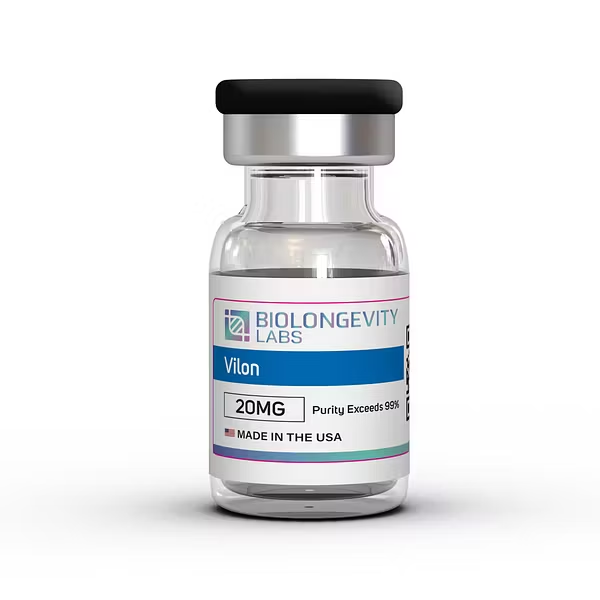
Vilon peptide, also known as Lysylglutamic Acid or Lysylglutamate, is a synthetic dipeptide bioregulator composed of the amino acids L-lysine and L-glutamic acid. As one of the peptides developed within the Khavinson peptide family, Vilon has been widely investigated for its potential role in immune system regulation, thymus biology, cellular signaling, and gene expression.
Current research has primarily focused on its interactions with immune cells, chromatin remodeling, cellular proliferation, and tissue regeneration. Vilon remains an investigational research peptide intended exclusively for laboratory and scientific use.
Vilon Peptide Specifications
| Property | Value |
|---|---|
| Peptide Sequence | L-Lys-L-Glu |
| Molecular Formula | C₁₁H₂₁N₃O₅ |
| Molecular Weight | 275.3 g/mol |
| CAS Number | 45234-02-4 |
| PubChem CID | 7010502 |
| Synonyms | Lysylglutamic acid, N-L-Lysyl-L-glutamic acid, H-Lys-Glu-OH, Lysyl glutamate, KE |
Potential Research Applications
Preclinical and laboratory studies have investigated Vilon in several areas, including:
- Immune system regulation
- Thymus function and thymocyte biology
- Gene expression and chromatin remodeling
- Cellular proliferation and differentiation
- Lymphocyte development
- Gastrointestinal tissue regeneration
- Radiation-induced lymphopenia models
- Healthy aging and peptide bioregulation research
- Cellular signaling and protein synthesis
- Experimental oncology research
Vilon Peptide Benefits
- Supports research into immune system regulation and thymus function.
- Investigated for its potential to influence gene expression through chromatin remodeling.
- May promote thymocyte proliferation and immune cell renewal in laboratory models.
- Studied for its role in T-cell differentiation, including CD4⁺ and CD5⁺ immune cell development.
- Research suggests it may help reactivate age-related inactive genes involved in cellular function.
- Investigated for its potential to enhance protein synthesis by activating ribosomal genes.
- Explored for supporting cellular proliferation and tissue regeneration.
- May contribute to intestinal epithelial cell renewal and gastrointestinal tissue repair in experimental studies.
- Studied for its potential to improve recovery following radiation-induced immune suppression.
- Investigated for its ability to support healthy lymphocyte populations in laboratory models.
- May influence stem cell activity involved in tissue maintenance and regeneration.
- Explored for its potential immunomodulatory properties in aging research.
- Studied for supporting balanced immune responses during immunosenescence.
- Research suggests potential involvement in maintaining cellular integrity during aging.
- Investigated for possible anti-inflammatory mechanisms in experimental settings.
- Explored for its effects on healthy chromatin organization and DNA accessibility.
- May support communication between immune cells through regulation of cellular signaling pathways.
- Investigated for promoting regenerative processes in multiple tissue types.
- Studied for its potential role in maintaining protein production and normal cellular metabolism.
- Explored in experimental oncology research for its potential influence on cellular homeostasis and tumor development.
Research Highlights
Immune System Research
Experimental studies suggest that Vilon may influence immune cell activity by regulating gene expression associated with lymphocyte proliferation and differentiation. Researchers have investigated its effects on thymic cells and immune signaling pathways involved in maintaining normal immune function.
Gene Expression Studies
In vitro investigations indicate that Vilon may interact with chromatin structures by promoting selective decondensation of facultative heterochromatin. This process has been associated with the activation of previously inactive genes involved in cellular function, protein synthesis, and immune regulation.
Thymocyte Proliferation
Preclinical research has reported increased proliferative activity in thymocytes following Vilon exposure. Laboratory findings have also demonstrated increased expression of proliferating cell nuclear antigen (PCNA), suggesting enhanced cellular activity within thymic tissue.
Lymphocyte Differentiation
Research has explored Vilon’s potential influence on T-cell development, including the expression of immune differentiation markers such as CD4 and CD5. These observations suggest possible involvement in early lymphocyte maturation under experimental conditions.
Gastrointestinal Cell Research
Experimental models have investigated Vilon’s potential effects on intestinal stem cell activity and epithelial regeneration. Studies reported increased proliferative activity within the intestinal crypts and improved tissue organization following experimental injury.
Cellular Regeneration
Researchers have also examined Vilon in studies involving tissue regeneration following radiation exposure. Laboratory observations suggest the peptide may support normal cellular renewal and regenerative processes in multiple tissues.
Experimental Oncology
Several preclinical investigations have evaluated Vilon in experimental models of tumor development. Researchers have explored whether its immunomodulatory properties may influence cellular integrity and tissue homeostasis, although additional research is needed to better understand these observations.
Product Features
- Synthetic dipeptide composed of L-Lysine and L-Glutamic Acid
- Also known as Lysylglutamic Acid and Lysylglutamate
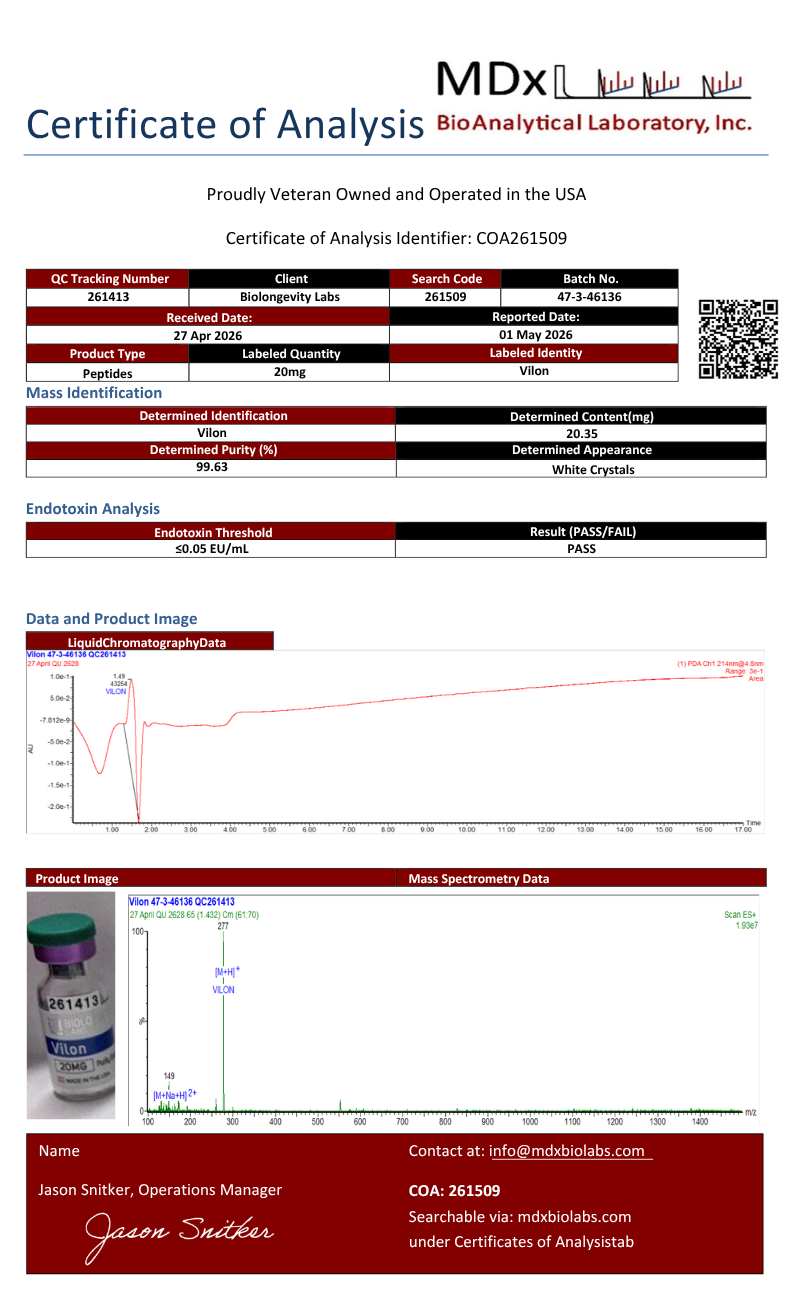
- High-purity research-grade material
- Studied in immune system and thymus research
- Investigated for gene regulation and chromatin remodeling
- Used in cellular proliferation and differentiation studies
- Suitable for laboratory and scientific research applications only
Research Use Only
Vilon peptide is supplied exclusively for scientific, laboratory, and research purposes. This product is not intended for human or veterinary use, and it is not approved to diagnose, treat, cure, or prevent any disease.