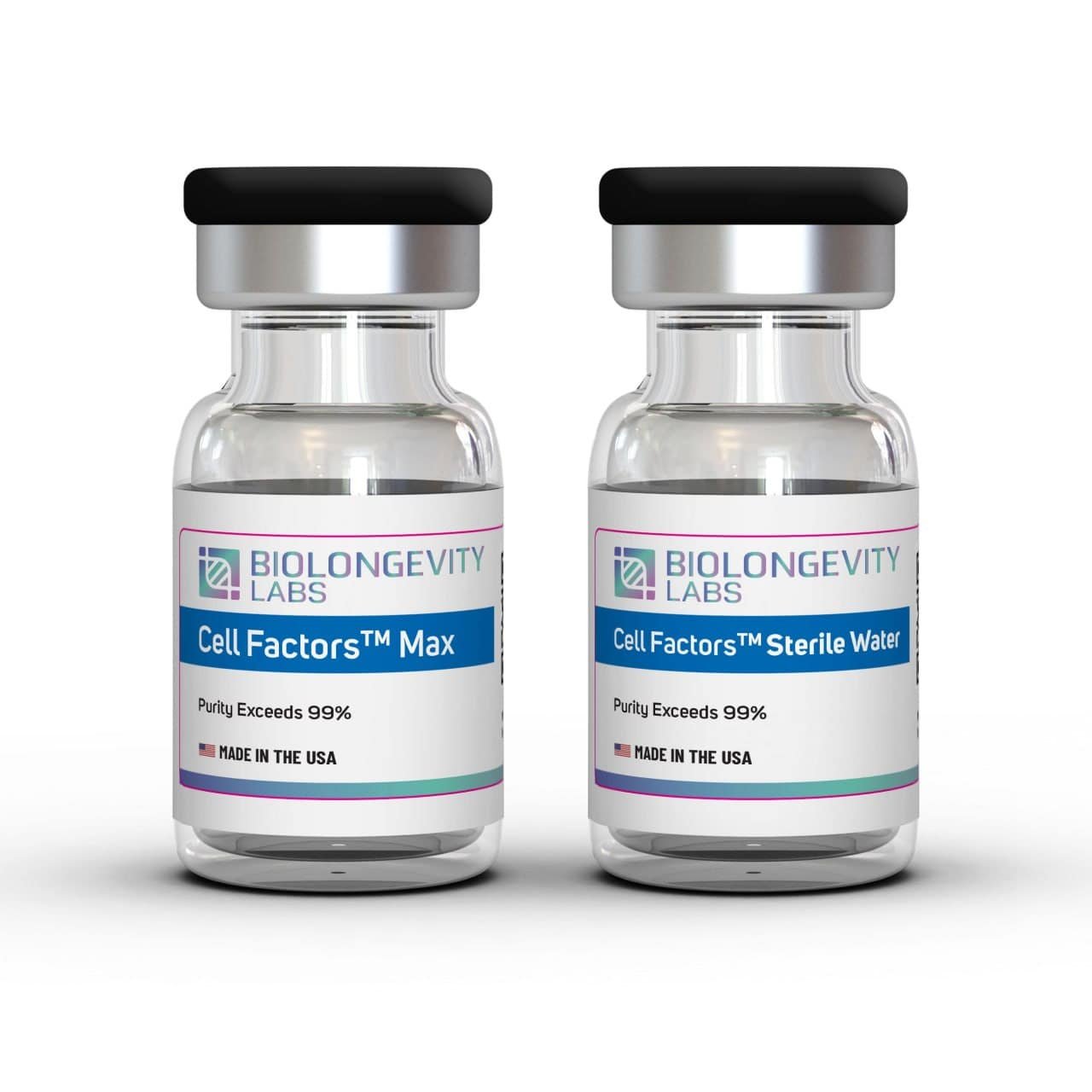
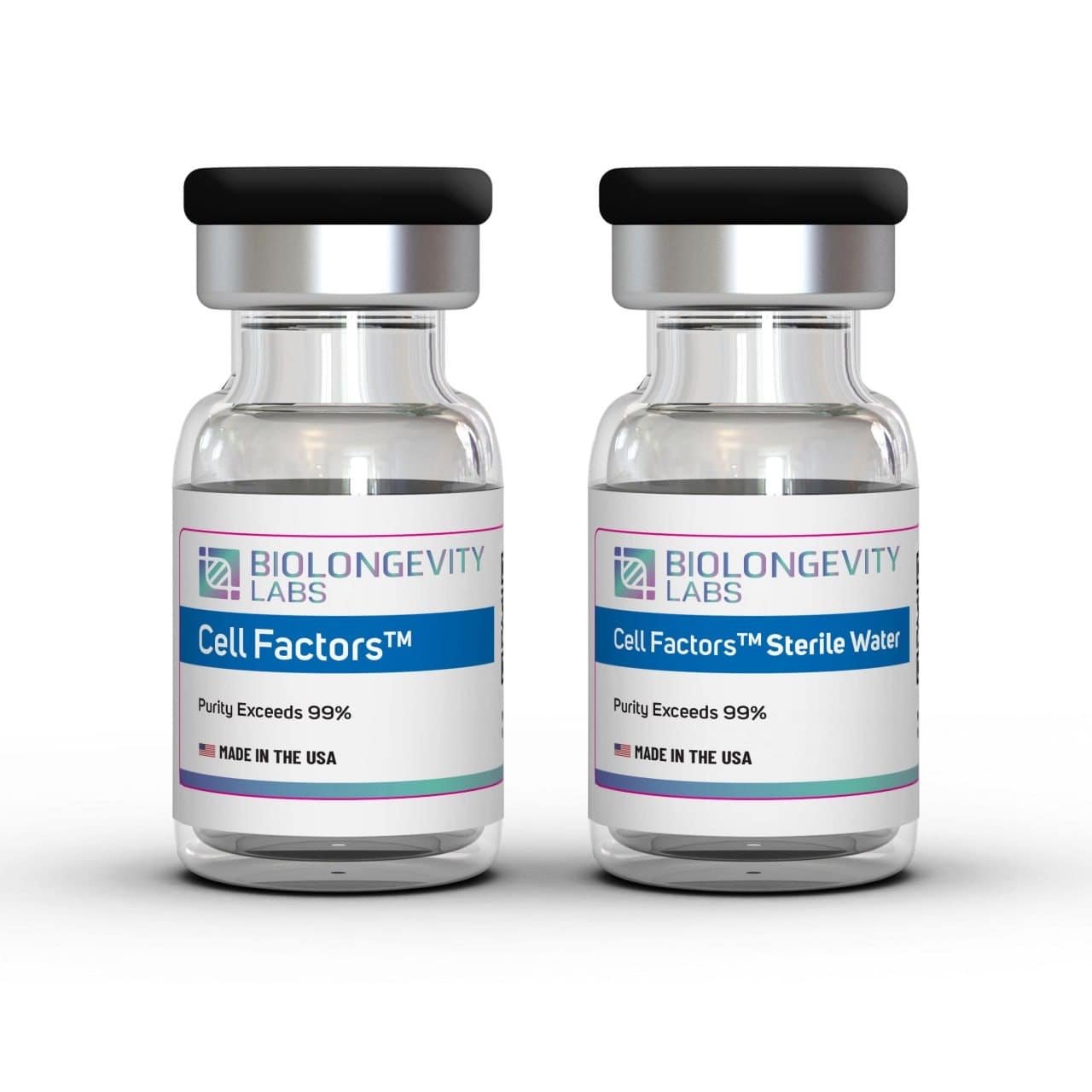
Description
Cell Factors: Cell-Free Signaling Factors for Regenerative Research
Advances in regenerative biology continue to highlight the importance of cellular communication in maintaining healthy tissue function. As cells age, signaling between receptors, growth factors, and surrounding tissues becomes progressively less efficient, contributing to declines in repair, metabolic regulation, and cellular resilience.
Cell Factors is a research-grade, placenta-derived secretome developed for scientists investigating cell-to-cell communication, regenerative signaling, and tissue microenvironment biology. Unlike live cell therapies, Cell Factors provides a cell-free, DNA-free formulation containing a diverse profile of naturally occurring signaling molecules derived from early placental tissues, making it suitable for controlled laboratory and preclinical research.
What is Cell Factors?
Cell Factors is a lyophilized regenerative signaling complex produced from placental-derived cellular secretions, including factors associated with:
- Wharton’s Jelly
- Amniotic membrane
- Amniotic fluid
- Chorionic tissue
- Umbilical cord blood (UCB)
Rather than introducing living cells, the formulation delivers a broad spectrum of extracellular signaling molecules that researchers use to investigate cellular communication, tissue regeneration, and receptor-mediated biological responses.
Its acellular design avoids many of the logistical challenges associated with live cell research while providing a stable material compatible with a wide range of laboratory protocols.
Why Researchers Use Cell Factors
Compared with traditional regenerative research models, Cell Factors offers several advantages for laboratory investigation:
- Cell-free and DNA-free formulation
- Lyophilized for long-term stability
- No viable cells requiring specialized handling
- Consistent batch-to-batch composition
- Compatible with peptide and biologic research protocols
- Suitable for in vitro and preclinical studies
- Broad profile of naturally occurring regenerative signaling molecules
Comparison with Other Regenerative Research Models
Platelet-Rich Plasma (PRP)
PRP primarily delivers platelet-derived growth factors that activate a relatively limited range of repair pathways. Cell Factors provides a substantially broader signaling profile, allowing researchers to investigate multiple regenerative pathways simultaneously.
Stem Cell-Based Models
Stem cell research introduces living cells capable of differentiation and tissue regeneration but often presents challenges related to viability, consistency, storage, and handling. Cell Factors eliminates these variables by providing only the biologically active signaling molecules without viable cells.
Exosome Research
Exosome-based products focus on extracellular communication through vesicle-mediated signaling. Cell Factors expands upon this concept by supplying a diverse secretome composed of proteins, peptides, cytokines, chemokines, and growth factors involved in cellular communication.
Research Applications
Cellular Signaling
Cell Factors is commonly investigated for its ability to support studies examining communication between neighboring cells and receptor-mediated signaling networks. Researchers use these models to better understand how extracellular messengers coordinate cellular responses.
Receptor Sensitivity
Laboratory studies may utilize Cell Factors to examine receptor responsiveness, signaling efficiency, and cellular adaptation during repeated stimulation. This area of research is particularly relevant when investigating receptor desensitization and signaling recovery.
Mitochondrial Biology
Researchers are increasingly interested in the relationship between mitochondrial function and nuclear signaling. Cell Factors may serve as a valuable research tool for investigating mitochondrial communication, oxidative stress responses, and cellular energy regulation.
Tissue Microenvironment Research
The extracellular environment surrounding cells plays a major role in regeneration and tissue maintenance. Cell Factors enables investigation of signaling mechanisms involved in maintaining healthy cellular environments across multiple tissue types.
Areas of interest include:
- Connective tissue biology
- Musculoskeletal research
- Vascular biology
- Renal physiology
- Neural tissue signaling
Inflammatory Signaling
Inflammation remains one of the most widely studied biological processes in regenerative medicine. Cell Factors provides researchers with a complex mixture of signaling molecules for investigating cytokine regulation, inflammatory pathways, and tissue recovery mechanisms.
Epigenetic Research
Growing evidence suggests extracellular signaling molecules influence gene expression without altering DNA sequences. Cell Factors may support investigations into epigenetic regulation, cellular reprogramming, and age-related changes in gene activity.
Aging Biology
Researchers studying healthy aging use Cell Factors to explore mechanisms associated with cellular communication, tissue maintenance, and regenerative capacity over time.
Potential Research Benefits
Current laboratory investigations suggest Cell Factors may be useful for studies involving:
- Cellular communication pathways
- Regenerative signaling
- Growth factor biology
- Tissue remodeling
- Receptor sensitivity
- Mitochondrial signaling
- Oxidative stress research
- Cytokine regulation
- Extracellular matrix biology
- Cellular aging mechanisms
- Epigenetic signaling
- Metabolic pathway research
Available Research Formats
Cell Factors is available in multiple research configurations to accommodate a variety of laboratory protocols, including:
- Single-cycle research format
- Multi-cycle regenerative signaling studies
- Combination protocols with Klotho research compounds
Each preparation includes sterile water for laboratory reconstitution.