Description
Testagen Peptide Product Description
Testagen Peptide (KEDG) is a research-grade tetrapeptide bioregulator belonging to the well-known Khavinson peptide family. Composed of the amino acid sequence Lys-Glu-Asp-Gly, Testagen has been extensively investigated for its potential interactions with the anterior pituitary gland, endocrine signaling pathways, and epigenetic regulation of gene expression. Laboratory studies suggest this ultra-short peptide is capable of penetrating cellular and nuclear membranes, where it may interact directly with DNA and chromatin structures involved in cellular differentiation and protein synthesis.
Researchers continue to investigate Testagen for its potential influence on the hypothalamic-pituitary-thyroid (HPT) axis, hypothalamic-pituitary-gonadal (HPG) axis, immune regulation, and tissue-specific gene expression. Its unique mechanism of action has made it an important peptide for studies involving endocrine biology, aging, regenerative medicine, and molecular genetics.
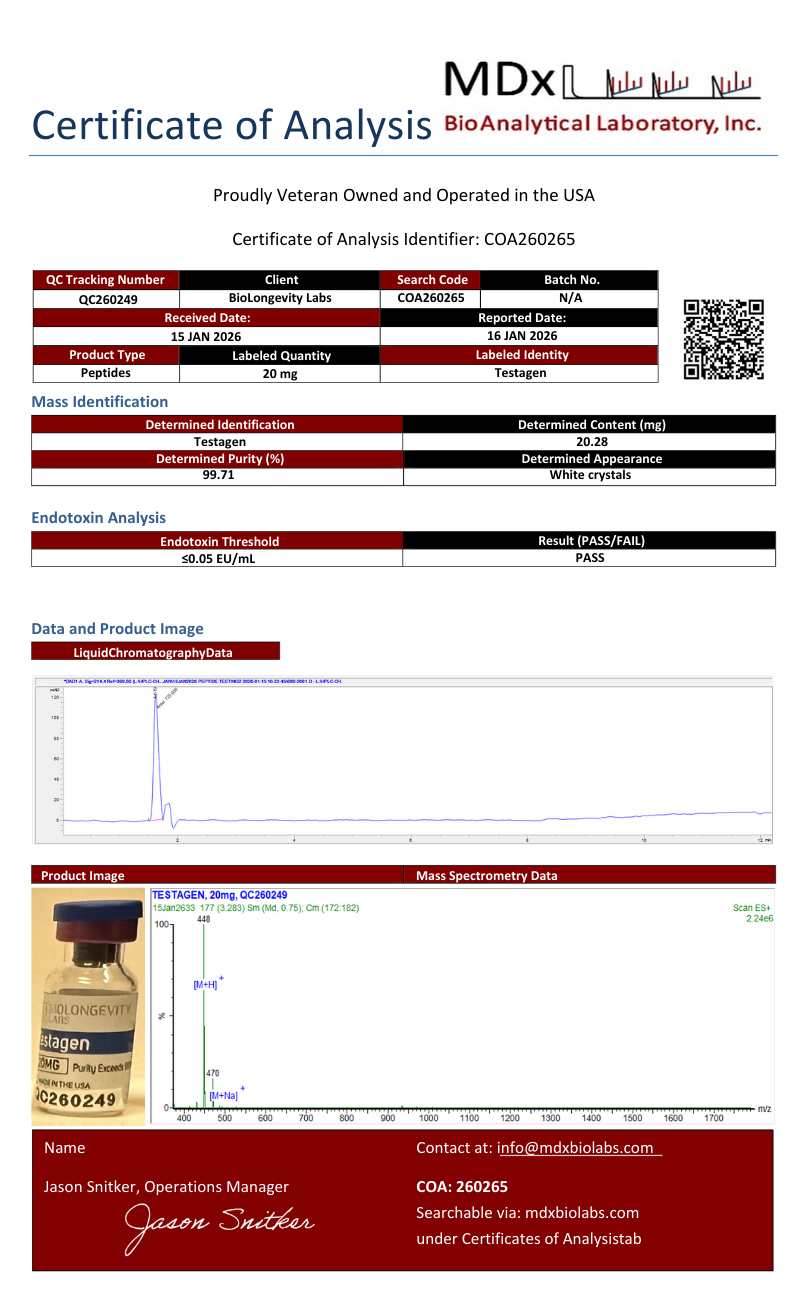
Our research-grade Testagen Peptide is manufactured under strict quality standards and supplied as a lyophilized powder to maximize purity, stability, and long-term storage. Every batch undergoes comprehensive analytical testing to ensure consistency and reliability for scientific research.
This product is intended strictly for laboratory research use only.
Testagen Peptide Benefits
Scientists investigate Testagen for its possible role in numerous biological pathways, including:
- Endocrine system regulation
- Pituitary gland function
- Thyroid hormone signaling
- Testosterone regulation research
- Epigenetic gene expression
- DNA and chromatin interaction
- Cellular differentiation
- Immune system modulation
- Healthy aging research
- Stem cell biology
- Hormonal signaling pathways
- Molecular endocrinology
Testagen Peptide Effects
Epigenetic Regulation and DNA Interaction
Unlike many signaling peptides, Testagen belongs to a class of ultra-short peptide bioregulators believed to interact directly with cellular DNA. Laboratory studies suggest KEDG may penetrate both cellular and nuclear membranes, where it may bind to chromatin and influence gene expression through epigenetic mechanisms.
Researchers continue to investigate its ability to regulate protein synthesis and activate genes involved in tissue maintenance, differentiation, and endocrine function.
Pituitary Gland Research
The anterior pituitary gland serves as the master regulator of numerous endocrine hormones. Experimental research suggests Testagen may support normal pituitary cellular activity through direct regulation of protein expression within pituitary tissue.
Studies indicate this mechanism may influence production of several important endocrine hormones, making Testagen valuable for investigations involving hormonal homeostasis.
Thyroid Function Studies
One of the primary research interests surrounding Testagen involves its interaction with the hypothalamic-pituitary-thyroid axis.
Experimental models suggest Testagen may:
- Support thyroid gland morphology
- Promote healthy thyroid follicle structure
- Influence thyroid-stimulating hormone (TSH) activity
- Support production of T3 and T4 hormones
- Reduce structural degeneration associated with pituitary dysfunction
Researchers continue to study how these effects may influence cellular metabolism and endocrine regulation.
Testosterone Research
Testagen has attracted attention for its potential role in testosterone regulation through its effects on pituitary signaling.
Preclinical investigations suggest Testagen may:
- Support normal endocrine communication
- Influence total testosterone production
- Promote healthy reproductive tissue function
- Support hormonal balance during aging models
- Improve endocrine signaling associated with reproductive health
Current evidence indicates these effects may occur indirectly through regulation of pituitary and thyroid function rather than direct androgen receptor activity.
Immune System Research
Research led by Dr. Vladimir Khavinson and others suggests Testagen may influence differentiation of stem cells into immune cell populations through epigenetic regulation.
Scientists are investigating its potential effects on:
- Immune cell development
- Cellular differentiation
- Immune surveillance
- Age-related immune decline
- Gene expression involved in immune regulation
These properties have made Testagen an emerging research tool within immunology and regenerative medicine.
Cellular Aging Research
Age-related chromatin condensation reduces expression of numerous protective genes throughout the body. Researchers hypothesize that ultra-short peptide bioregulators such as Testagen may help regulate chromatin structure and restore youthful patterns of gene expression.
Current investigations focus on:
- Healthy aging mechanisms
- Cellular longevity pathways
- Epigenetic regulation
- DNA stability
- Stem cell maintenance
Research Applications
The Testagen peptide is commonly investigated in laboratory settings involving:
- Endocrinology
- Epigenetics
- Molecular biology
- Pituitary gland research
- Testosterone signaling
- Thyroid research
- Cellular differentiation
- Stem cell biology
- Immunology
- Healthy aging research
- Gene regulation
- Hormonal signaling pathways
Testagen Peptide Features
- High-purity research peptide
- Lyophilized powder for maximum stability
- Tetrapeptide sequence: Lys-Glu-Asp-Gly (KEDG)
- Manufactured under stringent quality standards
- Batch-tested for purity and identity
- Excellent batch-to-batch consistency
- Suitable for in vitro laboratory research
- Research Use Only
Testagen Peptide Information
| Property | Value |
|---|---|
| Peptide Name | Testagen Peptide |
| Sequence | H-Lys-Glu-Asp-Gly-OH |
| Molecular Formula | C₁₇H₂₉N₅O₉ |
| Molecular Weight | 447.2 g/mol |
| CAS Number | 75007-24-8 |
| Synonyms | Testagen, KEDG, Anterior Pituitary Peptide (APP) |
| Form | Lyophilized Powder |
Research Use Information
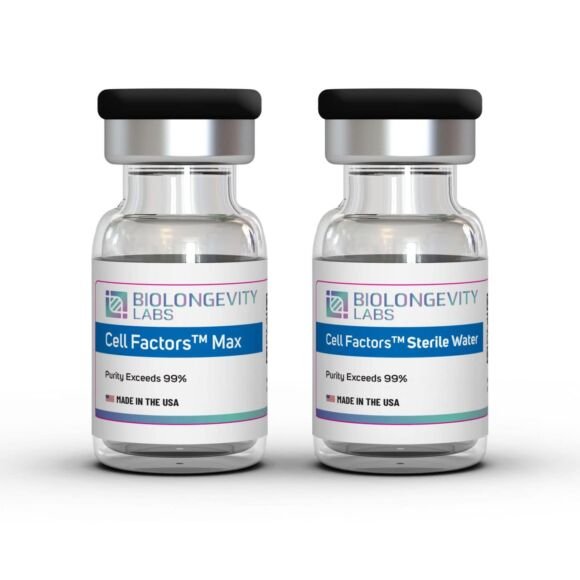
Testagen is supplied as a lyophilized peptide intended for laboratory research. Researchers generally reconstitute the peptide using sterile laboratory-grade bacteriostatic water or another validated research solvent immediately before experimental use.
Following reconstitution, aliquoting into single-use portions and storing frozen is commonly recommended to minimize repeated freeze-thaw cycles and preserve peptide stability.
Testagen Peptide Dosage
What is a typical Testagen dose?
Commonly referenced frameworks are in the low-milligram daily range for short cycles of 10–20 days, with 2–4 cycles per year. Specific dosing depends on the formulation and compounding pharmacy.
How long is a Testagen cycle?
10 to 20 days is the typical cycle length in published protocols.
Can Testagen be taken daily long-term?
The published framework for Testagen is cycled use, not continuous daily administration.
Is Testagen injected or oral?
Both are possible; oral and sublingual delivery are the most commonly referenced.