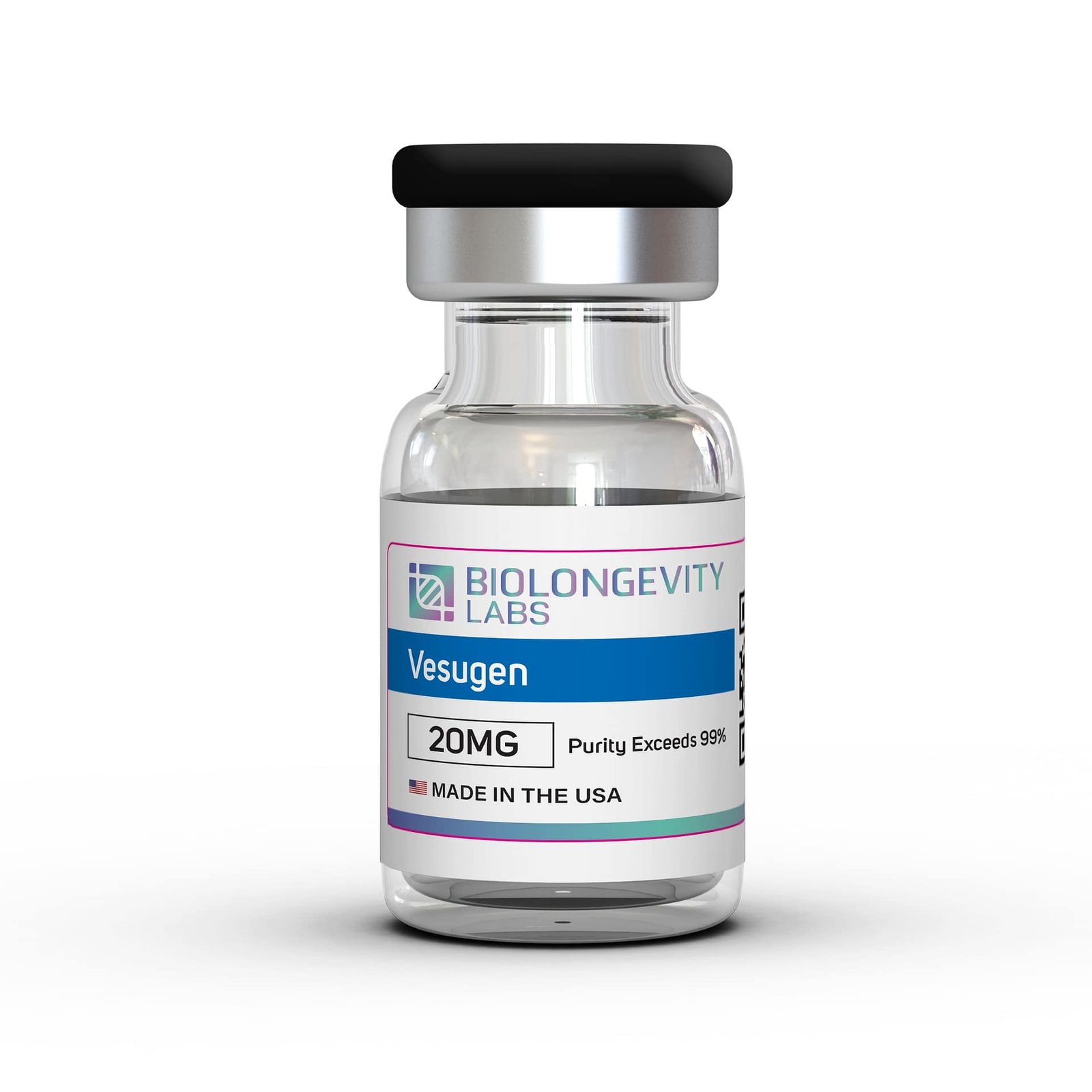
Description
Premium Vesugen Peptide for Advanced Vascular and Cellular Research
Vesugen peptide (Lys-Glu-Asp or KED) is a synthetic tripeptide bioregulator belonging to the Khavinson peptide family. Designed for advanced laboratory research, Vesugen is widely investigated for its potential role in vascular biology, endothelial cell function, neuroprotection, and healthy aging mechanisms. Composed of three amino acids—lysine, glutamic acid, and aspartic acid—this research peptide is studied for its ability to regulate gene expression involved in cellular maintenance and tissue regeneration.
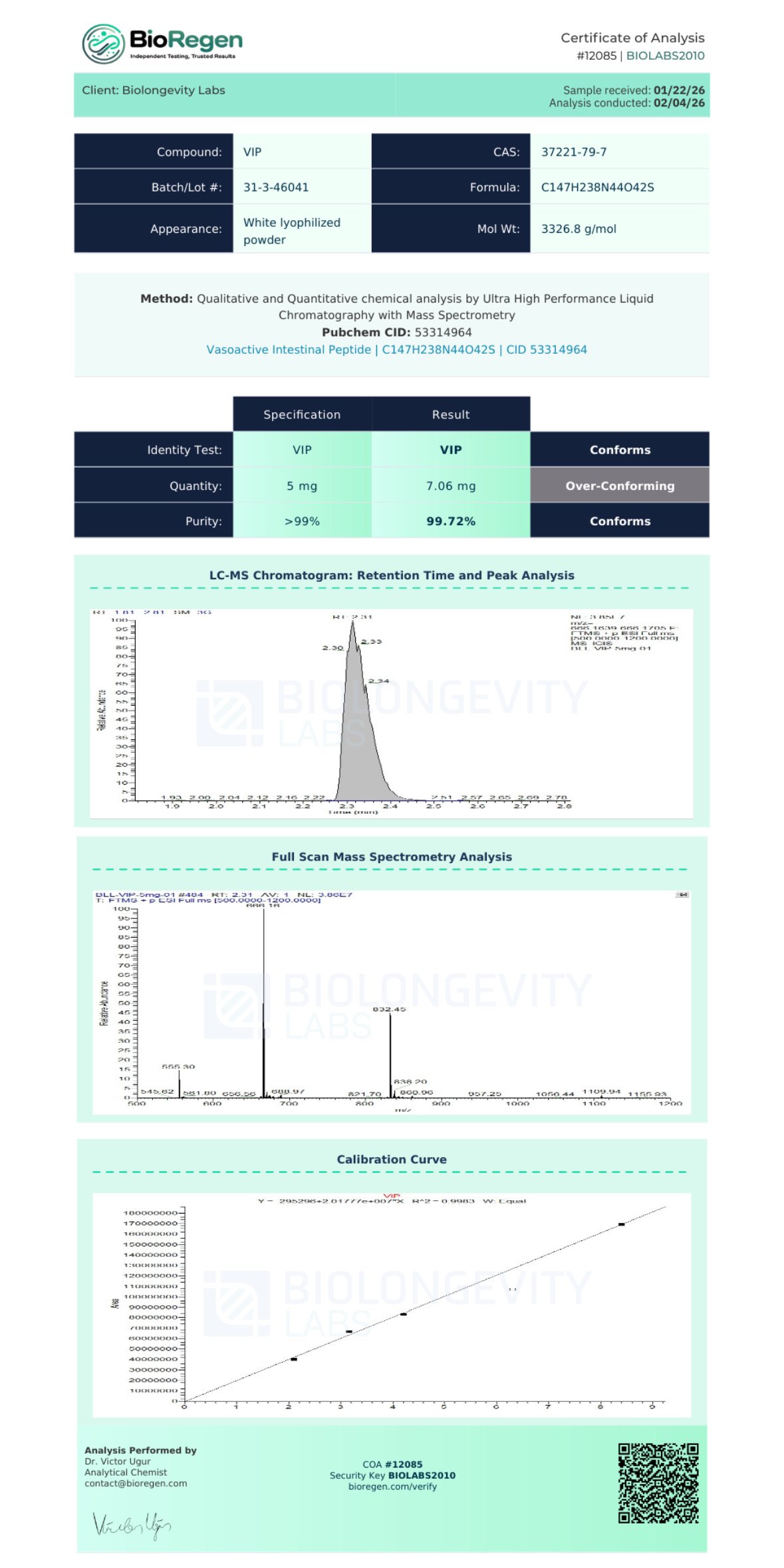
Manufactured as a high-purity lyophilized powder, Vesugen provides researchers with a reliable compound for investigating vascular homeostasis, endothelial repair, neuronal signaling, and cellular longevity pathways. Each batch undergoes rigorous analytical testing to ensure purity, identity, and consistency for reproducible laboratory results.
For laboratory research use only. Not intended for human consumption or therapeutic applications.
Vesugen Peptide Benefits
The Vesugen peptide is commonly investigated in research involving:
- Vascular endothelial cell biology
- Blood vessel integrity and endothelial repair
- Healthy aging and cellular longevity
- Gene expression and epigenetic regulation
- Neuroprotection and neuronal survival
- Synaptic plasticity research
- Oxidative stress response
- Cardiovascular biology
- Atherosclerosis and restenosis models
- Metabolic regulation and insulin sensitivity
- Cellular regeneration
- Tissue differentiation studies
Vesugen Peptide Effects
Supports Vascular Endothelial Function
Vesugen is primarily studied for its interaction with vascular endothelial cells, which form the inner lining of blood vessels. Laboratory research suggests the peptide may help regulate endothelial cell proliferation and maintain vascular integrity, making it valuable for studies investigating age-related vascular changes and endothelial dysfunction.
Promotes Cellular Regeneration
Experimental findings indicate that Vesugen may regulate proteins involved in cellular renewal and differentiation. Researchers investigate its ability to support tissue maintenance by influencing pathways associated with cell survival, proliferation, and repair.
Investigates Gene Expression
Like other Khavinson bioregulatory peptides, Vesugen has demonstrated the ability to interact with DNA and chromatin-associated proteins in laboratory models. These interactions may influence gene expression involved in cellular differentiation, vascular maintenance, and healthy aging without modifying the genetic sequence itself.
Supports Healthy Aging Research
Vesugen is frequently examined for its potential geroprotective properties. Research suggests it may influence biomarkers associated with cellular aging while supporting normal regenerative processes in vascular tissues.
Neuroprotective Research Applications
Studies indicate Vesugen may support neuronal survival, synaptic plasticity, and cellular communication within the central nervous system. Researchers continue investigating its potential role in maintaining healthy neuronal function during aging and oxidative stress.
Vascular Repair Mechanisms
Laboratory investigations suggest Vesugen may help maintain endothelial homeostasis by regulating proteins involved in vascular remodeling, cellular communication, and blood vessel maintenance. These properties make it useful in experimental models studying vascular injury and repair.
Oxidative Stress and Cellular Protection
Research suggests Vesugen may influence antioxidant defense mechanisms while regulating cellular responses to oxidative stress. These effects are being explored in studies focused on vascular aging and neurodegenerative processes.
Metabolic Research
Emerging evidence indicates Vesugen may activate signaling pathways associated with SIRT1, a regulator of cellular metabolism, insulin sensitivity, and mitochondrial health. Researchers continue investigating its role in metabolic homeostasis and age-related metabolic dysfunction.
Tissue-Specific Bioregulation
Unlike many broad-acting compounds, Vesugen appears to demonstrate tissue-selective activity, particularly within vascular and nervous system tissues. This specificity allows researchers to study targeted biological pathways while minimizing off-target cellular effects.
Research Applications
Vesugen peptide is widely utilized in laboratory studies involving:
- Vascular biology
- Endothelial cell research
- Cardiovascular aging
- Cellular senescence
- Epigenetic regulation
- Gene expression
- Neurobiology
- Alzheimer’s disease models
- Synaptic plasticity
- Tissue regeneration
- Oxidative stress
- Metabolic regulation
- Healthy aging research
Vesugen Peptide Information
| Property | Value |
|---|---|
| Peptide Name | Vesugen (KED) |
| Sequence | H-Lys-Glu-Asp-OH |
| Molecular Formula | C₁₅H₂₆N₄O₈ |
| Molecular Weight | 390.39 g/mol |
| Peptide Class | Khavinson Tripeptide Bioregulator |
| Appearance | Lyophilized Powder |
| Research Use | Laboratory Research Only |
The Vesugen peptide offers researchers a highly characterized peptide for investigating vascular biology, endothelial regeneration, cellular aging, neuroprotection, and gene regulation pathways. Its targeted activity and tissue-specific mechanisms make it a valuable tool for studies focused on cardiovascular health, regenerative biology, and longevity science.
Vesugen Peptide Dosage
Subcutaneous Administration
- Dosage Range: 10-20 mg per day
- Frequency: Once daily
- Bioavailability: High, due to direct absorption into the bloodstream
- Commonality: Preferred for its consistent bioavailability and efficacy
Oral Administration
- Dosage Range: 15-30 mg per day
- Frequency: Once or twice daily
- Bioavailability: Lower than subcutaneous due to first-pass metabolism
- Commonality: Used for ease of administration despite lower bioavailability