Description
N-Acetyl Semax Amidate Product Description
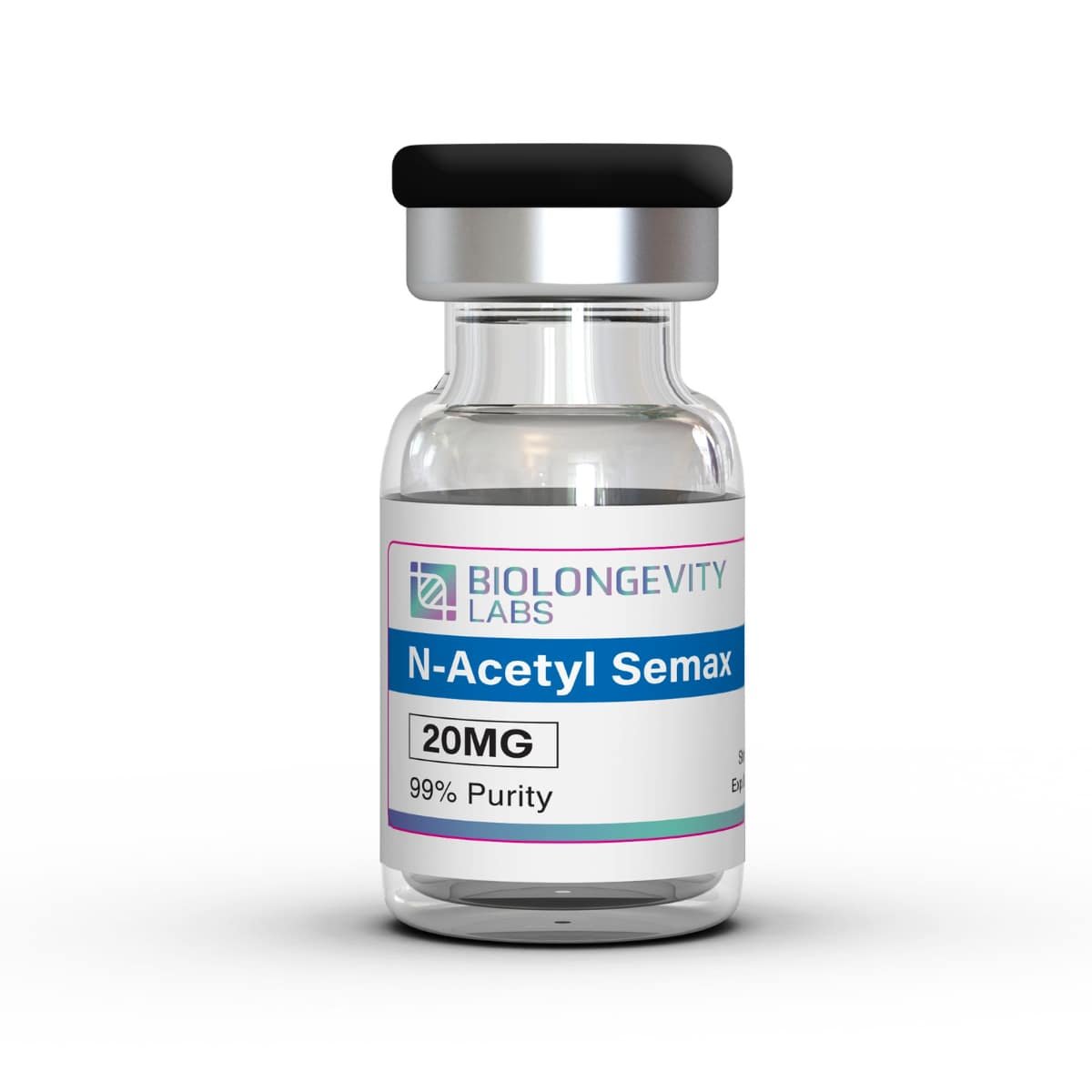
N-Acetyl Semax Amidate is a next-generation synthetic peptide engineered to deliver greater stability and prolonged biological activity compared to standard Semax. Through N-terminal acetylation and C-terminal amidation, this modified peptide is more resistant to enzymatic degradation, making it a valuable tool for researchers investigating cognitive function, neuroprotection, memory formation, and central nervous system signaling.
Derived from the ACTH (4-7) fragment with a Pro-Gly-Pro extension, The Peptide has attracted considerable research interest for its ability to influence neurotransmitter systems, promote brain-derived neurotrophic factor (BDNF) expression, and support neuronal resilience. Its enhanced stability makes it particularly useful for long-term experimental studies involving learning, stress adaptation, neuroplasticity, and neurological recovery.
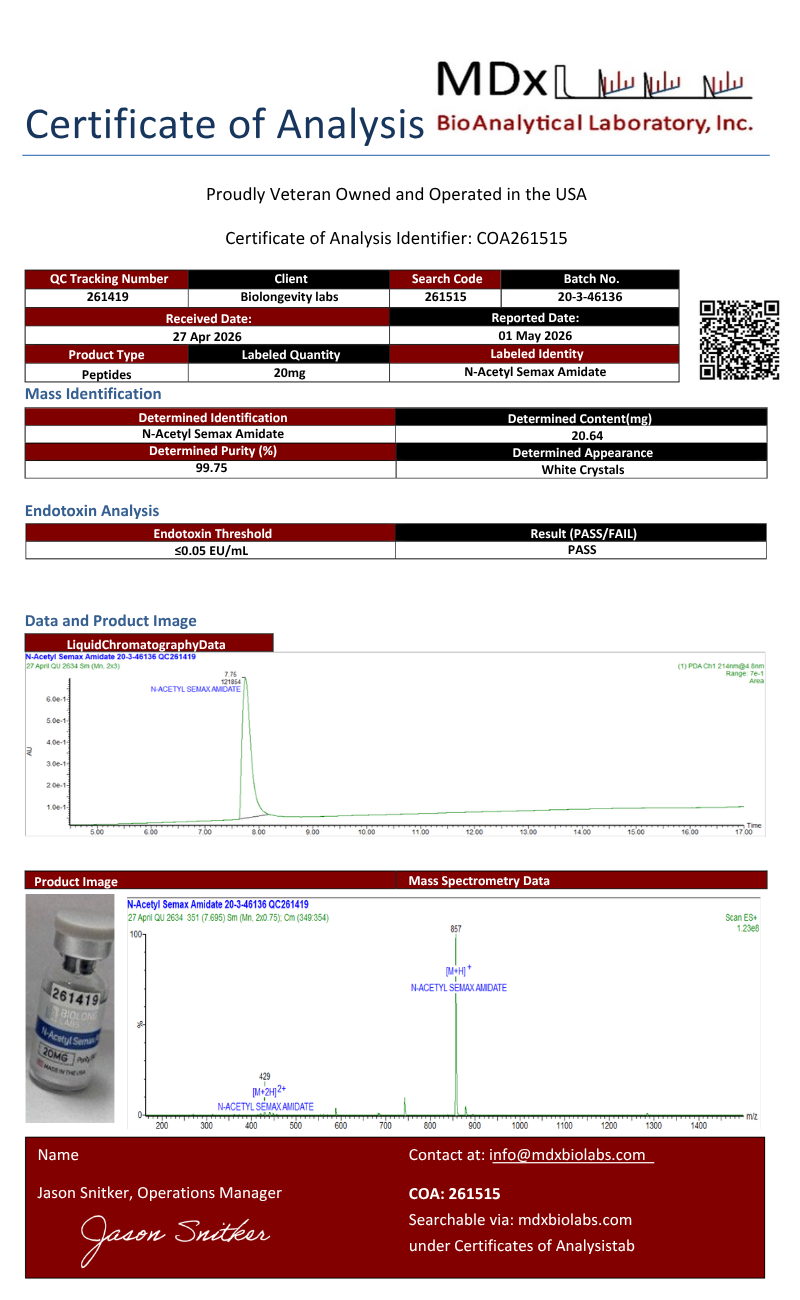
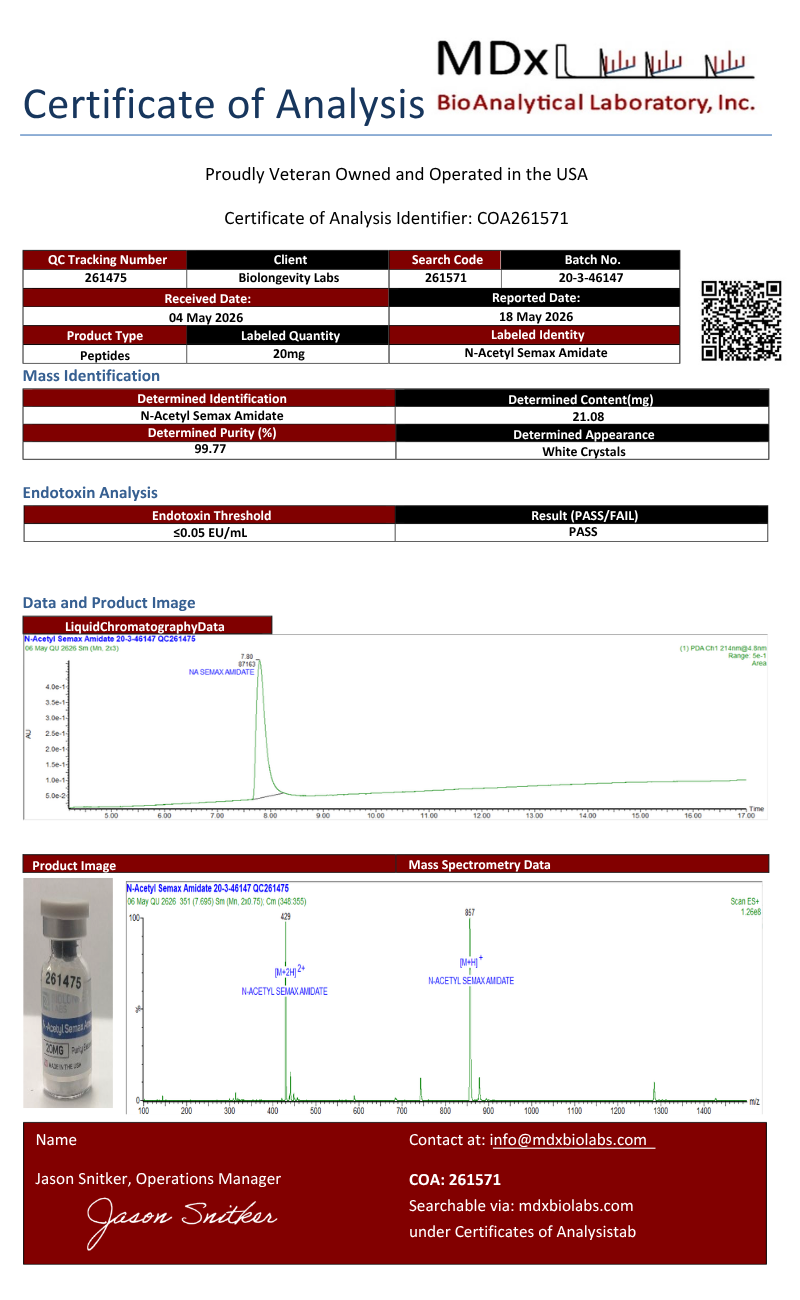
This product is supplied for laboratory research purposes only and is manufactured under strict quality standards to ensure exceptional purity and consistency.
N-Acetyl Semax Amidate Peptide Information
| Property | Value |
|---|---|
| Peptide Sequence | Ac-Met-Glu-His-Phe-Pro-Gly-Pro-NH₂ |
| Molecular Formula | C37H51N9O10S |
| Molecular Weight | 813.9 g/mol |
| CAS Number | 80714-61-0 |
| Synonyms | Semax Amidate, ACTH (4-7)-PGP, N-Acetyl Semax |
N-Acetyl Semax Amidate Benefits
Current preclinical research suggests N-Acetyl Semax Amidate may support investigations involving:
- Enhanced learning and memory formation
- Cognitive performance and focus
- Neuroprotection following ischemic injury
- Increased BDNF production
- Dopamine and serotonin modulation
- Stress adaptation
- Improved neuronal plasticity
- Anti-inflammatory activity within the central nervous system
- Oxidative stress reduction
- Blood-brain barrier penetration studies
- Recovery following neurological injury
N-Acetyl Semax Amidate Effects
Experimental investigations indicate that the peptide may contribute to:
- Increased expression of brain-derived neurotrophic factor (BDNF)
- Enhanced synaptic plasticity
- Improved neurotransmitter signaling
- Support for neuronal survival
- Reduction of neuroinflammatory responses
- Protection against oxidative cellular damage
- Improved memory consolidation
- Enhanced attention and learning performance
- Increased resistance to enzymatic degradation compared to standard Semax
- Extended duration of biological activity
N-Acetyl Semax Amidate Dosage
Research purposes only
Common experimental protocols reported in research literature include:
- Dose: 300–1,000 mcg per administration
- Route: Intranasal
- Frequency: 1–2 times daily
- Research Duration: 10–30 days
Some experimental models have evaluated doses outside these ranges depending on study objectives.
Not intended for human consumption.
Why Researchers Choose N-Acetyl Semax Amidate
Researchers frequently select the peptide because of its:
- Enhanced molecular stability
- Longer biological half-life than standard Semax
- High affinity for central nervous system targets
- Strong neuroprotective research profile
- Cognitive enhancement potential
- Extensive preclinical literature
- Reliable purity for laboratory applications
Semax vs N-Acetyl Semax Amidate: Key Differences Explained
Semax and N-Acetyl Semax Amidate are closely related synthetic neuropeptides derived from the ACTH(4-7) fragment. While they share the same core heptapeptide structure, they differ in their terminal modifications, which significantly affects stability, duration, and research interest.
Semax is the original compound studied for its effects on cognitive function, neuroprotection, and stress adaptation. N-Acetyl Semax Amidate is a chemically enhanced analog that includes both N-terminal acetylation and C-terminal amidation, designed to improve resistance to enzymatic breakdown and extend biological activity in research models.
Structural Differences Between Semax and N-Acetyl Semax Amidate
Both peptides share the same amino acid backbone:
- Met-Glu-His-Phe-Pro-Gly-Pro
However, the key distinction lies in terminal modifications:
Semax
- Free N-terminus
- Free C-terminal carboxyl group
- Shorter duration in biological systems
N-Acetyl Semax Amidate
- N-terminal acetyl group added
- C-terminal amidated (-NH₂)
- Increased stability against enzymatic degradation
These modifications make N-Acetyl Semax Amidate more resistant to breakdown, which is why it is often described as a “more stable analog” of Semax.
Mechanism Comparison
Both compounds are believed to act through similar pathways, including:
- Modulation of melanocortin receptors (MC4 and MC5)
- Upregulation of neurotrophic factors such as BDNF
- Influence on dopamine and serotonin signaling
- Neuroprotective and cognitive-support pathways
The difference is not the mechanism itself, but the duration and bioavailability of activity, which may be enhanced in the amidated version due to reduced enzymatic degradation.
Semax vs N-Acetyl Semax Amidate: Research Comparison Table
| Feature | Semax | N-Acetyl Semax Amidate |
|---|---|---|
| Structure | ACTH(4-7) + PGP | Same core + acetyl + amide |
| Stability | Moderate | Higher |
| Duration | Shorter | Longer (research-dependent) |
| Research Depth | More studied | Less direct research |
| Primary Use in Studies | Cognitive & neuroprotection | Stability-optimized analog research |
Potential Research Differences
Semax
- Strong historical research base
- Studied for stroke recovery models
- Cognitive enhancement and neuroprotection
- Stress adaptation and neurotransmitter regulation
N-Acetyl Semax Amidate
- Designed for improved stability and longer activity window
- Used in comparative peptide design research
- Often described as having extended effects in preclinical models
- Limited direct clinical studies compared to Semax
Which One Is Stronger?
In research discussions, N-Acetyl Semax Amidate is often considered:
- More stable
- Longer lasting
- Potentially more bioavailable
However, Semax remains:
- Better studied
- More clinically documented
- The reference compound for most data
So the comparison is not “better vs worse” but rather:
- Semax = research foundation
- N-Acetyl Semax Amidate = optimized analog