
Description
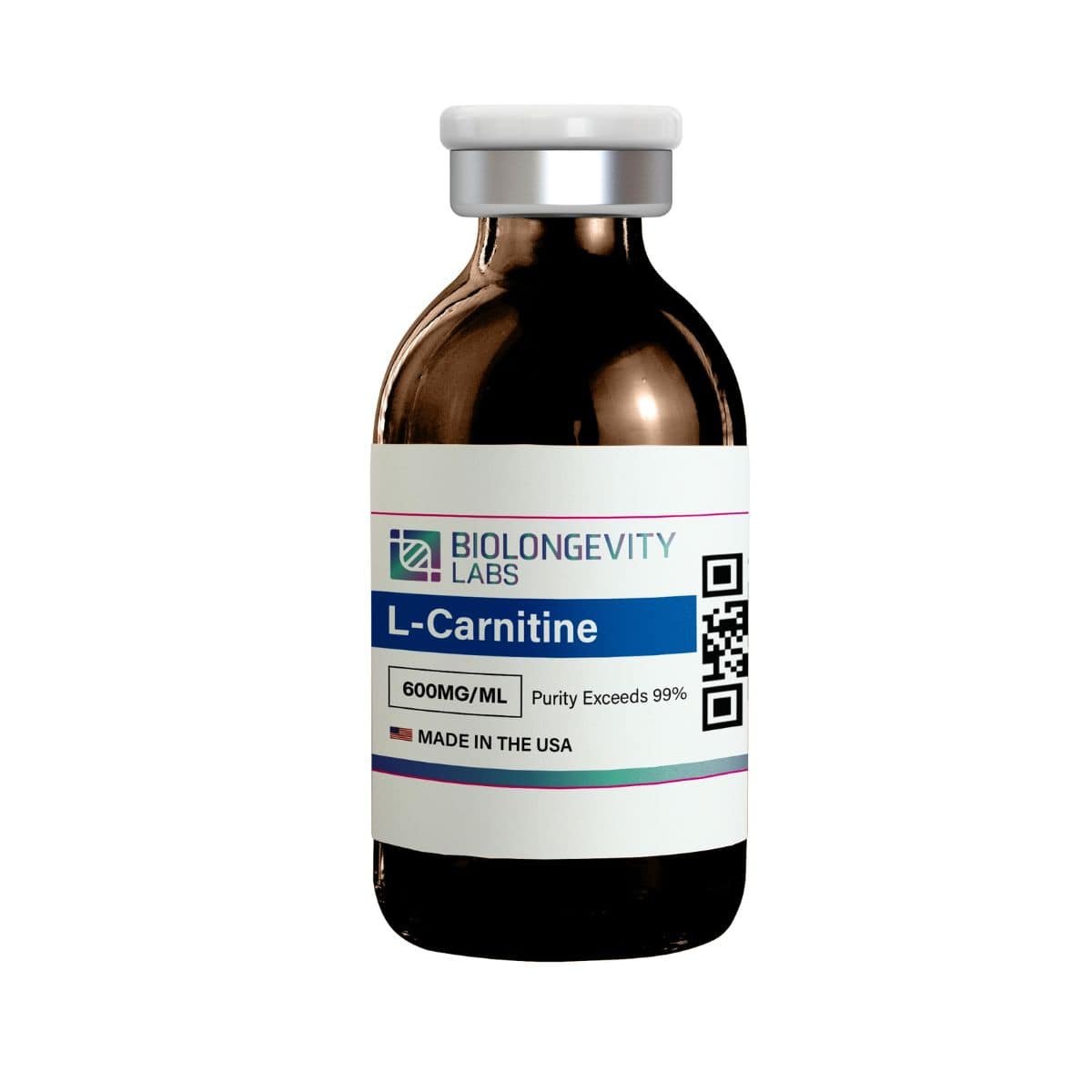
L-Carnitine Description
L-Carnitine is a naturally occurring compound synthesized from amino acids and plays a key role in cellular energy production. Its primary function is to act as a carrier molecule, transporting long-chain fatty acids into the mitochondria, where they are broken down through oxidation to generate usable energy.
From a chemical standpoint, L-carnitine is identified as 3-hydroxy-4-N-trimethylaminobutyrate and exists in two stereoisomeric forms, with L-carnitine representing the biologically active configuration, while D-carnitine is inactive in human physiology.
In biochemical processes, L-carnitine:
- Supports the transfer of long-chain fatty acids across the mitochondrial membrane for energy production
- Helps maintain balance between acyl-CoA and free CoA within mitochondria
- Assists in the removal of metabolic waste and potentially harmful compounds from mitochondrial structures
- Contributes to the metabolism of branched-chain amino acids
Peptide Information
| Property | Value |
|---|---|
| Molecular Formula | C7H15NO3 |
| Molecular Weight | 161.2 g/mol |
| CAS Number | 541-15-1 |
| Synonyms | Levocarnitine, 541-15-1, (R)-Carnitine, Carnitor |

Reviews
There are no reviews yet.