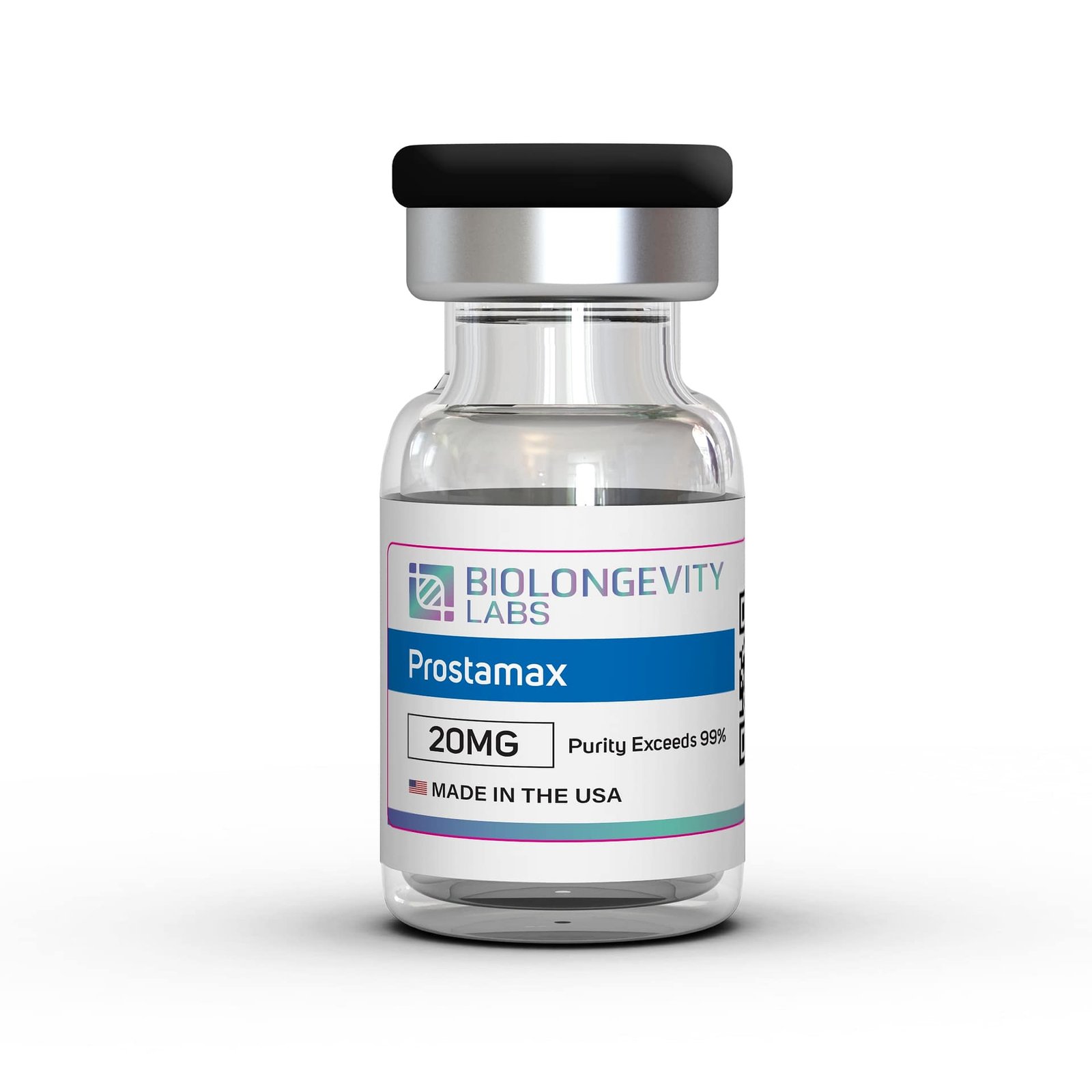
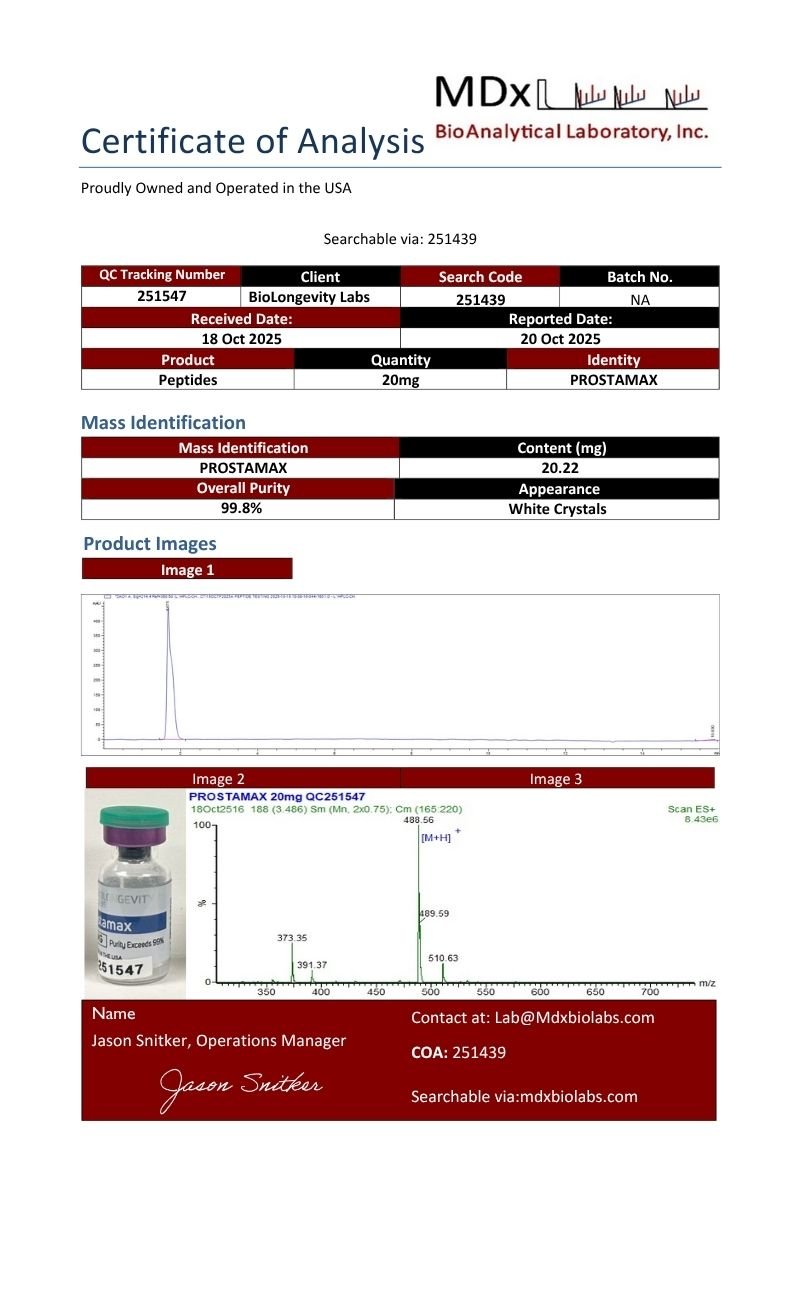
Description
Prostamax Peptide Product Description
Prostamax (also known as KEDP) is a synthetic tetrapeptide composed of four amino acids (Lys–Glu–Asp–Pro). It belongs to the group of Khavinson peptides and has been studied in experimental research for its potential role in tissue repair processes, particularly within prostate cell cultures.
In preclinical research settings, Prostamax has been investigated for its possible ability to influence chromatin structure and cellular gene regulation. Studies suggest it may interact with chromatin dynamics, potentially affecting how tightly DNA is packaged and how certain genes are expressed. These changes have been associated with markers of increased chromosomal activity and shifts in ribosomal RNA-related regions, indicating altered cellular function at a genetic level.
In prostate tissue culture models, Prostamax peptide has been explored for its potential to support regenerative processes and reduce inflammatory and degenerative changes. Researchers have also observed interest in its possible role in limiting sclerotic and atrophic tissue development within experimental prostate models.
Prostamax Peptide Specification
| Property | Value |
|---|---|
| Peptide Sequence | H-Lys-Glu-Asp-Pro-OH |
| Molecular Formula | C₂₀H₃₃N₅O₉ |
| Molecular Weight | 487.5 g/mol |
| PubChem CID | 9848296 |
The Prostamax Peptide Benefits
Prostamax (KEDP) is a tetrapeptide studied in preclinical research for its potential role in supporting prostate tissue function and broader cellular health processes. Its observed benefits are based mainly on laboratory and animal studies.
Prostate support
Prostamax has been researched for its potential to support healthy prostate function by helping reduce inflammatory activity and promoting normal tissue maintenance in prostate models.
Support for cellular and DNA regulation
Research suggests Prostamax may influence chromatin structure and DNA organization, which could contribute to improved cellular function and regulation of age-related changes at the tissue level.
Anti-aging and regenerative interest
Studies associate Prostamax peptide with markers of reduced cellular condensation and changes in gene activity linked to aging, suggesting possible roles in supporting healthier cellular aging processes in experimental settings.
Immune system modulation
Prostamax has been observed in research to potentially enhance immune activity by influencing lymphocyte behavior and supporting overall immune responsiveness.
Non-pharmaceutical research interest
It is often explored as a peptide-based alternative in research settings focused on prostate health and cellular regeneration pathways.
Prostamax Peptide Effects
In experimental models, Prostamax has demonstrated several biological effects that researchers continue to study:
- Reduction in prostate inflammation
Studies show possible decreases in inflammatory markers such as swelling, vascular congestion, and immune cell infiltration in prostate tissue models. - Influence on chromatin structure
Prostamax peptide appears to affect chromatin organization, potentially promoting a more relaxed DNA structure and altering gene expression patterns in aging cells. - Changes in cellular aging markers
Research reports shifts in chromosomal activity indicators, including increased chromosomal exchange activity and nucleolar organizer region activity in cell studies. - Support for tissue repair processes
In prostate tissue cultures, Prostamax has been associated with improved regenerative activity and reduced signs of degenerative changes such as fibrosis or atrophy. - Potential immune-related effects
Some studies suggest it may modulate immune cell function, particularly in aging or stressed cellular environments.
Prostamax Peptide Dosage
- Route: Intramuscular (IM) injection once daily
- Duration: 8–12 weeks (with gradual dose escalation)
- Approach: Stepwise increase from low dose to a maintenance level
Escalation pattern
- Week 1–2: ~500 mcg daily
- Week 3–4: ~750 mcg daily
- Week 5–12: ~1,000 mcg daily (maintenance phase in that protocol)
Some extended versions in peptide communities may continue longer or adjust upward, but this is not standardized or medically validated.
Reconstitution
When people prepare it in non-clinical settings, they typically:
- Add 2.0 mL bacteriostatic water (resulting in ~10 mg/mL concentration)
- Mix gently (no shaking)
- Store refrigerated at 2–8°C
- Use within a short stability window (often ~1–2 weeks in informal protocols)