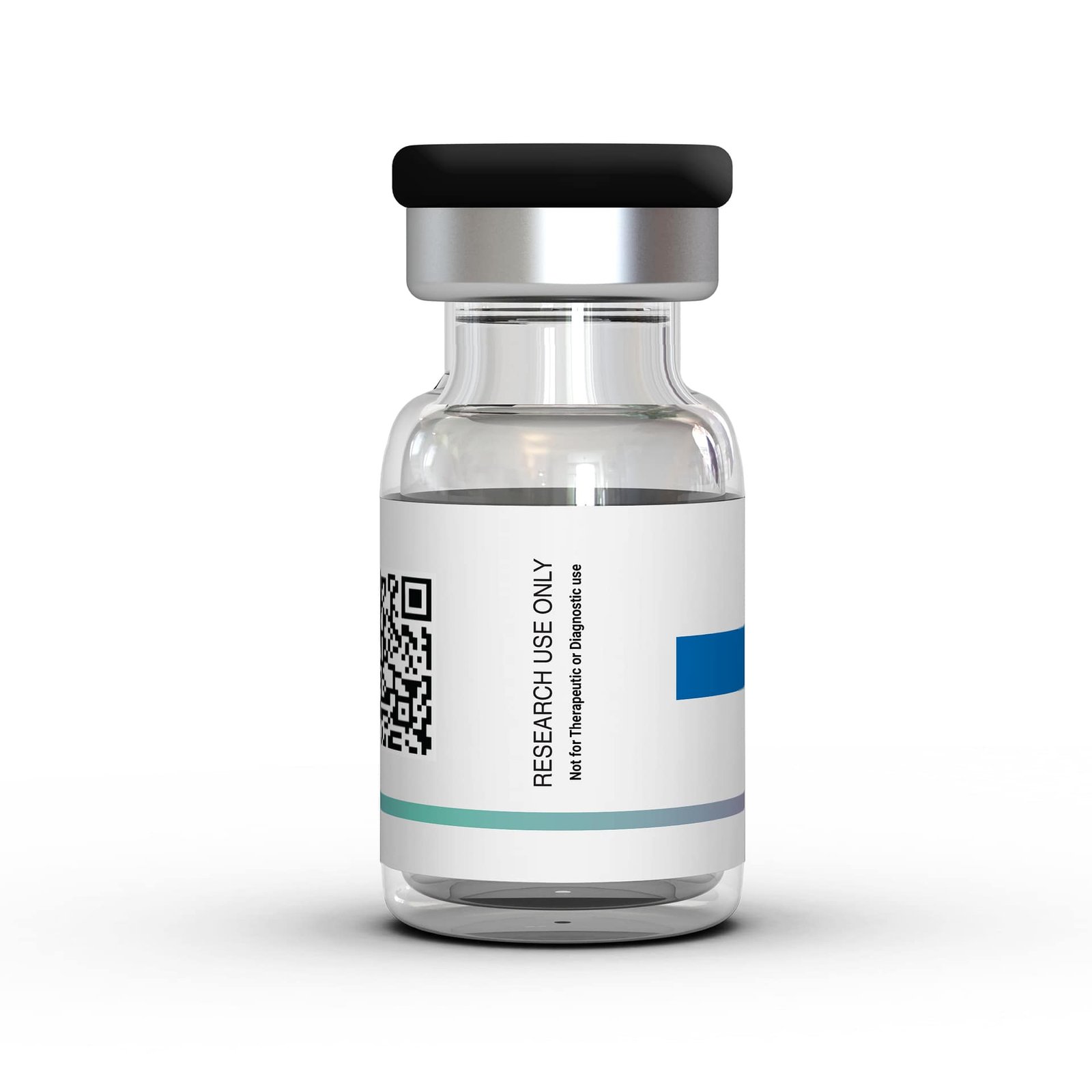
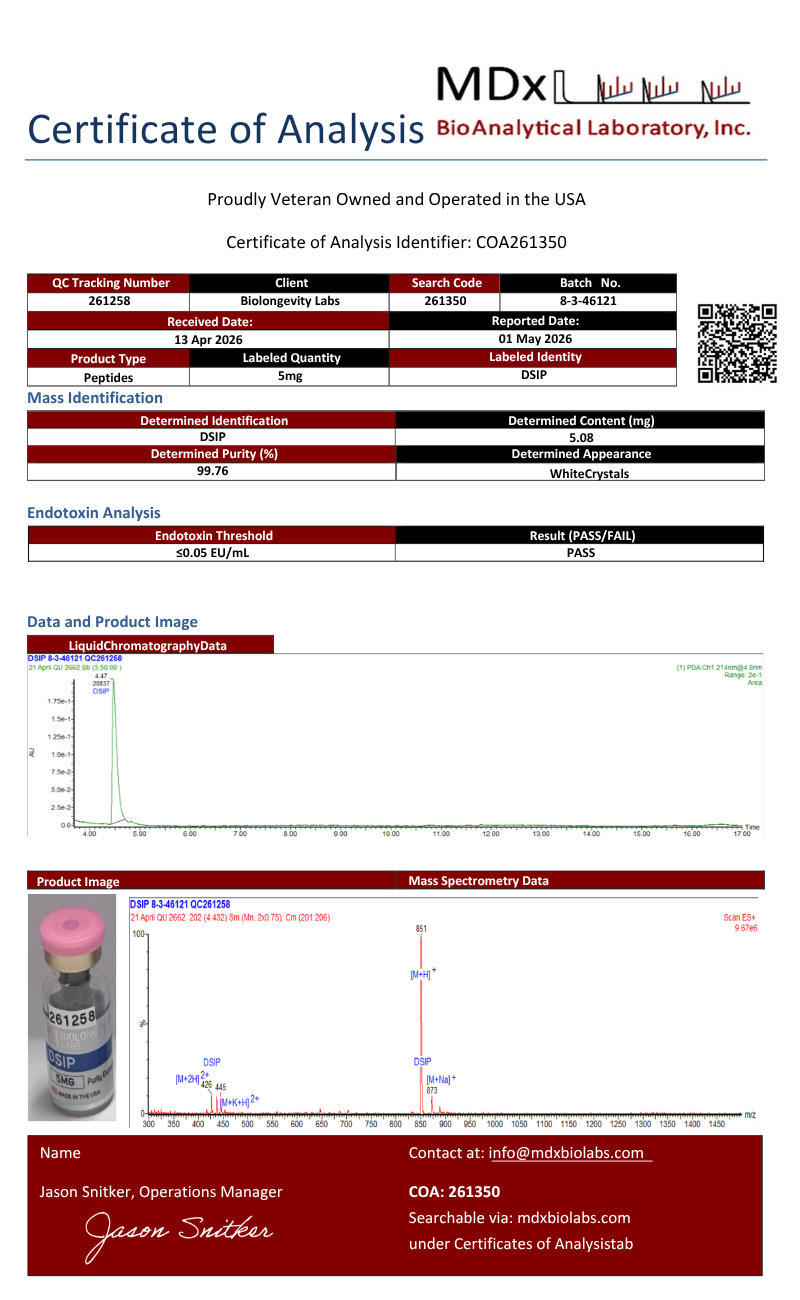
Description
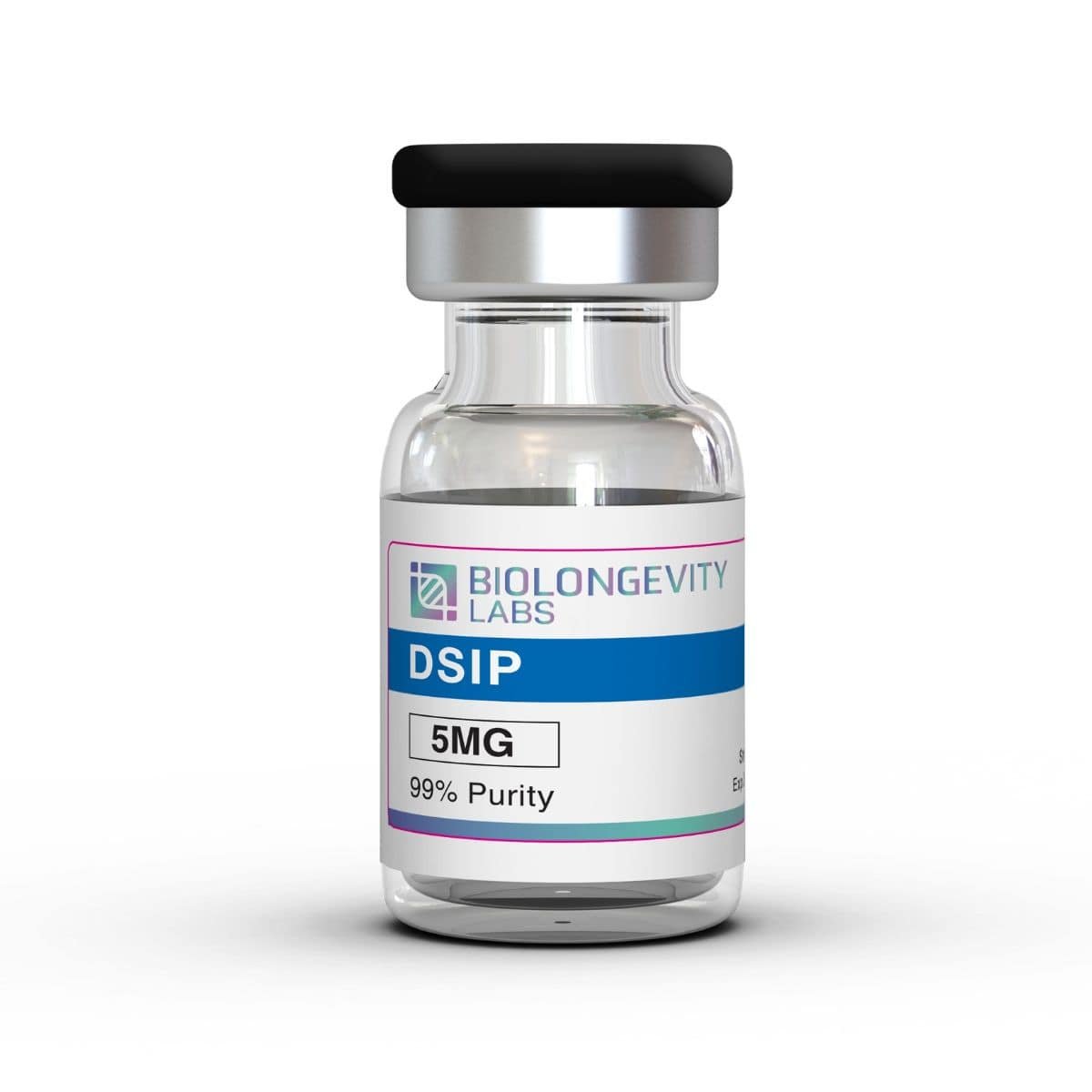
DSIP Peptide Product Description
DSIP (Delta Sleep-Inducing Peptide) is a naturally occurring neuropeptide composed of nine amino acids that has been extensively investigated for its role in sleep regulation, neurological function, endocrine signaling, and stress response. First isolated from the central nervous system during sleep research, DSIP continues to be studied for its potential influence on slow-wave (delta) sleep, neurotransmitter activity, and hormone regulation.
Research suggests that DSIP may interact with multiple neurotransmitter systems, including GABA, glutamate, dopamine, serotonin, and melatonin pathways. It has also been investigated for its potential effects on growth hormone secretion, stress adaptation, pain modulation, antioxidant activity, and overall neurological function.
This research-grade peptide is supplied exclusively for laboratory and scientific research. It is not intended for human or veterinary use.
DSIP Peptide Specifications
| Property | Value |
|---|---|
| Peptide Sequence | Trp-Ala-Gly-Gly-Asp-Ala-Ser-Gly-Glu |
| Molecular Formula | C35H48N10O15 |
| Molecular Weight | 848.8 g/mol |
| CAS Number | 62568-57-4 |
| PubChem CID | 68816 |
| Synonyms | Emideltide, 62568-57-4, DELTA SLEEP INDUCING PEPTIDE, DSIP nonapeptide |
Research Applications of DSIP Peptide
DSIP has become an important research tool for scientists studying sleep physiology and neuroendocrine regulation. Current laboratory investigations focus on understanding how this peptide influences communication between the nervous system and endocrine system.
Research areas include:
- Sleep architecture and slow-wave (delta) sleep
- Circadian rhythm regulation
- Neurotransmitter signaling pathways
- Stress adaptation and cortisol regulation
- Growth hormone and endocrine function
- Pain perception mechanisms
- Oxidative stress and antioxidant responses
- Healthy aging and longevity research
- Recovery and neurological performance
- Immune system regulation
DSIP Peptide Benefits
Current laboratory investigations suggest DSIP may contribute to several important biological processes.
Supports Sleep Quality Research
DSIP is primarily investigated for its potential role in promoting deep slow-wave sleep (NREM Stage 3). Laboratory studies suggest it may help researchers better understand sleep efficiency, sleep onset, and healthy sleep architecture.
Investigated for Stress Response
Research indicates DSIP may influence biological markers associated with stress by interacting with neuroendocrine signaling pathways. Scientists continue exploring its role in maintaining physiological balance during periods of stress.
Explores Growth Hormone Regulation
Experimental studies suggest DSIP may influence natural growth hormone secretion through hypothalamic and pituitary signaling. This makes it valuable for research involving recovery, metabolism, and endocrine regulation.
Studied for Pain Modulation
DSIP has been examined in experimental models investigating pain perception and nervous system signaling. Researchers continue exploring how it may influence neurological pathways involved in discomfort and recovery.
Supports Antioxidant Research
Preclinical studies indicate DSIP may help regulate oxidative stress by influencing antioxidant enzyme activity. Researchers are investigating its possible role in cellular protection and healthy aging.
Investigated for Cognitive and Neurological Function
DSIP continues to be explored for its effects on neurotransmitter balance, neuronal communication, and overall central nervous system function.
Research into Healthy Aging
Laboratory studies suggest DSIP may influence cellular maintenance, oxidative balance, and age-related biological processes, making it an area of interest in longevity research.
DSIP Peptide Dosage
General Research Dosage
- Typical research dose: 100–300 mcg per administration
- Advanced research range: Up to 500 mcg per administration in selected experimental protocols
- Administration frequency: 2–5 times per week, depending on the research protocol
- Cycle length: Commonly 2–4 weeks, followed by a break before beginning another research cycle
Administration Timing
Research protocols commonly administer DSIP approximately 30–60 minutes before the intended sleep period to investigate its effects on sleep quality, slow-wave sleep, and circadian regulation.
Research Administration
- Typical laboratory route: Subcutaneous (SQ) injection
- Alternative research route: Intranasal administration has also been explored in some studies.
Research Considerations
- Many protocols begin with the lowest effective research dose before evaluating study outcomes.
- Cycling periods are commonly incorporated to help maintain consistent experimental responses.
- Higher doses have been associated with an increased likelihood of excessive sedation and next-day drowsiness in research observations.
Why Researchers Choose DSIP
DSIP remains one of the most extensively studied neuropeptides for sleep and neuroendocrine research. Its broad range of investigated mechanisms allows researchers to examine the complex relationship between sleep, stress, hormone regulation, metabolism, recovery, and neurological health.
Manufactured under strict quality standards, this research-grade peptide provides high purity and consistency for laboratory investigations.