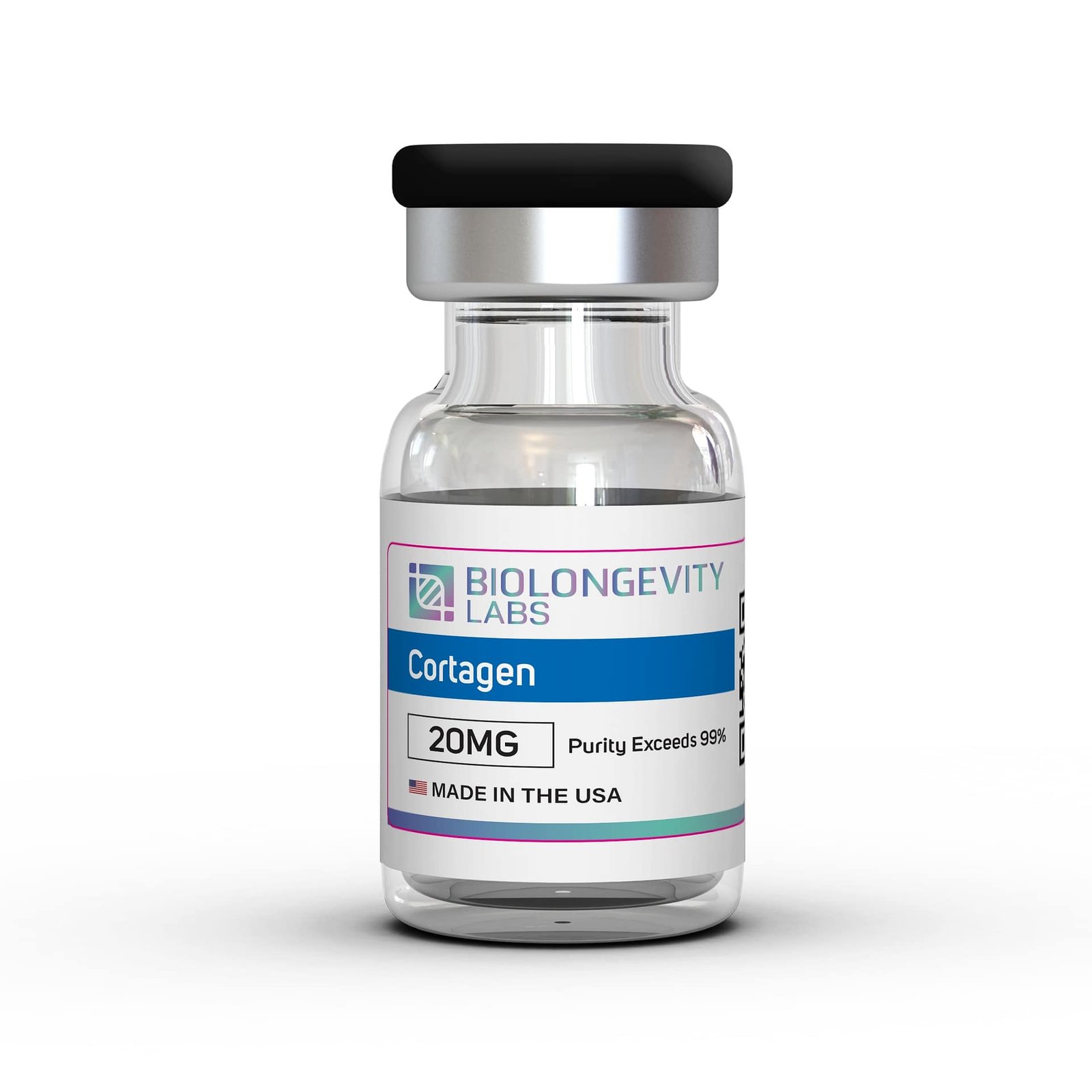
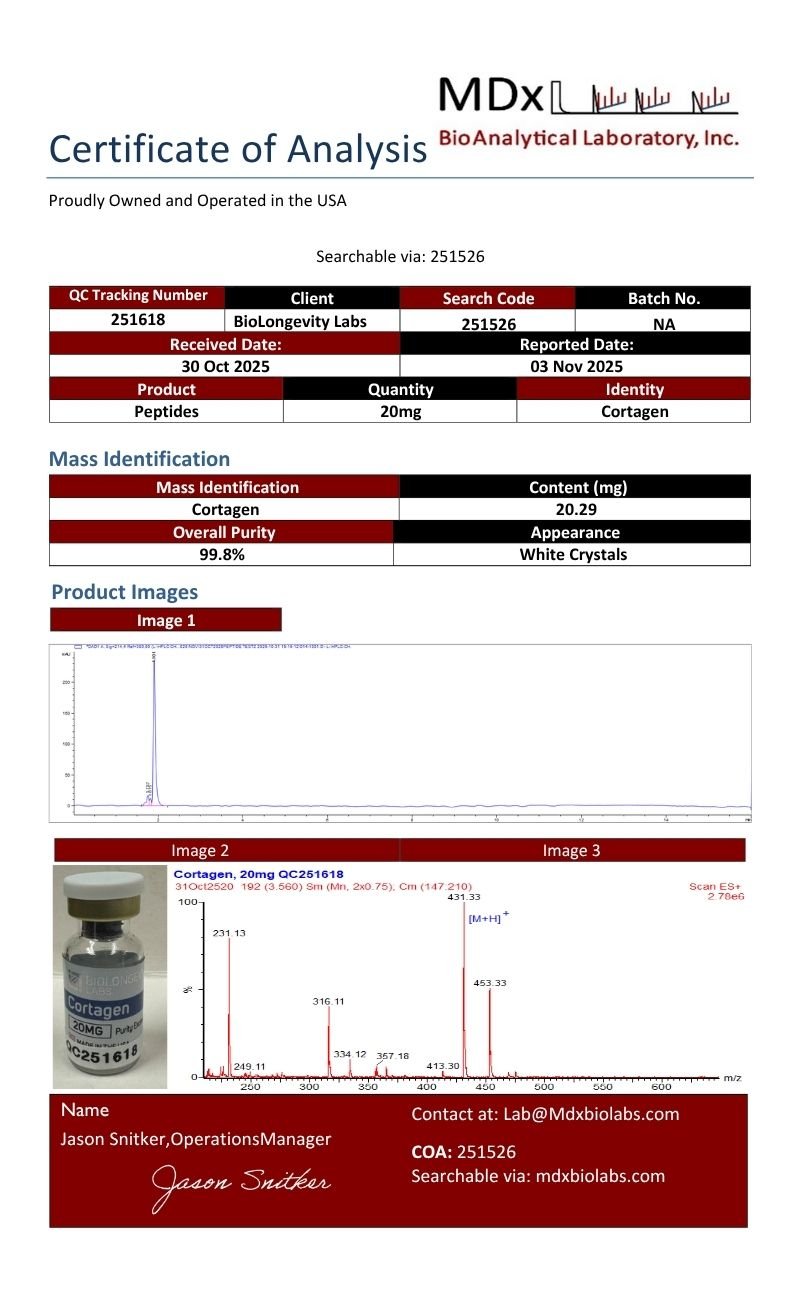
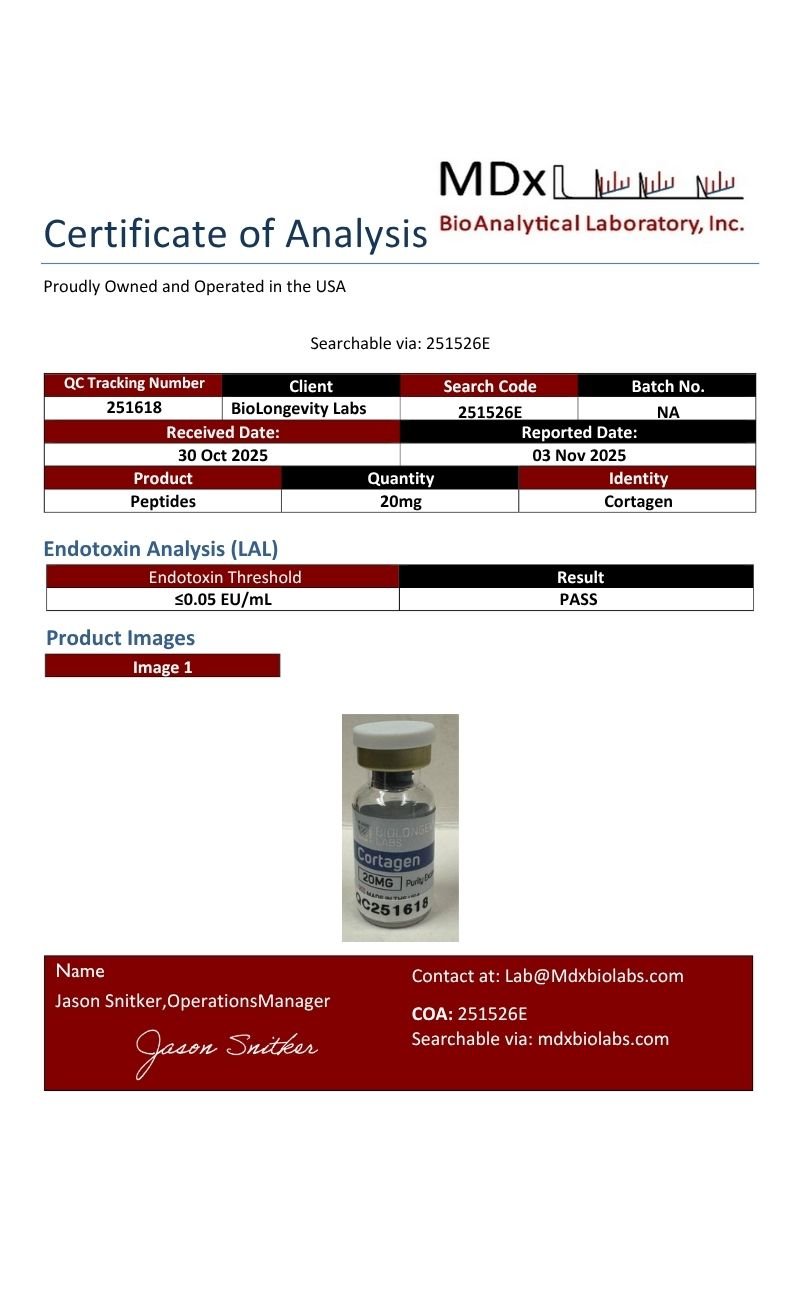
Description
Cortagen Peptide Product Description
Cortagen is a synthetic tetrapeptide belonging to the Khavinson peptide bioregulator family, a group of short-chain peptides (typically 2–4 amino acids) studied for their potential role in regulating gene expression and supporting tissue-specific cellular function. Its amino acid sequence, Ala–Glu–Asp–Pro (AEDP), has been structurally modeled after bioactive fragments derived from endogenous regulatory peptide complexes.
In preclinical research settings, Cortagen has been investigated for its potential ability to interact with cellular regulatory systems, including chromatin structure, gene transcription activity, and stress-response signaling pathways. Studies suggest that Cortagen may enter cells and localize near nuclear structures, where it could influence epigenetic regulation and DNA-associated processes in mammalian cell models.
Because of its proposed bioregulatory properties, Cortagen is primarily studied in laboratory environments focusing on neurobiology, cellular aging, regenerative signaling, and stress adaptation mechanisms.
Cortagen Peptide Information
| Property | Value |
|---|---|
| Peptide Sequence | Ala-Glu-Asp-Pro |
| Molecular Formula | C17H26N4O9 |
| Molecular Weight | 430.17 g/mol |
| CAS Number | 335591-03-2 |
| PubChem CID | 18439621 |
| Synonyms | SCHEMBL5491754 |
Mechanism of Action (Research Overview)
Scientific literature suggests that Cortagen may act through multiple biological pathways rather than a single receptor-based mechanism. Proposed mechanisms include:
- Interaction with chromatin structure, potentially influencing DNA accessibility and transcriptional activity
- Modulation of gene expression profiles linked to cellular stress response and repair processes
- Regulation of mitochondrial and energy-related genes associated with cellular metabolism
- Influence on neuronal signaling pathways involved in excitability and adaptive response
Some studies propose that Cortagen may preferentially affect regions of facultative heterochromatin, potentially contributing to changes in gene activation patterns in aged or stressed cell models.
Potential Research Applications
Cortagen has been explored in a variety of experimental models, particularly in neuroscience and cellular biology research.
Neuroprotective and Nervous System Research
Cortagen has demonstrated interest in studies focused on neuronal activity regulation, where it may help modulate membrane potential, reduce excessive spontaneous neuronal firing, and support neuron stability in experimental conditions. It is also studied for its potential role in early-stage nerve regeneration and functional recovery in peripheral nerve injury models.
Cellular Stress Response
Research indicates Cortagen may influence genes involved in cellular stress adaptation, including mitochondrial function, protein transport, and DNA replication pathways. These changes suggest a potential role in supporting cellular resilience under stress conditions.
Gene Expression and Epigenetic Regulation
Cortagen has been studied for its ability to alter gene expression profiles in various cell types, including lymphoid and cardiac tissue models. Findings suggest it may support transcriptional activity of genes involved in repair, differentiation, and metabolic regulation.
Cellular Differentiation Studies
Experimental models suggest Cortagen may influence the differentiation pathways of pluripotent cells, potentially guiding them toward epithelial and mesenchymal lineages under controlled laboratory conditions.
Oxidative Stress Modulation
The Cortagen peptide has been associated with reduced markers of oxidative damage, including lipid peroxidation products and protein carbonylation levels, suggesting a potential indirect antioxidant-like effect through modulation of cellular stress pathways.
Cortagen Peptide Benefits
Cortagen (AEDP) is a tetrapeptide studied in experimental settings for its potential role in neuroregulation, gene expression modulation, and cellular stress response support.
Neuroprotective support (preclinical research)
Cortagen has been studied for its ability to modulate neuronal activity, including stabilizing membrane potential and reducing excessive neuronal excitability. This has led to interest in its potential role in supporting nerve cell resilience.
Nerve regeneration research
Experimental models suggest Cortagen may support early-stage nerve repair by promoting nerve fiber growth and improving functional recovery signals in injured peripheral nerve tissue.
Gene expression and cellular regulation
Cortagen has been investigated for its ability to influence gene expression patterns related to:
- Cellular repair pathways
- Stress-response signaling
- Mitochondrial function
- Protein synthesis and transport systems
Cellular stress adaptation
Research indicates potential modulation of stress-related genes (such as heat-shock proteins and survival pathways), suggesting Cortagen may help cells adapt more efficiently to environmental or metabolic stress in laboratory models.
Epigenetic-like activity (theoretical research model)
Some studies propose Cortagen may influence chromatin structure and gene accessibility, potentially reactivating suppressed genetic programs in aged or stressed cell models.
Oxidative stress reduction
Preclinical findings suggest Cortagen may reduce markers of oxidative damage, including lipid peroxidation and protein oxidation, through indirect regulation of cellular defense systems.
Cell differentiation support (lab studies)
In experimental embryonic models, Cortagen has shown potential to influence differentiation pathways, supporting development into epithelial and mesenchymal cell lines.
Cortagen Peptide Dosage and Administration
The standard dose for Cortagen typically ranges from 0.1 to 1 mg per day.
A common dosing guideline is around 10 micrograms per kilogram of body weight.
For those under 100 kg, one capsule or a 1 mg injection is common, while those over 100 kg may take two capsules (or up to 2 mg per day).
Some protocols recommend even smaller amounts, especially in nerve regeneration studies.
Treatment cycles usually last between 10 to 30 days, depending on your goals and how your body responds.