Description
Premium Thymagen (Thymogen) Peptide for Advanced Research
Thymagen peptide, also known as Thymogen (Glu-Trp), is a synthetic dipeptide bioregulator belonging to the Khavinson family of short peptides. Composed of the amino acids glutamic acid and tryptophan, Thymagen has become an important research compound for investigating immune regulation, cellular signaling, and gene expression. Laboratory studies suggest that this peptide interacts with specific DNA sequences and may influence the activity of genes involved in immune system function, cellular differentiation, and inflammatory responses.
As a research-grade peptide, Thymagen is widely used in experimental models exploring T-cell maturation, cytokine regulation, immune homeostasis, cellular aging, and tissue regeneration. Its compact molecular structure allows researchers to investigate peptide-mediated bioregulation in controlled laboratory environments.
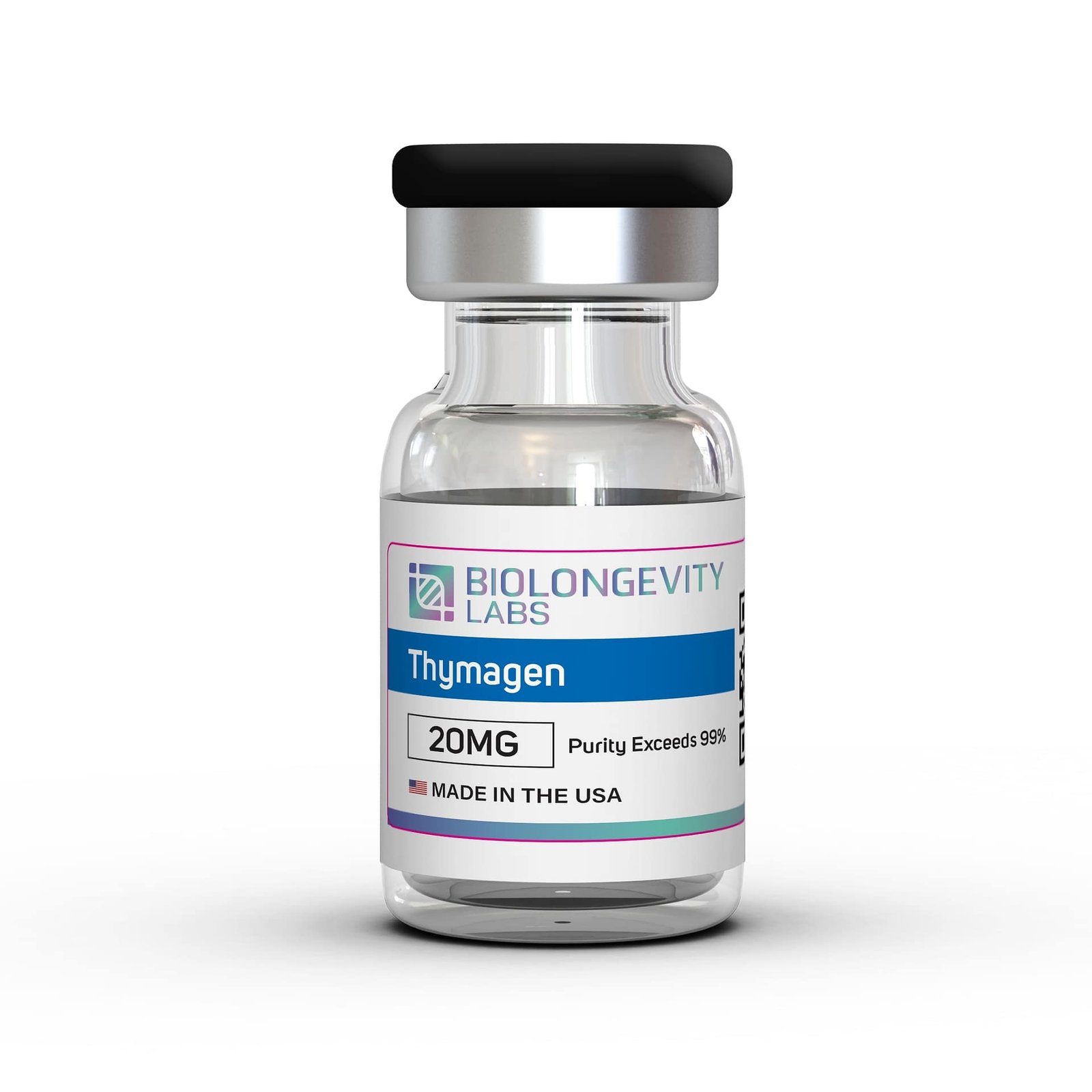
Manufactured under strict quality standards and supplied as a highly purified lyophilized powder, Thymagen is intended exclusively for laboratory and research purposes.
Thymagen Peptide Benefits
Current laboratory investigations suggest that Thymagen may support research involving:
- Immune system regulation and thymic peptide signaling
- T-cell differentiation and maturation
- Cytokine balance and inflammatory pathway modulation
- DNA interaction and epigenetic gene regulation
- Cellular communication and immune responsiveness
- Healthy aging and immunosenescence research
- Tissue repair and regenerative biology
- Stem cell differentiation studies
- Cellular stress response mechanisms
- Experimental models of immune dysfunction
Although these findings are encouraging, additional research is necessary to fully characterize the peptide’s biological mechanisms.
Thymagen Peptide Effects
Immune System Regulation
One of the primary areas of Thymagen research involves its potential role in regulating immune function. Experimental studies suggest the peptide may influence both innate and adaptive immune responses by promoting T-cell differentiation and supporting balanced immune signaling.
Researchers have observed that Thymagen may help normalize immune cell populations while regulating cytokine production involved in inflammatory responses.
T-Cell Development
Laboratory investigations indicate that Thymagen may influence the maturation of T lymphocytes originating from hematopoietic stem cells. This has made the peptide valuable for studying thymic function, immune aging, and immune recovery models.
Its activity appears closely linked to thymus-derived signaling pathways responsible for maintaining healthy immune surveillance.
DNA Binding and Gene Expression
Unlike many conventional peptides, Thymagen has demonstrated the ability to interact with specific DNA nucleotide sequences in experimental models.
Research suggests these interactions may regulate hundreds of genes involved in:
- Immune signaling
- Cellular differentiation
- Inflammatory regulation
- Cellular repair
- Stress adaptation
This epigenetic mechanism has made Thymagen an important subject within peptide bioregulator research.
Cytokine and Inflammatory Pathways
Experimental studies indicate that Thymagen may help regulate inflammatory mediator production by influencing signaling molecules involved in immune activation.
Researchers have reported reductions in several pro-inflammatory cytokines while maintaining balanced immune responses, making the peptide useful for inflammation research.
Potential areas of investigation include:
- Cytokine expression
- NF-κB signaling
- Cellular inflammatory responses
- Immune homeostasis
Cellular Regeneration and Repair
Thymagen has demonstrated potential involvement in cellular proliferation and differentiation within laboratory models.
Researchers continue studying its possible role in:
- Tissue regeneration
- Cellular renewal
- Stem cell differentiation
- Recovery following cellular stress
- Healthy tissue maintenance
Healthy Aging Research
Age-related decline of immune function remains a significant area of peptide research.
Studies suggest Thymagen may help investigate mechanisms associated with:
- Immunosenescence
- Cellular aging
- Gene regulation during aging
- Maintenance of immune competence
- Restoration of normal immune signaling in aging models
These observations continue to make Thymagen an attractive compound within longevity research.
Cardiovascular and Vascular Research
Preclinical investigations suggest Thymagen may influence endothelial function and vascular signaling pathways involved in circulation and inflammatory regulation.
Researchers are exploring its potential effects on:
- Endothelial cell function
- Blood vessel integrity
- Hemostatic balance
- Vascular inflammation
Thymagen Peptide Information
| Property | Value |
|---|---|
| Peptide Name | Thymagen (Thymogen) |
| Sequence | H-Glu-Trp-OH |
| Molecular Formula | C₁₆H₁₉N₃O₅ |
| Molecular Weight | 333.34 g/mol |
| CAS Number | 38101-59-6 |
| PubChem CID | 100094 |
| Synonyms | Thymagen, Thymogen, Glutamyl-Tryptophan, EW Peptide |
Why Researchers Choose Thymagen
Thymagen combines a well-characterized molecular profile with broad applications across immunology, molecular biology, and regenerative medicine research. Its reported ability to influence DNA-mediated gene expression, immune signaling pathways, and cellular differentiation makes it valuable for laboratories investigating peptide bioregulation and age-associated immune changes.
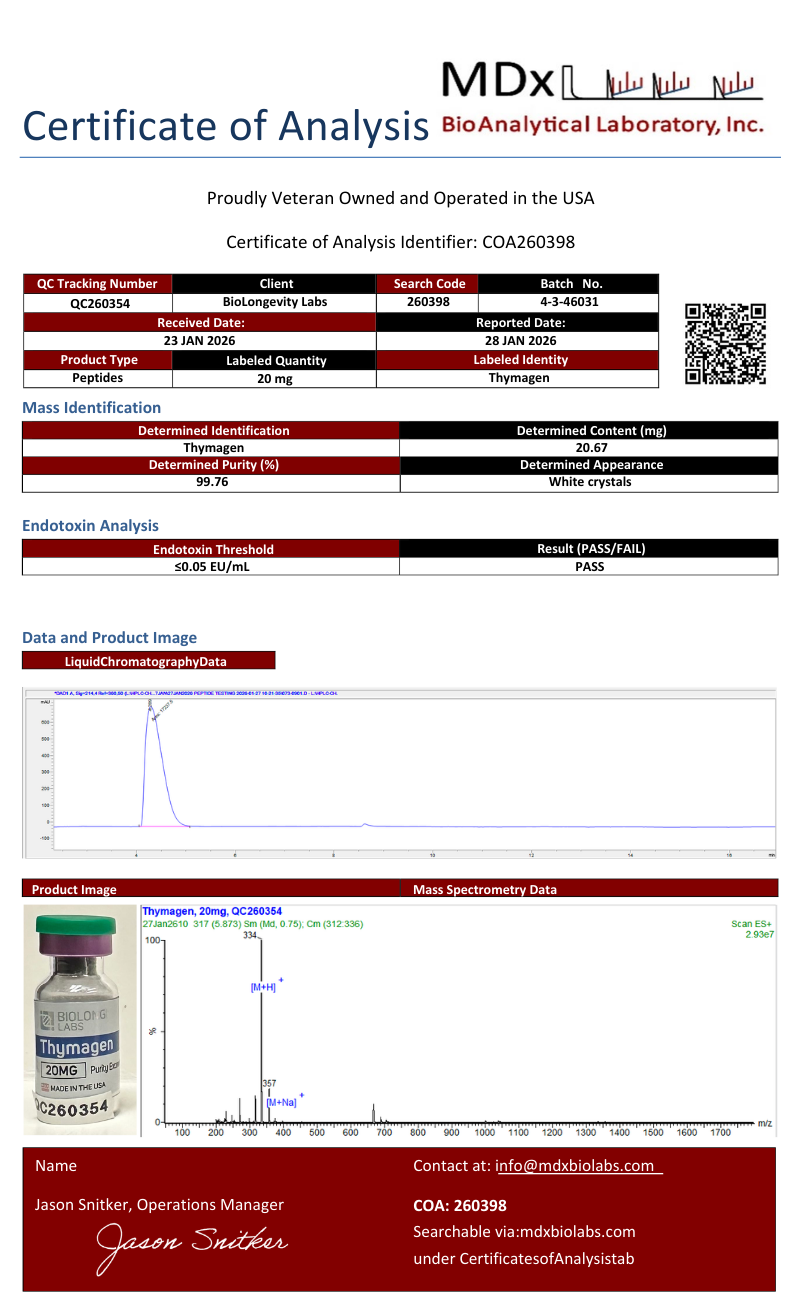
Each research vial is manufactured to rigorous quality standards and undergoes analytical testing to ensure purity, identity, and consistency for reproducible laboratory results.
Thymagen Peptide Dosage
Research protocols for Thymagen (Thymogen) typically employ subcutaneous administration with doses ranging from 10-100 mcg per injection, administered 1-3 times weekly depending on the specific research objectives. The peptide’s short half-life of approximately 2-4 hours necessitates frequent dosing to maintain therapeutic plasma concentrations, with peak serum levels occurring 30-60 minutes post-injection.
Clinical research has utilized various dosing regimens, with most studies employing a starting dose of 10-20 mcg administered subcutaneously three times weekly for initial immune system assessment. Higher doses of 50-100 mcg have been investigated in studies examining more pronounced immunomodulatory effects, though these protocols require careful monitoring of T-cell populations and cytokine profiles. The bioavailability of subcutaneously administered Thymagen (Thymogen) approaches 85-90%, making this route preferable to oral administration which shows significantly reduced absorption.
| Indication | Starting Dose | Maintenance Dose | Max Dose | Frequency | Source |
|---|---|---|---|---|---|
| T-cell research | 10-20 mcg | 20-50 mcg | 100 mcg | 3x weekly | Research protocols |
| Immune modulation study | 20-30 mcg | 30-75 mcg | 100 mcg | 2-3x weekly | Preclinical studies |
| Nucleic acid synthesis research | 15-25 mcg | 25-60 mcg | 80 mcg | 3x weekly | Laboratory protocols |