Description
Cardiogen Peptide Product Description
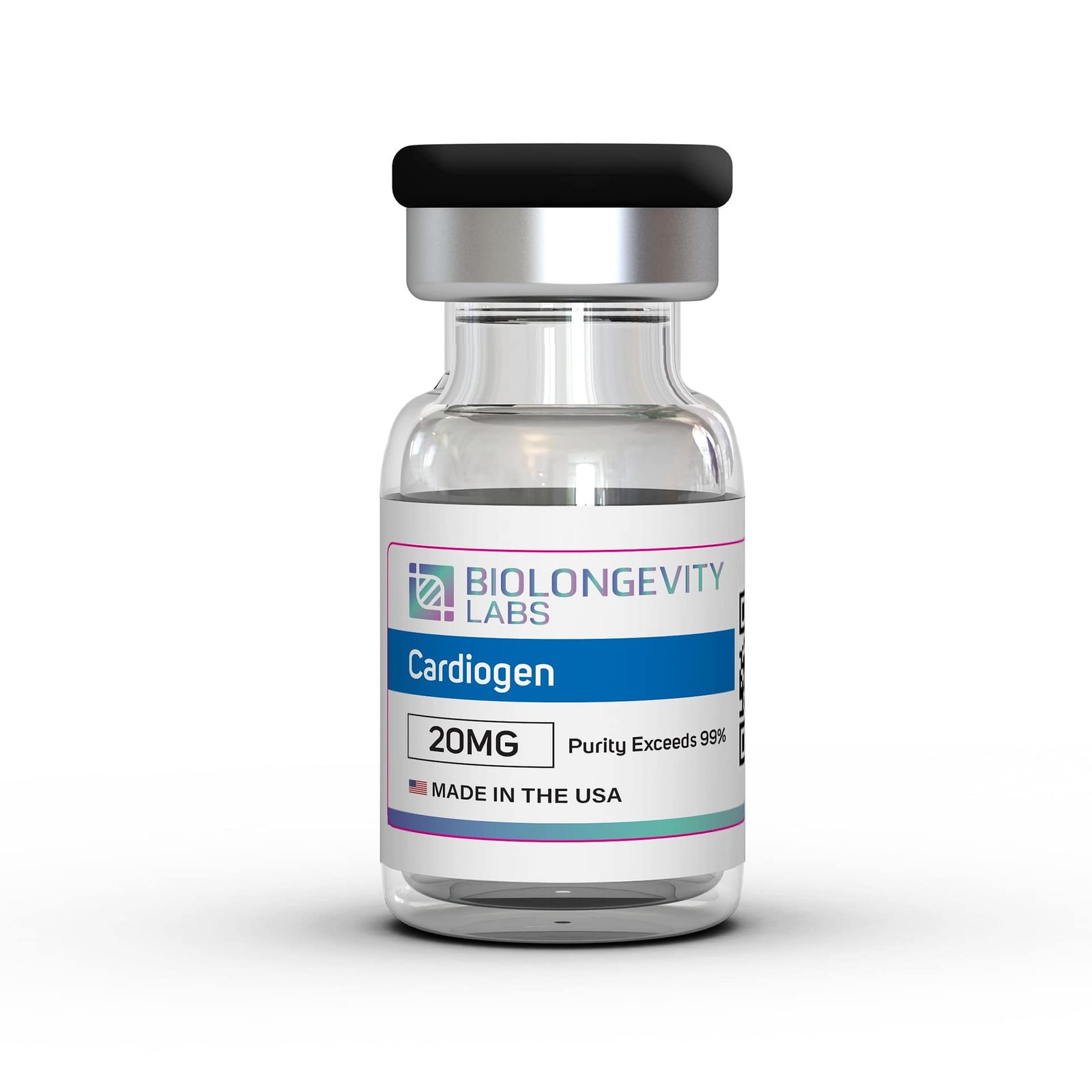
Cardiogen peptide is a synthetic tetrapeptide with the amino acid sequence Ala-Glu-Asp-Arg (AEDR). As a member of the Khavinson peptide family, it has attracted significant scientific interest for its potential role in regulating cardiovascular tissue function, cellular regeneration, and gene expression. Research suggests that Cardiogen interacts with cardiomyocytes and fibroblasts, influencing cellular pathways involved in tissue repair, apoptosis, inflammation, and scar formation.
Unlike conventional therapeutic compounds, Cardiogen is being investigated for its ability to support normal cellular signaling within cardiac tissue while promoting regenerative processes at the molecular level. Ongoing laboratory studies continue to explore its applications in cardiovascular biology, tissue regeneration, and age-related cellular dysfunction.
Cardiogen Peptide Benefits
Current preclinical research suggests Cardiogen may support investigations involving:
- Cardiomyocyte regeneration and proliferation
- Healthy cardiac tissue remodeling
- Reduction of fibroblast-mediated scar tissue formation
- Cellular protection following ischemic injury
- Regulation of apoptosis through p53 signaling pathways
- Improved mitochondrial integrity and cellular energy production
- Enhanced tissue repair after myocardial damage
- Age-related cardiovascular research
- Fibroblast differentiation and cellular communication
- Experimental oncology research involving tumor cell apoptosis
The Cardiogen Peptide Effects
Experimental studies indicate Cardiogen may:
- Promote proliferation of healthy cardiac muscle cells
- Reduce cardiomyocyte apoptosis following tissue injury
- Suppress excessive fibroblast activity associated with fibrosis
- Support myocardial repair and regeneration
- Preserve mitochondrial function during oxidative stress
- Improve cellular metabolism within cardiac tissue
- Reduce ischemia-induced tissue damage
- Maintain structural proteins involved in cellular integrity
- Enhance expression of proteins responsible for tissue regeneration
- Stimulate programmed cell death in selected tumor models
Cardiogen Peptide Dosage
Research Use Only
Current experimental protocols commonly investigate:
- Dose: 5–10 mg per week
- Administration: Subcutaneous injection
- Frequency: Divided into 2–3 injections per week
- Research Cycle: 4–8 weeks
Dosage protocols used in research vary considerably depending on the experimental model, study objectives, and route of administration. There are currently no standardized dosing guidelines established for human therapeutic use.
Cardiogen Peptide Specifications
| Property | Value |
|---|---|
| Peptide Sequence | Ala-Glu-Asp-Arg (AEDR) |
| Molecular Formula | C18H31N7O9 |
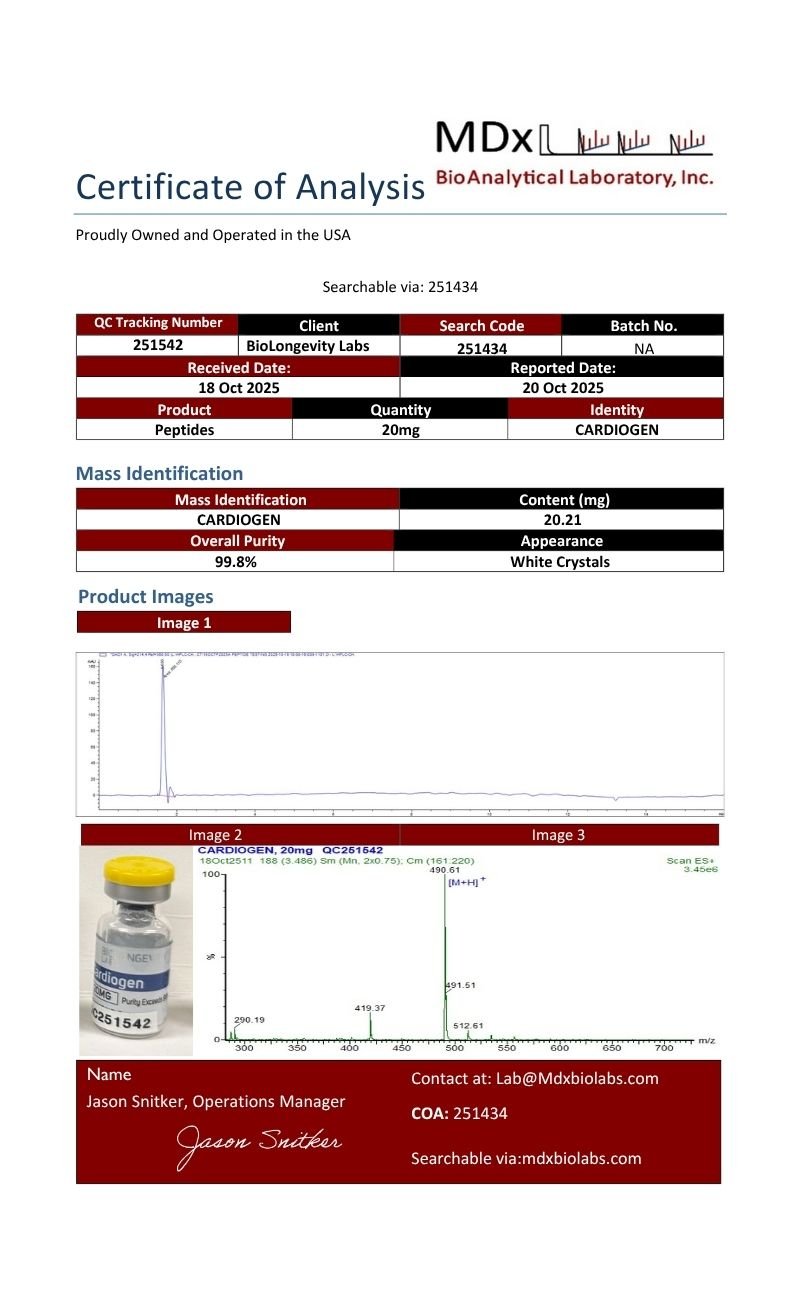
| Molecular Weight | 489.5 g/mol |
| Synonyms | Cardiogen, AEDR Peptide, SCHEMBL3194515 |