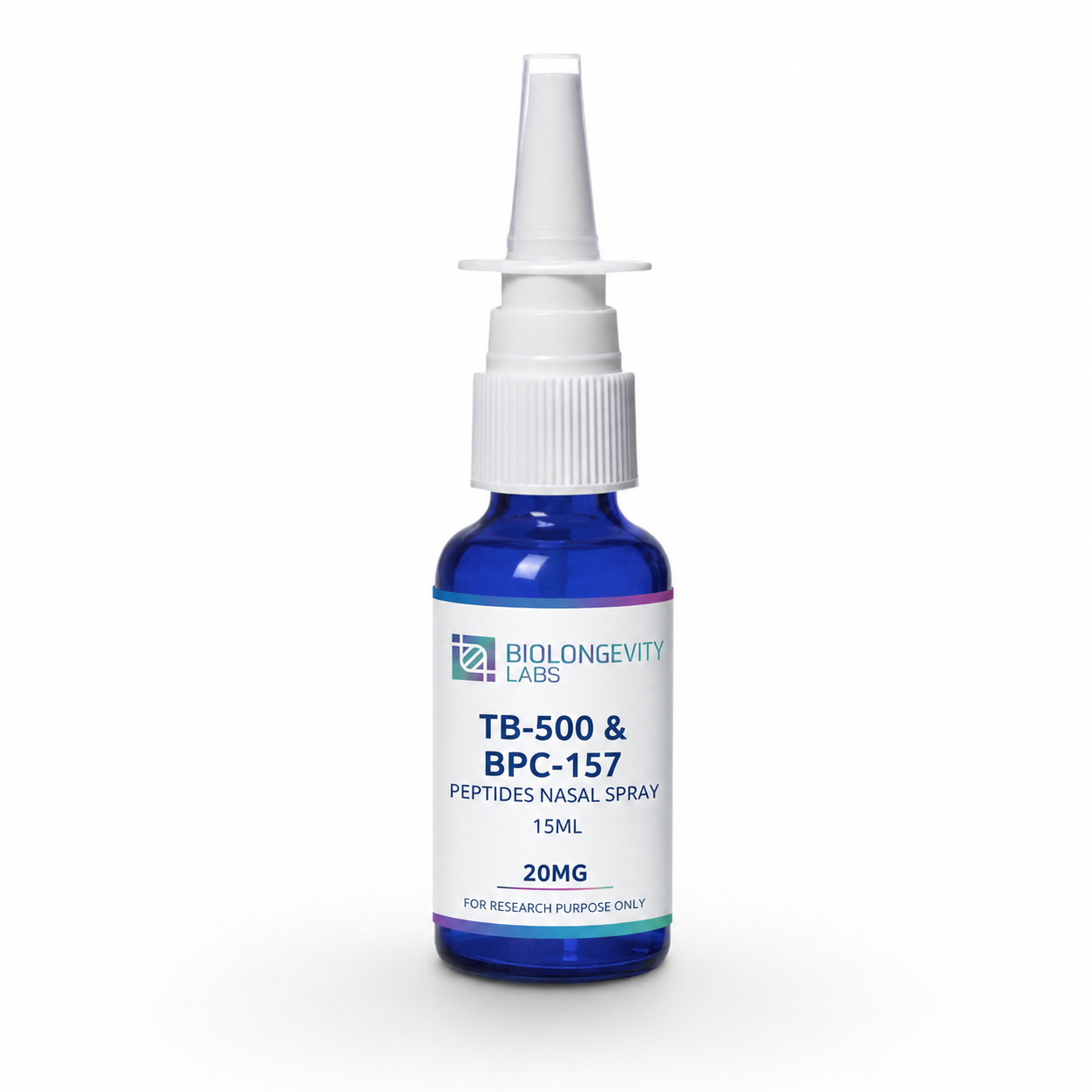
Description
Premium BPC-157 TB-500 Nasal Spray for Research Applications
BPC-157 TB-500 Nasal Spray is a research-grade peptide formulation developed for laboratory investigations involving tissue regeneration, inflammation signaling, neurobiology, and cellular repair pathways. Combining BPC-157 (Body Protection Compound-157) with TB-500 (Thymosin Beta-4 Fragment), this nasal delivery system provides researchers with a convenient, non-invasive method for studying peptide absorption and biological activity in preclinical models.
Each bottle is manufactured using high-purity research materials and produced under strict quality standards to ensure consistency, stability, and reproducibility across laboratory studies. The formulation is intended exclusively for research purposes and is not for human or veterinary use.
What Is BPC-157 TB-500 Nasal Spray?
BPC-157 TB-500 Nasal Spray combines two extensively studied research peptides into a single intranasal research formulation.
BPC-157 is a synthetic pentadecapeptide investigated for its role in cytoprotective signaling, angiogenesis, collagen synthesis, nitric oxide regulation, and tissue repair mechanisms.
TB-500 is a synthetic fragment of Thymosin Beta-4 that has been widely researched for its involvement in cell migration, actin regulation, angiogenesis, wound healing, and tissue remodeling pathways.
Together, these peptides allow researchers to investigate complementary biological mechanisms associated with tissue regeneration, inflammatory modulation, extracellular matrix remodeling, vascular biology, and cellular recovery.
BPC-157 TB-500 Nasal Spray Benefits
Researchers utilize BPC-157 TB-500 Nasal Spray to investigate multiple biological pathways, including:
- Cellular repair and tissue regeneration mechanisms
- Angiogenesis and blood vessel development
- Collagen synthesis and extracellular matrix remodeling
- Nitric oxide signaling pathways
- Cell migration and cytoskeletal organization
- Inflammatory cytokine regulation
- Soft tissue and connective tissue research
- Gastrointestinal cellular protection studies
- Neuroprotective and neuroregenerative pathways
- Musculoskeletal recovery models
- Oxidative stress response
- Wound healing biology
BPC-157 TB-500 Nasal Spray Effects
Laboratory investigations suggest the combined peptide formulation may assist researchers studying:
Tissue Repair
BPC-157 activates signaling pathways involved in fibroblast migration, collagen production, and cellular regeneration, while TB-500 promotes cell movement and tissue remodeling through actin-binding mechanisms.
Angiogenesis
Both peptides have demonstrated activity in laboratory models examining vascular endothelial cell migration, capillary formation, and blood vessel regeneration.
Inflammatory Regulation
Research has shown both compounds influence inflammatory signaling pathways, including modulation of cytokine production and NF-κB-related mechanisms involved in tissue recovery.
Connective Tissue Research
The combination is frequently investigated in experimental models involving tendon, ligament, muscle, cartilage, and connective tissue regeneration.
Neurobiology
Intranasal peptide delivery is commonly explored in laboratory settings for studying central nervous system signaling, neuronal repair, neuroinflammation, and neuroprotective mechanisms.
Oxidative Stress
Studies continue to examine how both peptides influence oxidative stress markers, mitochondrial function, and cellular survival under experimental stress conditions.
Why Researchers Choose BPC-157 TB-500 Nasal Spray
- Research-grade peptide formulation
- High-purity ingredients
- Convenient intranasal research delivery
- Designed for reproducible laboratory studies
- Manufactured under strict quality standards
- Batch-tested for identity and purity
- Stable formulation for research use
- Suitable for in vitro and preclinical investigations
Applications in Scientific Research
BPC-157 TB-500 Nasal Spray is commonly investigated in research involving:
- Regenerative medicine
- Tissue engineering
- Musculoskeletal biology
- Neuroscience
- Vascular biology
- Gastrointestinal research
- Cellular signaling
- Peptide pharmacology
- Inflammation research
- Aging and longevity research
- Sports medicine research models
Storage
Store refrigerated between 2–8°C before use. Protect from excessive heat, moisture, and direct light. Follow laboratory storage protocols after opening.