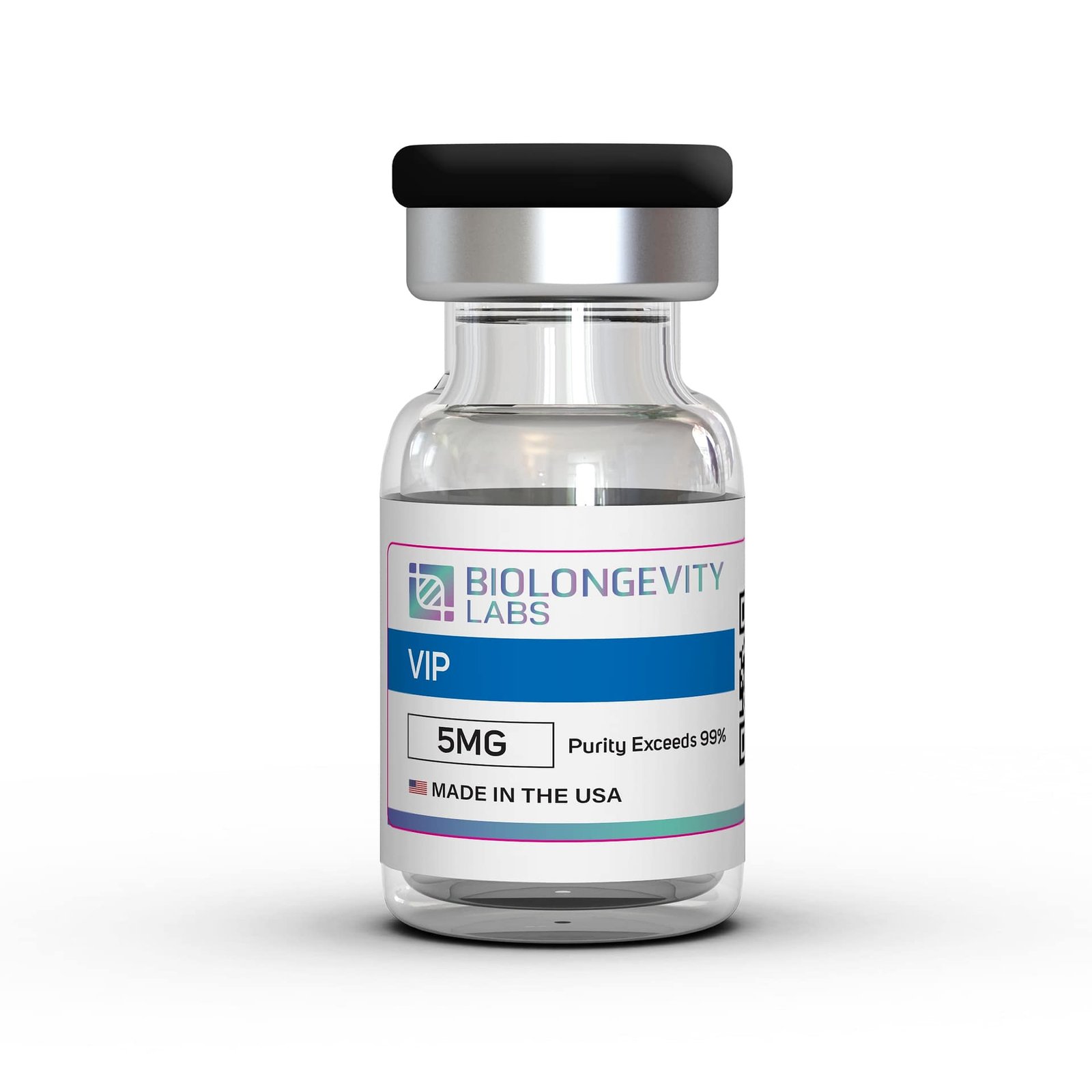
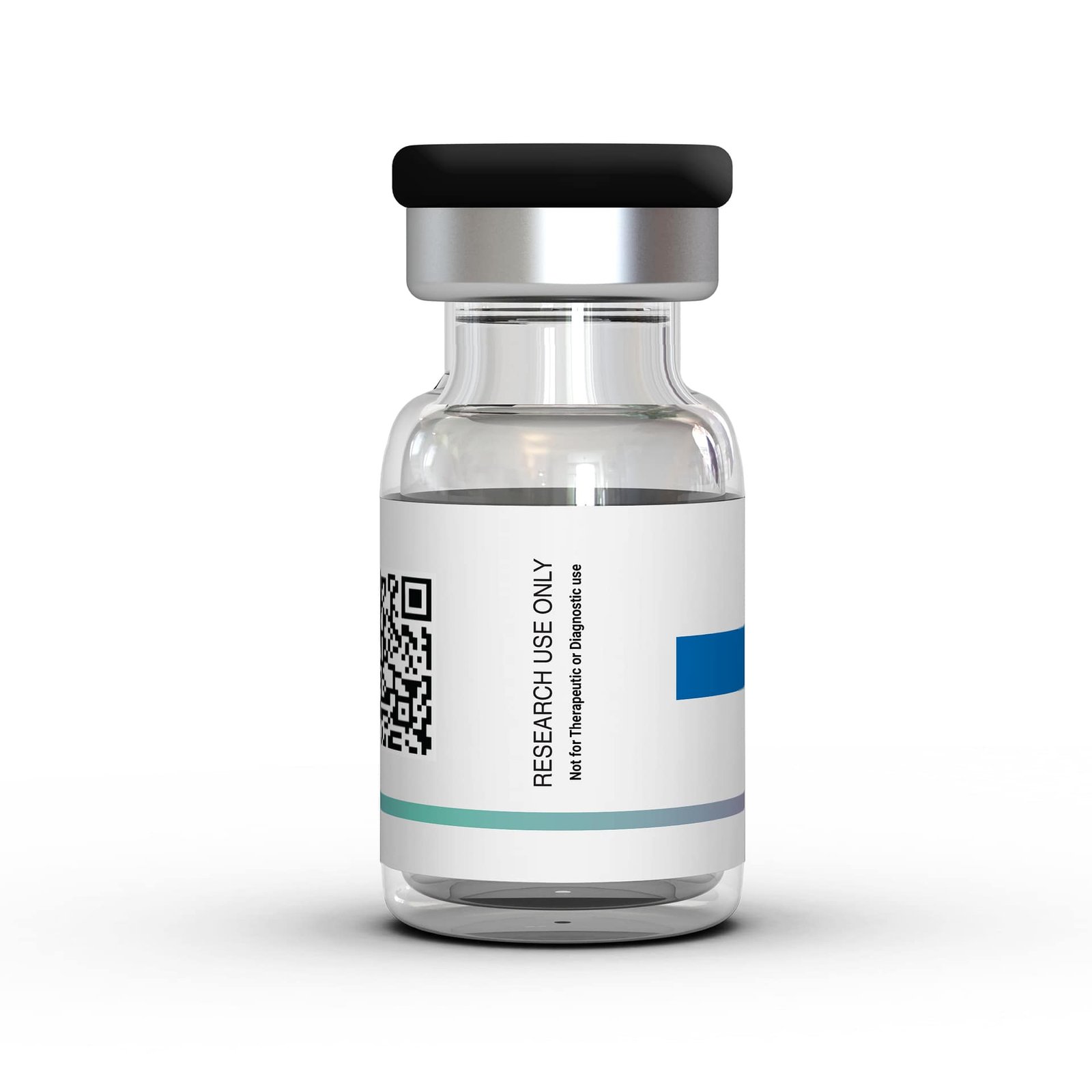
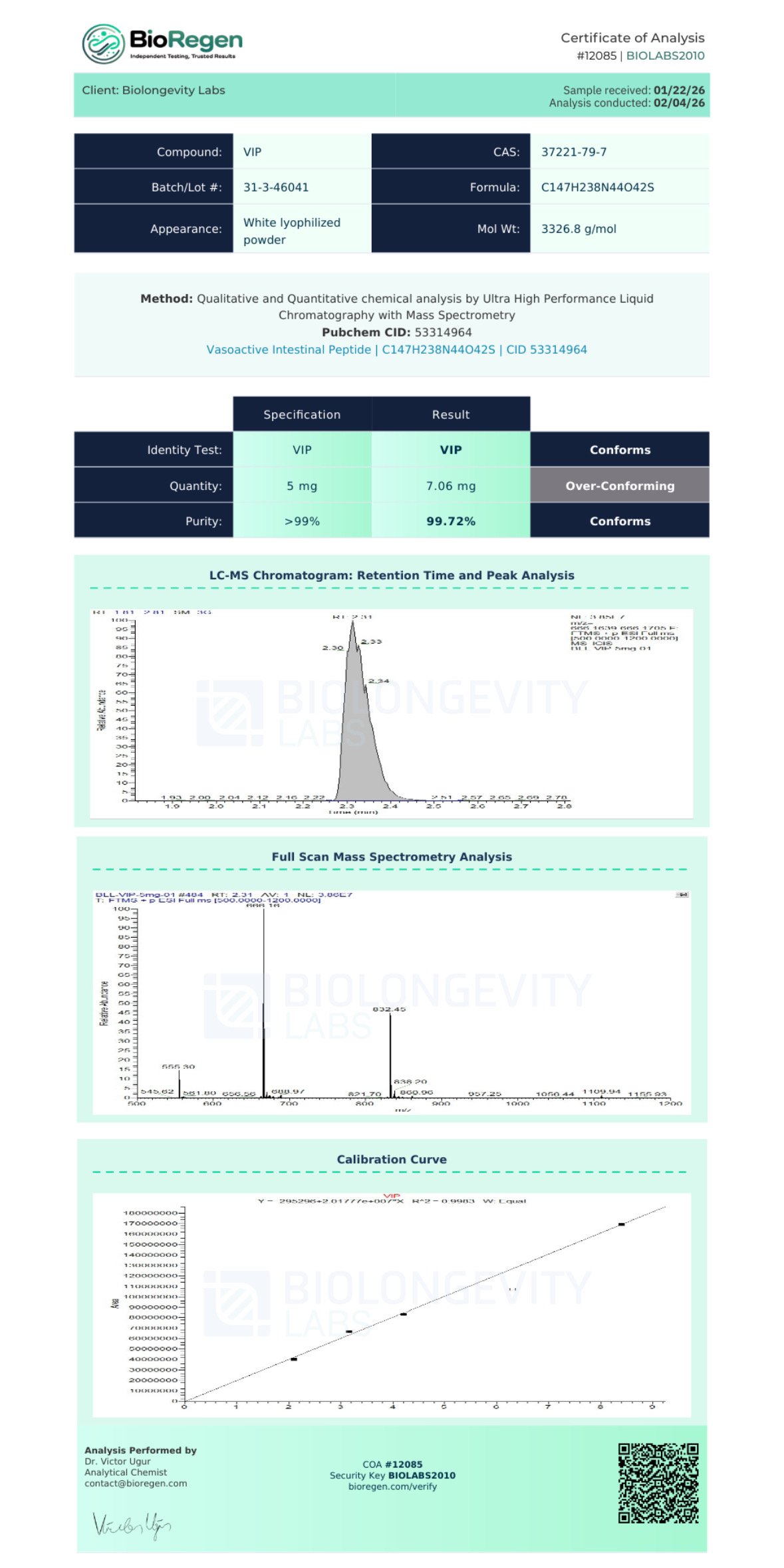
Description
Vasoactive Intestinal Peptide (VIP) – Premium Research Peptide
Vasoactive Intestinal Peptide (VIP) is a naturally occurring 28-amino acid neuropeptide widely distributed throughout the central nervous system, peripheral nervous system, gastrointestinal tract, lungs, pancreas, and immune tissues. As an endogenous signaling peptide, VIP interacts primarily with the VPAC1, VPAC2, and PAC1 receptors, activating intracellular cAMP signaling pathways that regulate numerous physiological processes.
Due to its broad biological activity, VIP has become an important research compound in studies involving neurobiology, immunology, cardiovascular physiology, pulmonary science, gastrointestinal function, and cellular signaling. Laboratory investigations continue to examine its role in regulating inflammation, smooth muscle relaxation, vasodilation, epithelial barrier integrity, neurotransmission, and endocrine signaling.
Manufactured to strict research-grade standards, our lyophilized VIP peptide provides exceptional purity and consistency for laboratory applications. This product is intended strictly for research purposes and is not intended for human or veterinary use.
What is Vasoactive Intestinal Peptide?
VIP is an endogenous peptide hormone consisting of 28 amino acids belonging to the secretin/glucagon peptide family. Although initially discovered in intestinal tissue, researchers now recognize VIP as an important neurotransmitter and neuromodulator throughout multiple organ systems.
VIP produces its biological activity by binding to VPAC receptors located throughout the body. Activation of these receptors stimulates adenylate cyclase, increases intracellular cyclic AMP (cAMP), and regulates numerous downstream signaling pathways involved in immune regulation, vascular tone, glandular secretion, and neuronal communication.
Because VPAC receptors are expressed across multiple tissues—including the brain, lungs, pancreas, gastrointestinal tract, cardiovascular system, and immune cells—VIP remains one of the most extensively studied endogenous regulatory peptides.
Vasoactive Intestinal Peptide Benefits
Current laboratory studies suggest VIP may be valuable for investigating:
- Neurotransmission and neuronal signaling pathways
- Immune regulation and inflammatory cytokine modulation
- Blood-brain barrier integrity
- Gastrointestinal barrier function
- Smooth muscle relaxation mechanisms
- Vasodilation and vascular biology
- Pulmonary physiology
- Cardiovascular remodeling
- Circadian rhythm regulation
- Endocrine and secretory signaling pathways
These findings remain experimental and continue to be investigated in laboratory settings.
Vasoactive Intestinal Peptide Effects
Scientific investigations have demonstrated several biological activities associated with VIP:
Immune Regulation
VIP has demonstrated potent immunomodulatory activity by regulating cytokine production and influencing both innate and adaptive immune responses. Laboratory studies indicate VIP may suppress pro-inflammatory mediators while promoting anti-inflammatory signaling pathways.
Neurological Research
VIP functions as both a neurotransmitter and neuromodulator throughout the nervous system. Researchers continue investigating its role in neuronal survival, neuroprotection, circadian rhythm regulation, and maintenance of blood-brain barrier integrity.
Gastrointestinal Function
VIP regulates intestinal secretion, smooth muscle relaxation, epithelial barrier maintenance, and digestive physiology. Experimental models suggest it may help maintain intestinal tight junction integrity during inflammatory conditions.
Cardiovascular Studies
VIP acts as a powerful endogenous vasodilator capable of relaxing vascular smooth muscle. Research has also explored its potential influence on myocardial remodeling, vascular inflammation, and cardiac fibrosis.
Cellular Signaling
Activation of VPAC receptors stimulates cAMP-dependent intracellular signaling pathways that regulate numerous physiological processes across multiple organ systems.
Vasoactive Intestinal Peptide Dosage
For laboratory research only.
Published experimental protocols commonly investigate:
- 100–500 mcg per administration
- 1–3 administrations daily
- Research duration commonly ranges from 2–8 weeks, depending on study design.
Dosage protocols vary considerably depending on the research objective, animal model, route of administration, and experimental conditions. Researchers should always consult published scientific literature when designing study protocols.
This peptide is not intended for human consumption or therapeutic use.
Vasoactive Intestinal Peptide Information
| Property | Value |
|---|---|
| Peptide Sequence | His-Ser-Asp-Ala-Val-Phe-Thr-Asp-Asn-Tyr-Thr-Arg-Leu-Arg-Lys-Gln-Met-Ala-Val-Lys-Lys-Tyr-Leu-Asn-Ser-Ile-Leu-Asn-NH2 |
| Molecular Formula | C147H238N44O42S |
| Molecular Weight | 3325.8 g/mol |
| CAS Number | 40077-57-4 |
| PubChem CID | 53314964 |
| Synonyms | VIP, Aviptadil, Vasoactive Intestinal Polypeptide, Vasoactive Intestinal Peptide |
Research Applications
VIP continues to be investigated across numerous scientific disciplines, including:
- Neurobiology
- Immunology
- Pulmonary research
- Cardiovascular science
- Gastrointestinal physiology
- Endocrinology
- Cellular signaling
- Receptor pharmacology
- Vascular biology
Storage
Store lyophilized peptide refrigerated before reconstitution.
Following reconstitution, aliquot into single-use portions and store frozen at −20°C or below to minimize degradation caused by repeated freeze-thaw cycles.
Research Use Disclaimer
Vasoactive Intestinal Peptide (VIP) is supplied exclusively as a laboratory research chemical.
This product is not approved for human or veterinary use, therapeutic applications, diagnosis, or consumption.