Description
Thymosin Alpha-1 Peptide Product Description
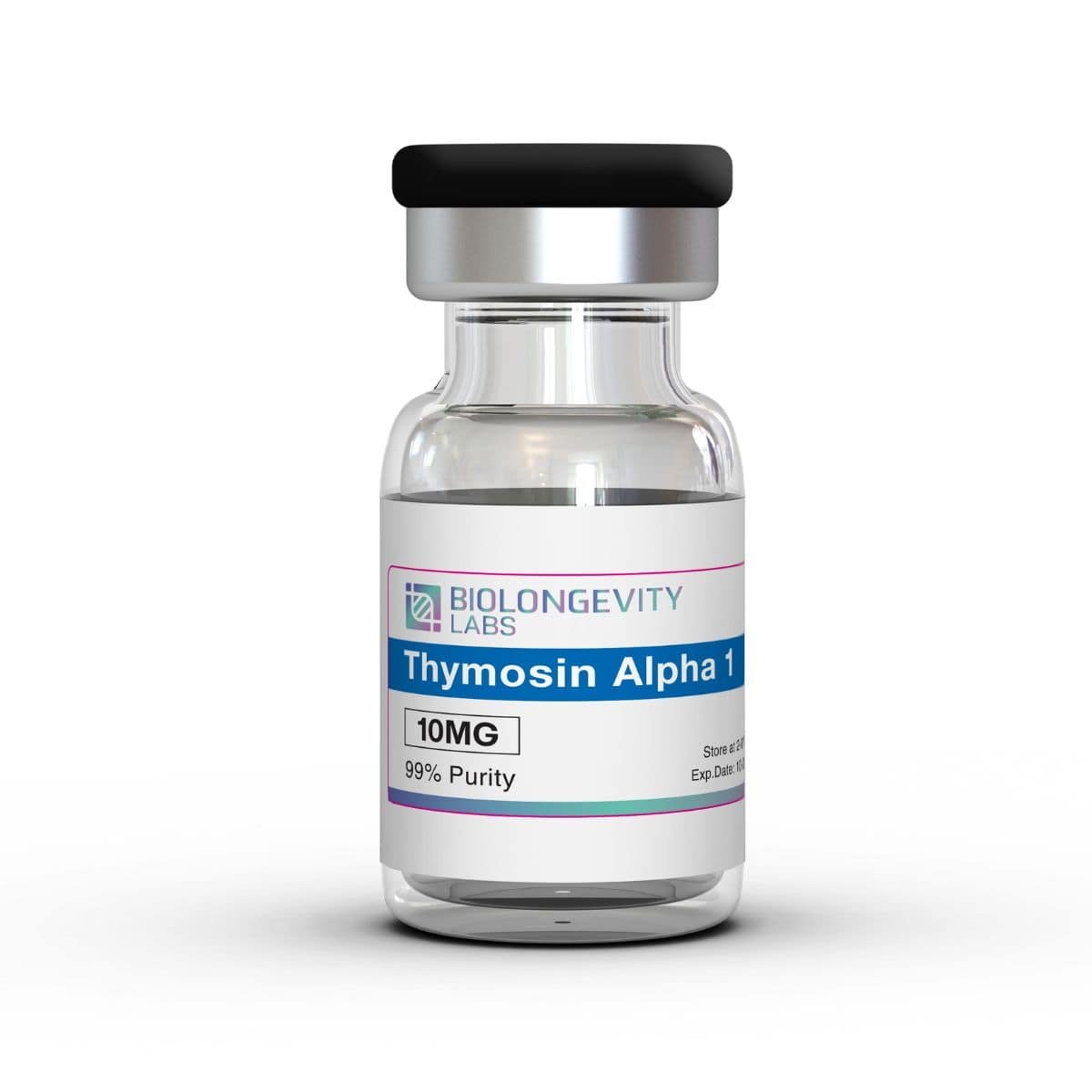
Thymosin Alpha-1 (TA1), also known as Thymalfasin, is a synthetic 28-amino acid peptide that replicates a naturally occurring peptide originally isolated from the thymus gland. It has become one of the most extensively researched immunomodulatory peptides due to its potential role in regulating both innate and adaptive immune responses.
In laboratory research, Thymosin Alpha-1 is widely investigated for its interactions with T lymphocytes, dendritic cells, natural killer (NK) cells, cytokine signaling pathways, and inflammatory mediators. Rather than directly stimulating the immune system, researchers believe TA1 helps regulate immune activity by promoting balanced immune responses during experimental studies.
Its ability to influence immune signaling has made Thymosin Alpha-1 an important research peptide in studies involving viral immunity, inflammatory pathways, oncology, vaccine response, and age-related immune decline.
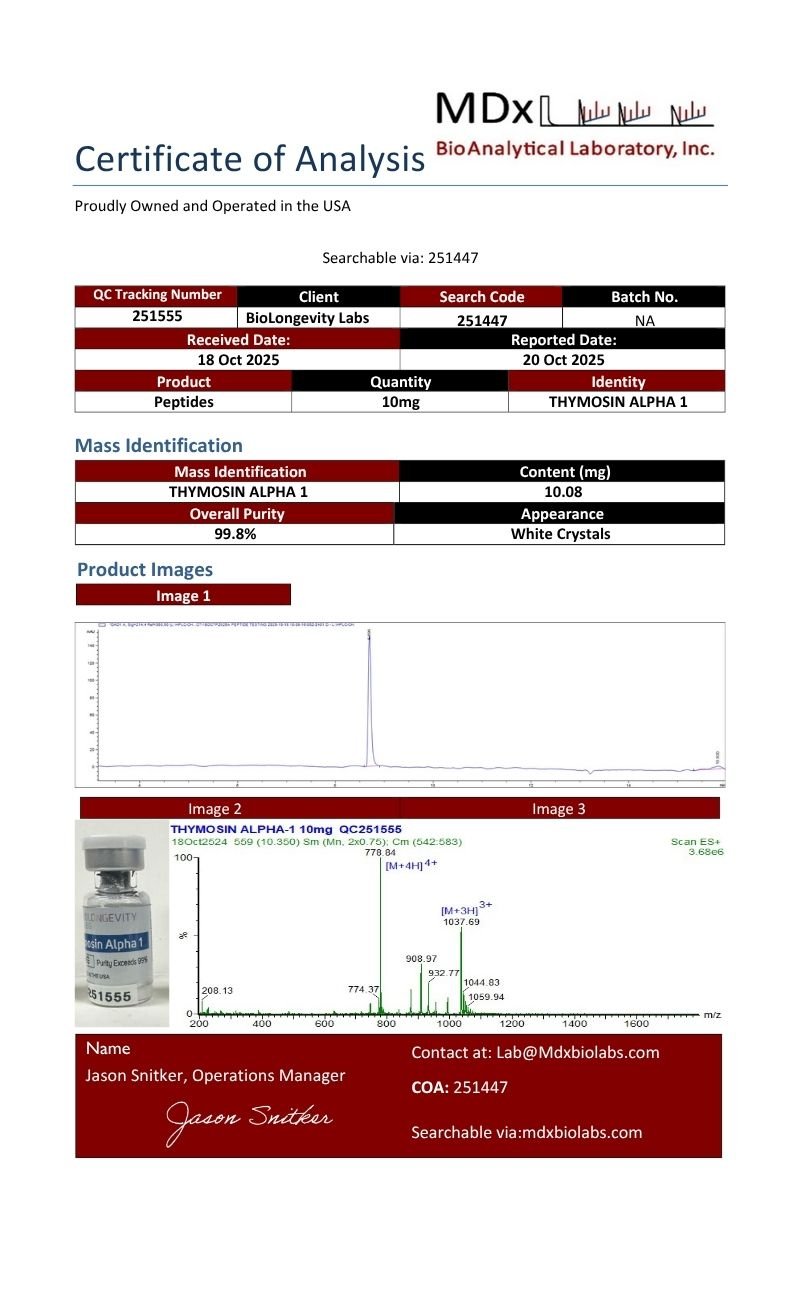
Our Thymosin Alpha-1 Peptide is manufactured using advanced solid-phase peptide synthesis and supplied as a highly purified lyophilized powder. Every batch undergoes rigorous third-party testing for identity and purity and includes a Certificate of Analysis (COA), ensuring consistency for laboratory research applications.
Thymosin Alpha-1 Effects
Current laboratory research suggests Thymosin Alpha-1 may influence several important biological pathways, including:
- May support normal T-cell development and maturation
- May enhance natural killer (NK) cell activity
- May regulate innate and adaptive immune responses
- May promote healthy cytokine signaling
- May assist research involving antiviral immune mechanisms
- May support investigations into chronic inflammation
- May influence dendritic cell maturation and immune surveillance
- May help study vaccine-induced immune responses
- May contribute to cellular defense against oxidative stress
- May support research involving immune aging and immunosenescence
- May assist investigations into autoimmune regulation
- May support studies examining immune recovery following illness or physiological stress
These potential effects are based on preclinical and clinical research and remain under scientific investigation.
Thymosin Alpha-1 Peptide Information
| Property | Value |
|---|---|
| Peptide Name | Thymosin Alpha-1 |
| Other Names | TA1, Tα1, Thymalfasin, Zadaxin |
| Peptide Sequence | Ser-Asp-Ala-Ala-Val-Asp-Thr-Ser-Ser-Glu-Ile-Thr-Thr-Lys-Asp-Leu-Lys-Glu-Lys-Lys-Glu-Val-Val-Glu-Glu-Ala-Glu-Asn |
| Molecular Formula | C129H215N33O55 |
| Molecular Weight | 3108.31 g/mol |
| CAS Number | 62304-98-7 |
| PubChem CID | 16130571 |
| Form | Lyophilized Powder |
Research Applications
Thymosin Alpha-1 has become a valuable research compound across multiple scientific disciplines, including:
- Immune system modulation
- Viral infection research
- Cytokine signaling pathways
- Vaccine response studies
- Cancer immunology
- Autoimmune disease research
- Sepsis and inflammatory response
- Respiratory immune function
- Healthy aging and immune senescence
- Cellular defense mechanisms
Its broad range of biological interactions continues to make TA1 one of the most widely investigated peptides in immunology research.
Thymosin Alpha-1 Peptide Benefits
Current scientific research suggests Thymosin Alpha-1 may influence several immune and cellular pathways. While research is ongoing, laboratory studies have investigated its potential in the following areas:
- May support healthy immune system regulation
- May promote T-cell maturation and activation
- May enhance natural killer (NK) cell function
- May improve communication between immune cells through cytokine signaling
- May support innate and adaptive immune responses
- May assist research involving antiviral defense mechanisms
- May help regulate inflammatory responses
- May support vaccine-response and immune memory studies
- May promote dendritic cell maturation and antigen presentation
- May support investigations into immune recovery following physiological stress
- May assist research involving chronic inflammation
- May contribute to healthy cellular defense against oxidative stress
- May support studies examining immune aging (immunosenescence)
- May aid research into autoimmune immune-balance mechanisms
- May support investigations into respiratory immune health
- May assist oncology research involving cancer immunotherapy and immune surveillance
- May support studies involving sepsis and immune dysfunction
- May contribute to maintaining immune homeostasis during chronic illness research
Thymosin Alpha-1 (TA1) Peptide Dosage
Research protocols for Thymosin Alpha-1 (TA1) vary depending on the area of investigation and study design. The following represents commonly referenced research protocols and is provided for informational and educational purposes only.
General Research Dosage
- Typical dosage: 1.5–1.6 mg per administration
- Administration: Subcutaneous (SubQ) injection
- Frequency: Two to three times per week
- Cycle length: Commonly 2 weeks to 3 months, with longer research protocols used in certain immune-related studies
Research Administration Guidelines
- Administer via subcutaneous injection using an insulin syringe.
- Common injection sites include the abdomen, outer thigh, or upper arm.
- Rotate injection sites regularly to reduce localized irritation.
- Reconstitute the lyophilized peptide with bacteriostatic water before use.
- Store refrigerated (2–8°C) after reconstitution and follow proper laboratory handling procedures.
Research Protocols by Study Focus
General Immune Function Research
- Dose: 1.5–1.6 mg
- Frequency: Twice weekly
- Duration: 4–12 weeks
Viral Immunity Research
- Dose: 1.6 mg
- Frequency: Twice weekly
- Duration: 2–12 weeks, depending on the research protocol
Long-Term Immune Modulation Research
- Dose: 1.6 mg
- Frequency: Twice weekly
- Duration: 3–6 months or longer in extended research settings