Description
Retatrutide Peptide Product Description
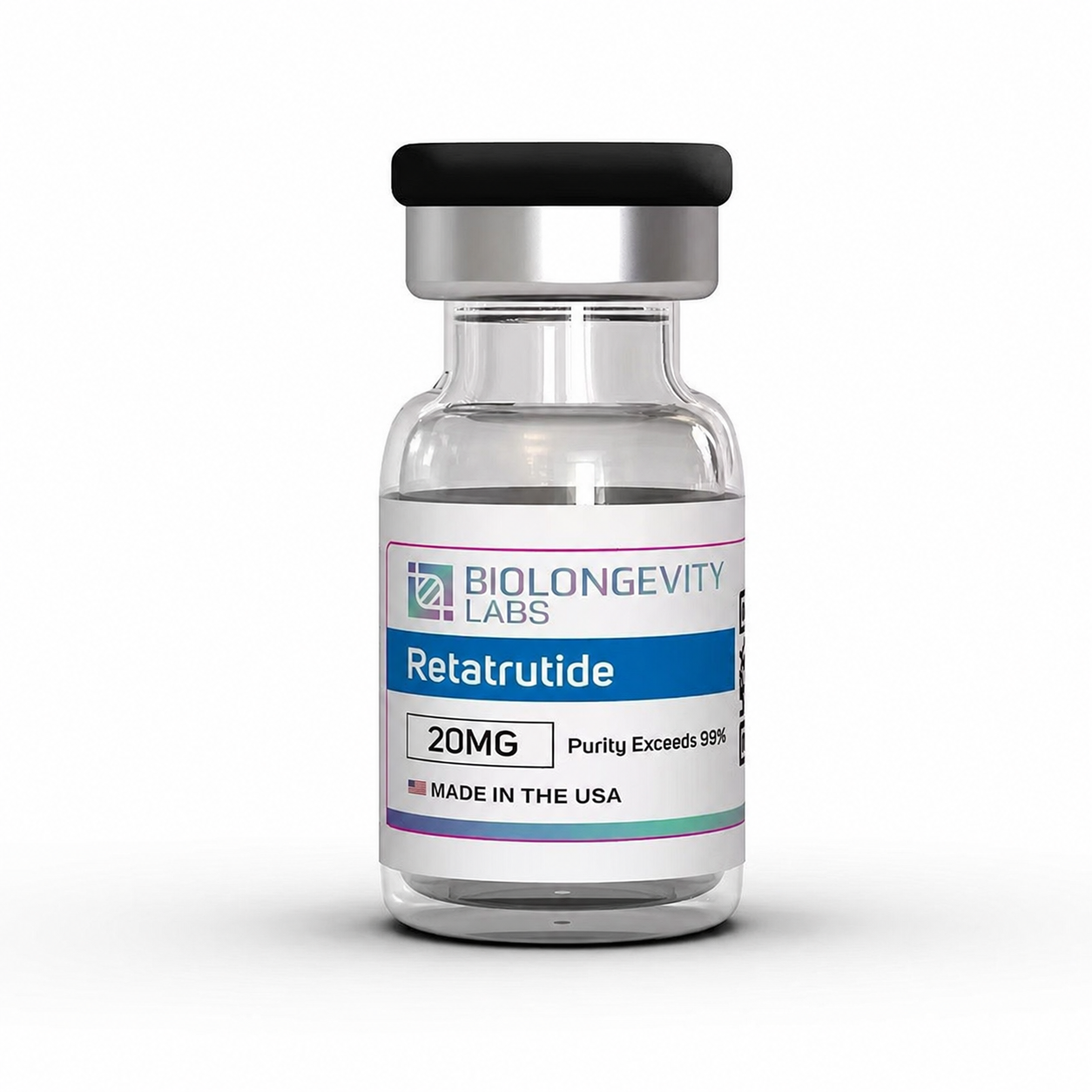
Retatrutide peptide (LY3437943) is an investigational synthetic peptide designed to activate three key metabolic hormone receptors simultaneously: glucagon-like peptide-1 (GLP-1), glucose-dependent insulinotropic polypeptide (GIP), and glucagon (GCG). As the first triple-receptor agonist of its kind, Retatrutide has attracted significant attention in metabolic and obesity research because it targets appetite regulation, energy expenditure, and glucose metabolism through complementary biological pathways.
Unlike single-receptor GLP-1 agonists or dual GIP/GLP-1 agonists, Retatrutide combines three distinct mechanisms into a single peptide. GLP-1 receptor activation promotes satiety and slows gastric emptying, GIP receptor activation supports glucose-dependent insulin activity and metabolic regulation, while glucagon receptor activation increases energy expenditure and fat oxidation. Together, these actions create a comprehensive metabolic response that researchers continue to investigate.
Current clinical research has demonstrated promising effects on body weight reduction, waist circumference, glycemic control, liver fat reduction, and overall metabolic health. However, Retatrutide remains an investigational peptide and has not received FDA approval for general clinical use.
Retatrutide Peptide Benefits
Researchers continue to investigate Retatrutide for several potential benefits, including:
- Supports healthy weight management by reducing appetite while increasing energy expenditure.
- Promotes fat metabolism through activation of glucagon-mediated fat oxidation pathways.
- Enhances metabolic function by targeting GLP-1, GIP, and glucagon receptors simultaneously.
- Supports healthy blood glucose regulation through improved glucose-dependent insulin signaling.
- May improve insulin sensitivity, helping maintain normal metabolic balance.
- May reduce liver fat accumulation, making it an area of interest in metabolic disease research.
- Supports appetite control and satiety, which may help reduce overall calorie intake.
- May improve lipid metabolism by influencing multiple pathways involved in energy utilization.
Retatrutide Peptide Effects
Preclinical and clinical studies have reported several biological effects associated with Retatrutide, including:
- Increased activation of GLP-1, GIP, and glucagon receptors
- Reduced appetite and increased feelings of fullness
- Delayed gastric emptying
- Increased energy expenditure and thermogenesis
- Enhanced fat oxidation
- Improved glucose tolerance and insulin response
- Reduced body weight and waist circumference in clinical trials
- Improvements in liver fat content and several metabolic health markers
Because Retatrutide acts through three complementary metabolic pathways, researchers consider it one of the most promising investigational peptides for obesity and metabolic health research.
Retatrutide Peptide Dosage
- Weeks 1–4: 0.5 mg once weekly
- Weeks 5–8: 1.0 mg once weekly
- Weeks 9–12: 2.0 mg once weekly (if well tolerated)
Some people stay at a lower dose longer, especially if they’re already seeing appetite control or mild side effects.
Others may pause increases until symptoms fully settle.
There is no benefit to rushing dose increases.
How Long Should You Stay on the Starting Dose?
Most people stay on the starting dose for at least four weeks.
This timeframe allows providers to assess:
- Side effect severity
- Appetite changes
- Energy levels
- Overall tolerance
If side effects are present but mild, staying at the starting dose longer often leads to improvement without sacrificing progress.