Description
PNC-27 Peptide Product Description
PNC-27 peptide is a synthetic research peptide engineered from the HDM-2 (MDM2) binding domain of the p53 tumor suppressor protein. It was developed to investigate highly selective mechanisms of cancer cell targeting by binding to membrane-associated HDM-2, a protein expressed on the surface of many malignant cells.
Unlike conventional compounds that primarily induce apoptosis, PNC-27 has demonstrated a unique mechanism in preclinical research. Laboratory studies suggest the peptide binds to membrane-bound HDM-2, where it promotes the formation of transmembrane pores that disrupt cellular membrane integrity, leading to rapid necrotic cell death in cancer cells while exhibiting minimal activity toward healthy cells lacking membrane HDM-2 expression.
Due to this highly selective mechanism, PNC-27 has become an important research tool for scientists studying targeted oncology, membrane biology, cancer cell signaling, and novel anticancer peptide therapies.
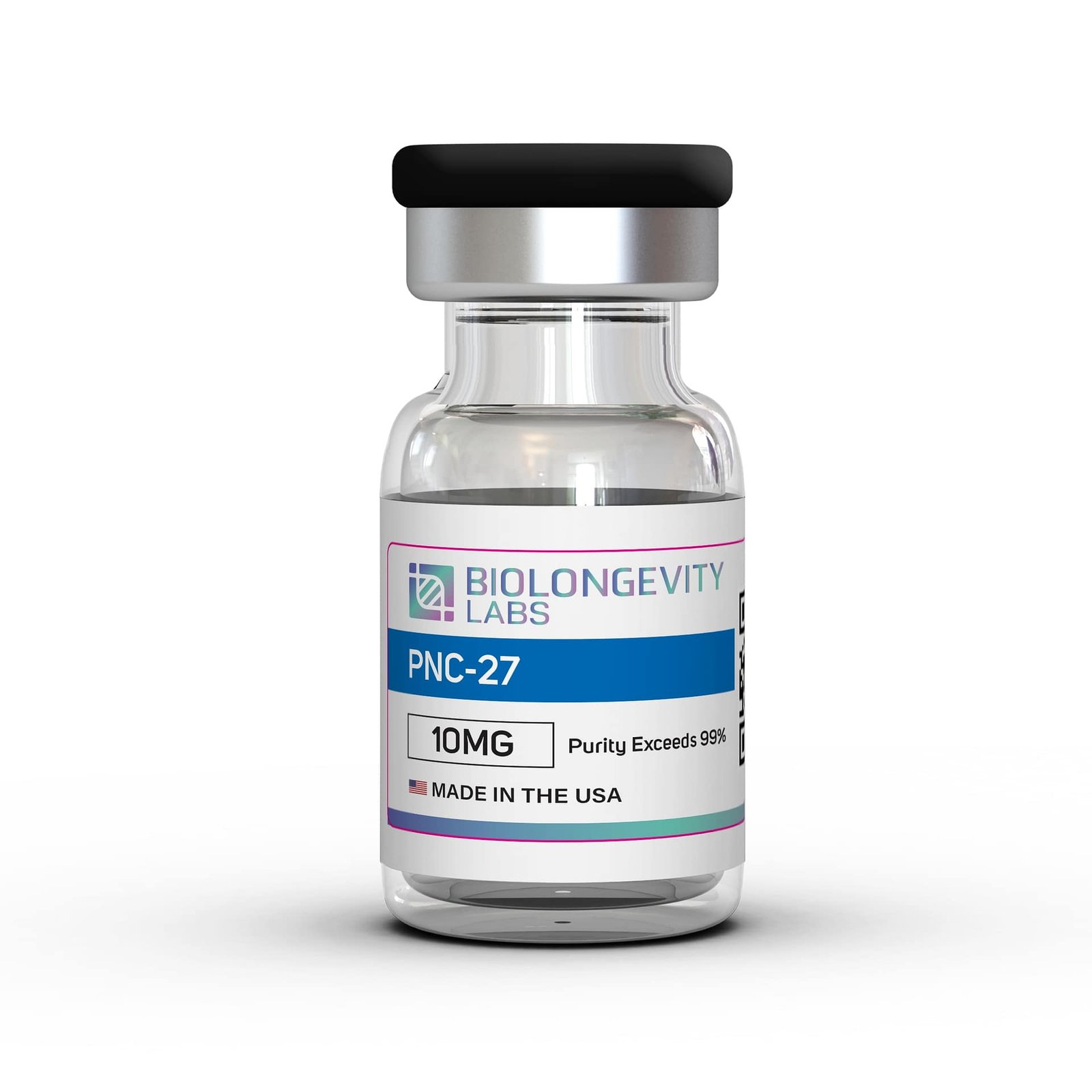
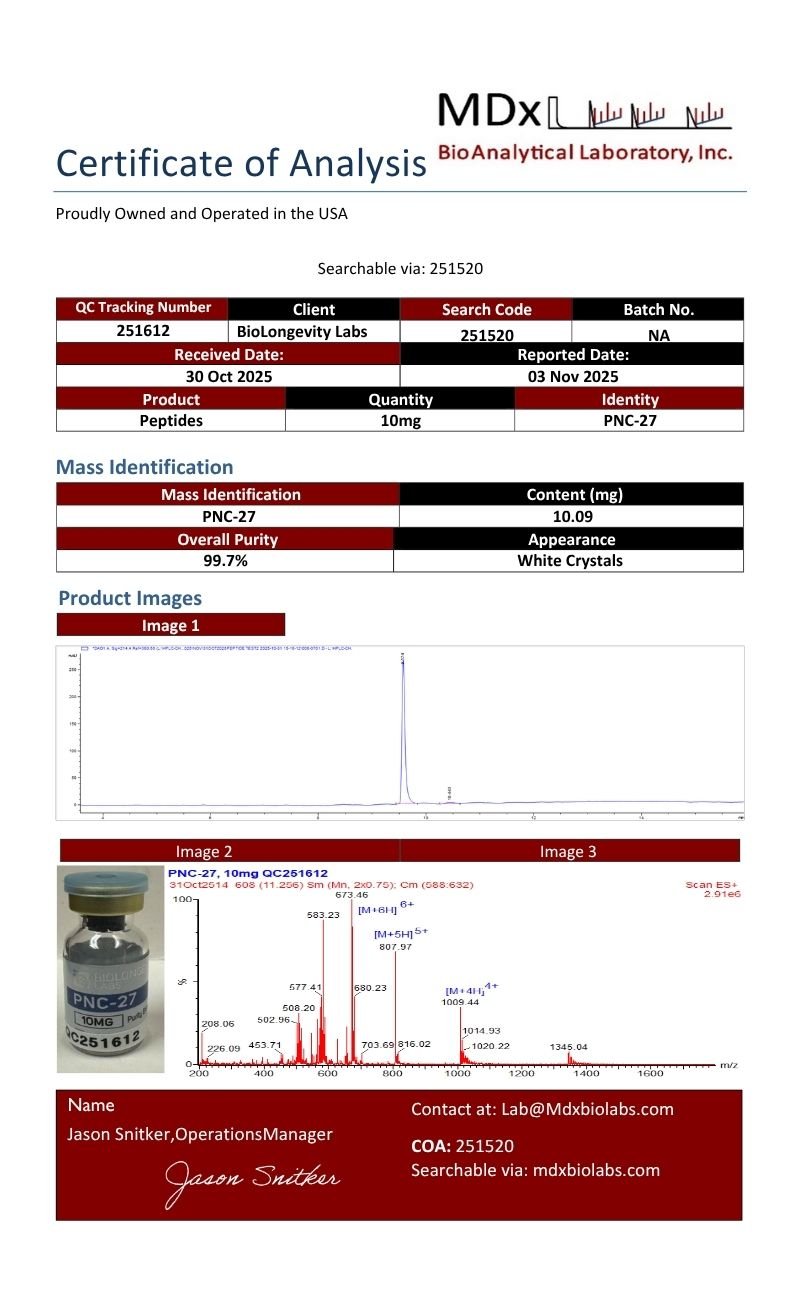
Our PNC-27 peptide is supplied as a high-purity, lyophilized powder manufactured exclusively for laboratory research. Each vial is filler-free and produced under strict quality standards to ensure purity, consistency, and stability.
PNC-27 Peptide Information
| Property | Value |
|---|---|
| Peptide Sequence | Pro-Pro-Leu-Ser-Gln-Glu-Thr-Phe-Ser-Asp-Leu-Trp-Lys-Leu-Leu-Lys-Lys-Trp-Lys-Met-Arg-Arg-Asn-Gln-Phe-Trp-Val-Lys-Val-Gln-Arg-Gly |
| Molecular Formula | C188H293N53O44S |
| Molecular Weight | 4029.2 g/mol |
| CAS Number | 1159861-00-3 |
| Synonyms | H-PPLSQETFSDLWKLLKKWKMRRNQFWVKVQRG-OH, PPLSQETFSDLWKLLKKWKMRRNQFWVKVQRG-acid, H-Pro-Pro-Leu-Ser-Gln-Glu-Thr-Phe-Ser-Asp-Leu-Trp-Lys-Leu-Leu-Lys-Lys-Trp-Lys-Met-Arg-Arg-Asn-Gln-Phe-Trp-Val-Lys-Val-Gln-Arg-Gly-OH, A6, Paralit |
PNC-27 Peptide Benefits
Current laboratory and preclinical research has investigated PNC-27 for its potential role in:
- Selective targeting of HDM-2-positive cancer cells
- Membrane pore formation research
- Tumor cell membrane disruption studies
- Oncology drug development
- Cancer cell selectivity investigations
- Chemotherapy-resistant tumor research
- Cell membrane biology
- Solid tumor laboratory models
- Hematologic cancer research
- Novel peptide-based anticancer mechanisms
The PNC-27 Peptide Effects
Experimental studies suggest PNC-27 may:
- Bind selectively to membrane-bound HDM-2 (MDM2)
- Form transmembrane pores in malignant cell membranes
- Induce rapid necrotic cell death in cancer cells
- Preserve normal cells with low membrane HDM-2 expression
- Demonstrate activity against multiple tumor cell lines
- Exhibit efficacy in chemotherapy-resistant cancer models
- Support investigations into targeted peptide therapeutics
- Provide insight into membrane-selective cytotoxic mechanisms
These findings are based on laboratory and preclinical studies. Further research is required to fully characterize the peptide’s biological activity.
PNC-27 Peptide Dosage (Research Use Only)
Suggested Research Protocol
- Weeks 1–2: 100 mcg once daily
- Weeks 3–4: 200 mcg once daily
- Weeks 5–8: 300 mcg once daily
- Weeks 9–12: 400 mcg once daily
- Weeks 13–16 (optional): 500 mcg once daily
Reconstitution
For a 30 mg vial:
- Reconstitute with 3 mL of bacteriostatic water
- Final concentration: 10 mg/mL (10,000 mcg/mL)
U-100 Insulin Syringe Measurements
At a concentration of 10 mg/mL:
| Daily Dose | Syringe Units |
|---|---|
| 100 mcg | 1 unit |
| 200 mcg | 2 units |
| 300 mcg | 3 units |
| 400 mcg | 4 units |
| 500 mcg | 5 units |
Typical Research Cycle
- Administration: Once daily
- Typical cycle length: 8–12 weeks
- Extended research cycle: Up to 16 weeks using gradual titration
Research Disclaimer: PNC-27 remains an investigational peptide with no established human clinical dosage and no FDA-approved therapeutic use. The protocol above is derived from educational and preclinical research guidance rather than human clinical trials.
Product Features
- High-purity PNC-27 peptide
- Lyophilized, filler-free formulation
- Excellent stability after proper storage
- Suitable for oncology and cell biology research
- Manufactured exclusively for laboratory research
- Ideal for studies involving HDM-2 signaling and membrane biology