Description
Kisspeptin-10 Peptide Product Description
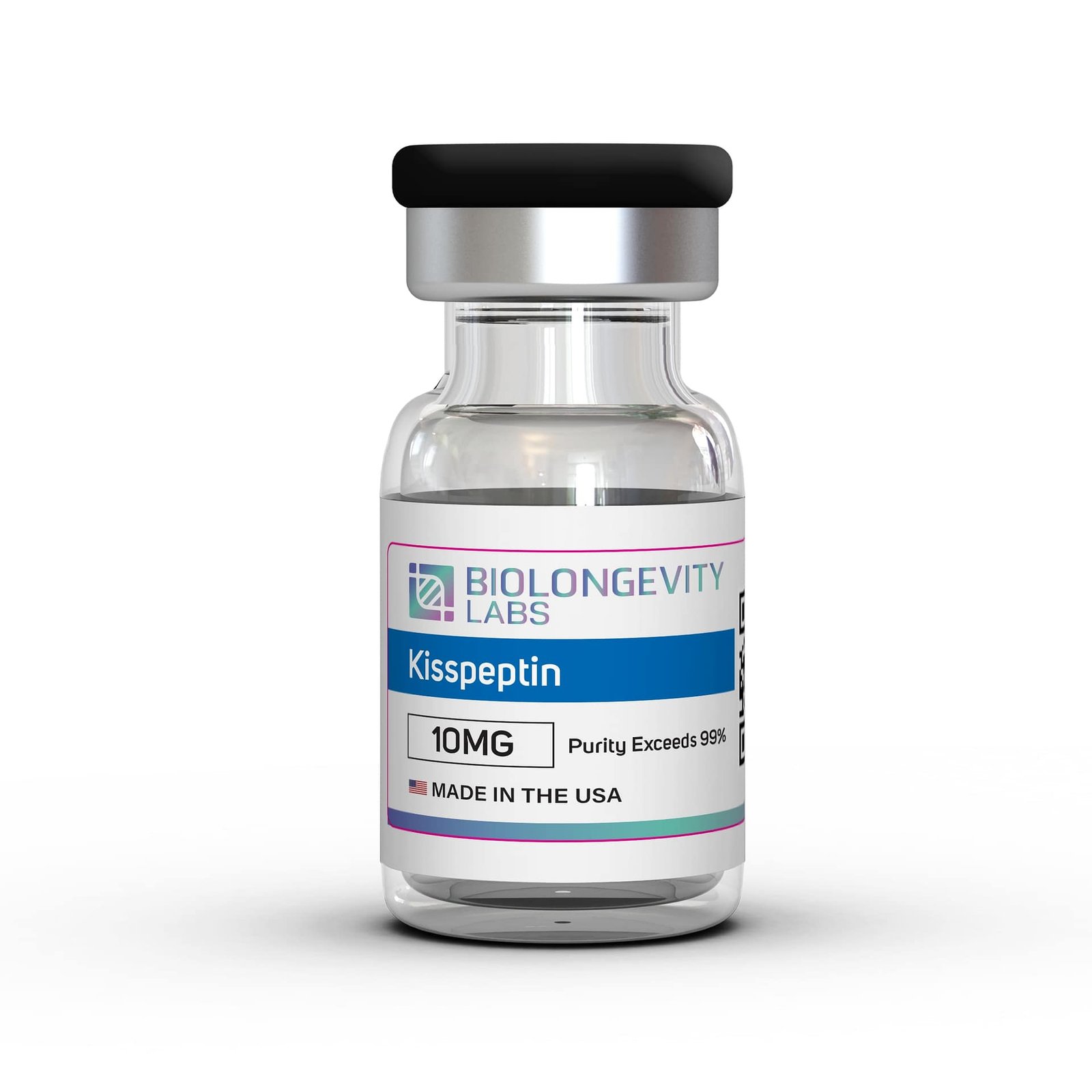
Kisspeptin-10 is a synthetic research peptide representing the biologically active C-terminal fragment of the kisspeptin family encoded by the KISS1 gene. Although it is the shortest active kisspeptin fragment, Kisspeptin-10 retains full biological activity through activation of the KISS1 receptor (GPR54), making it one of the most extensively studied peptides in reproductive endocrinology and neuroendocrine research.
Research suggests that Kisspeptin-10 plays a central role in regulating the hypothalamic-pituitary-gonadal (HPG) axis by stimulating gonadotropin-releasing hormone (GnRH), which subsequently influences luteinizing hormone (LH) and follicle-stimulating hormone (FSH) secretion. Beyond reproductive signaling, laboratory investigations have explored its involvement in neuroprotection, cardiovascular biology, oncology, metabolic regulation, and behavioral neuroscience.
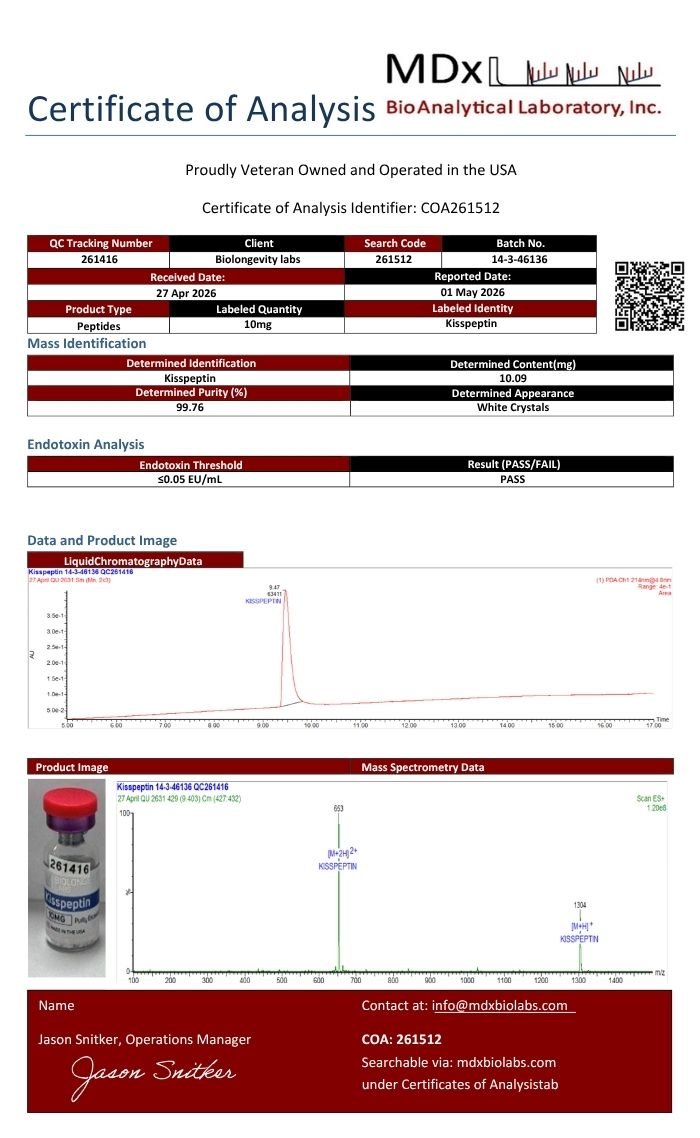
Our Kisspeptin-10 peptide is supplied as a highly purified, lyophilized powder without fillers, making it suitable for laboratory and in vitro research applications.
Kisspeptin-10 Peptide Information
| Property | Value |
|---|---|
| Peptide Sequence | Tyr-Asn-Trp-Asn-Ser-Phe-Gly-Leu-Arg-Phe-NH2 |
| Molecular Formula | C63H83N17O14 |
| Molecular Weight | 1302.5 g/mol |
| CAS Number | 374675-21-5 |
| PubChem CID | 71306396 |
| Synonyms | Kisspeptin, Protein KISS-1, Kisspeptins, Gene KISS1 protein, KISS-1, Metastin |
Kisspeptin-10 Peptide Benefits
Current laboratory research suggests Kisspeptin-10 may help investigators study:
- Regulation of GnRH, LH, and FSH secretion
- Hypothalamic-pituitary-gonadal (HPG) axis signaling
- Reproductive hormone regulation
- Fertility and reproductive biology mechanisms
- Neuroprotective cellular pathways
- Dopamine and serotonin signaling
- Cancer metastasis suppression mechanisms
- Placental development and trophoblast regulation
- Cardiovascular remodeling pathways
- Appetite and metabolic regulation
- Behavioral neuroscience and reward circuitry
- Cellular communication through KISS1/GPR54 signaling
Kisspeptin-10 Peptide Effects
Preclinical and clinical investigations have demonstrated that Kisspeptin-10 exhibits several important biological activities in research settings, including:
Reproductive Hormone Regulation
Kisspeptin-10 activates KISS1 receptors located within the hypothalamus, stimulating the release of GnRH and increasing downstream secretion of LH and FSH. These mechanisms have made the peptide an important research tool for investigating fertility, puberty, hypogonadism, and endocrine disorders.
Neuroprotective Activity
Experimental studies indicate that Kisspeptin-10 may protect neurons from oxidative stress, mitochondrial dysfunction, and protein aggregation. Researchers continue to investigate its role in neurodegenerative disease models involving α-synuclein and amyloid proteins.
Oncology Research
Originally identified through the KISS1 metastasis suppressor gene, Kisspeptin-10 has demonstrated activity in laboratory models examining cancer cell migration, tumor invasion, and metastatic signaling pathways. Ongoing research also explores radiolabeled KP-10 analogues for diagnostic imaging.
Cardiovascular Research
Studies suggest Kisspeptin-10 influences vascular signaling, extracellular matrix remodeling, and myocardial collagen production, making it an area of interest for cardiovascular biology investigations.
Metabolic and Behavioral Research
Researchers have explored Kisspeptin-10’s effects on appetite regulation, dopamine signaling, serotonin metabolism, emotional processing, reward behavior, and cognitive function through hypothalamic and limbic pathways.
Kisspeptin-10 Peptide Dosage
Research protocols commonly investigate:
- 100-500 mcg administered subcutaneously once daily
- Research cycles generally range from 2-8 weeks, depending on study objectives.
Product Features
- High-purity Kisspeptin-10 peptide
- Lyophilized powder for enhanced stability
- No fillers or unnecessary additives
- Manufactured for research applications
- Suitable for in vitro and laboratory studies
- Excellent purity and consistency
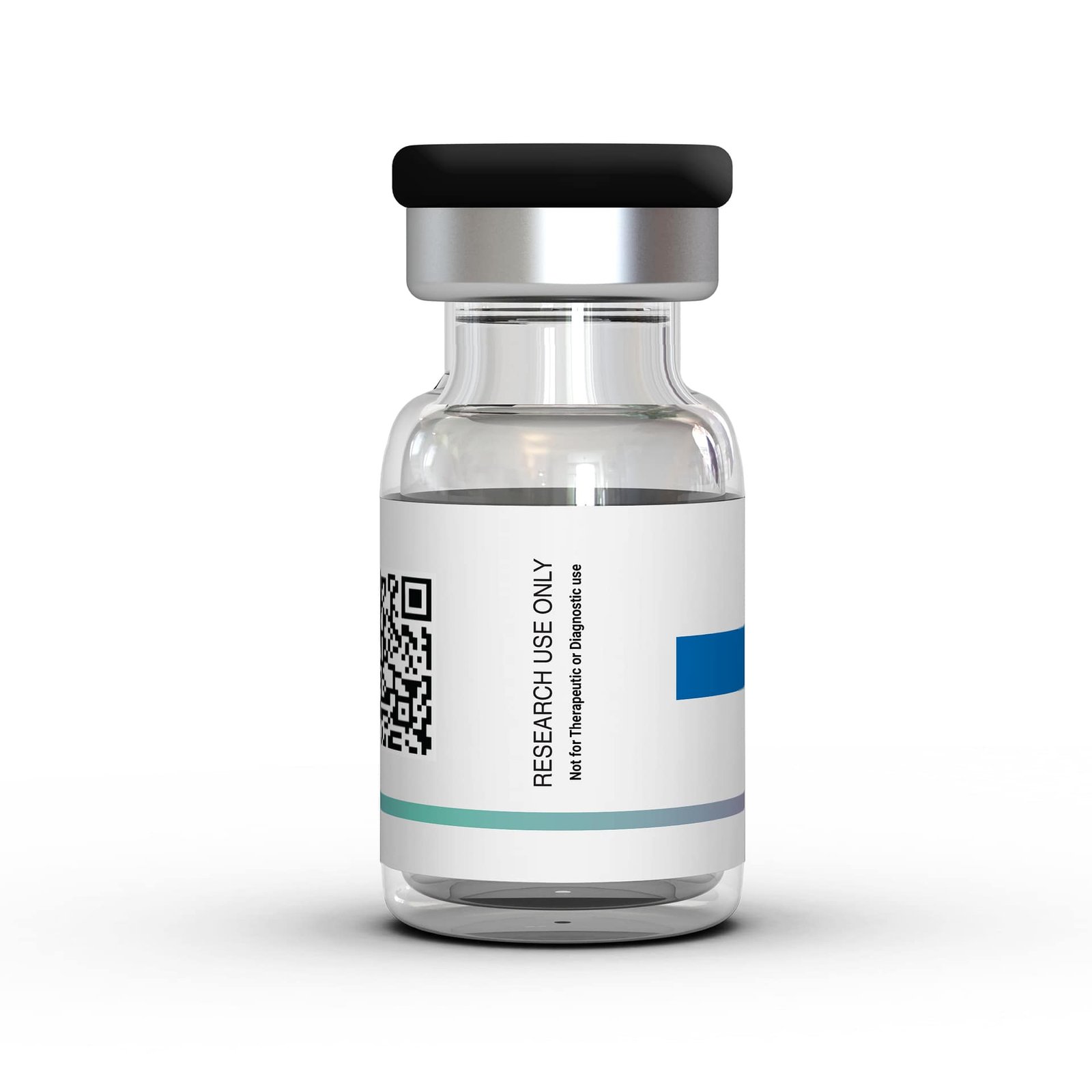
Research Use Only
This product is supplied exclusively as a research chemical for laboratory investigation. It is intended only for qualified researchers performing scientific studies. It is not intended for human consumption, therapeutic use, veterinary use, or diagnostic purposes.