Description
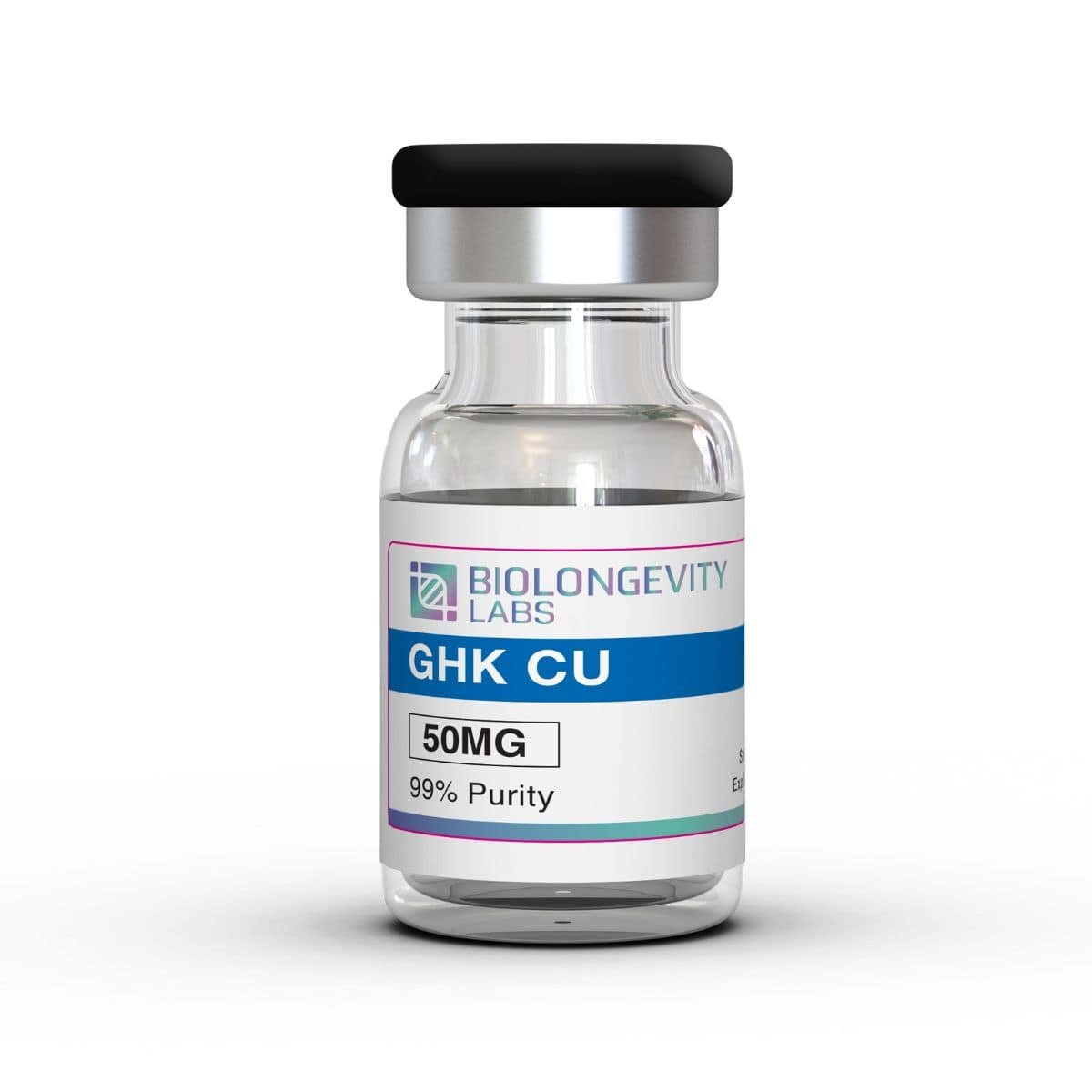
GHK-Cu (Copper) Peptide Product Description
GHK-Cu (Copper Peptide) is a naturally occurring copper-binding tripeptide composed of the amino acids glycine, histidine, and lysine (Gly-His-Lys) complexed with copper ions. First identified in human plasma, GHK-Cu naturally occurs throughout the body and is present in saliva, urine, and other tissues. Researchers have observed that endogenous GHK-Cu concentrations gradually decline with age, leading to increased scientific interest in its potential role in tissue regeneration, skin health, wound repair, and cellular maintenance.
Unlike many synthetic peptides, GHK-Cu is naturally produced by the body and functions as a signaling molecule involved in cellular communication. Research suggests it plays an important role in regulating gene expression, supporting extracellular matrix remodeling, transporting copper to damaged tissues, and coordinating tissue repair following injury.
Over the past several decades, GHK-Cu has become one of the most extensively studied regenerative peptides due to its broad biological activity across the skin, connective tissue, hair follicles, nervous system, and various organs.
How GHK-Cu Copper Peptide Works
GHK-Cu functions by binding copper (Cu2+) ions and delivering them where they are needed for numerous enzymatic reactions involved in cellular repair and regeneration. Copper serves as an essential cofactor for many enzymes responsible for collagen production, antioxidant defense, angiogenesis, and wound healing.
Research also suggests that GHK-Cu influences the expression of thousands of genes involved in inflammation, oxidative stress, tissue remodeling, stem cell activation, and cellular repair. Rather than replacing damaged tissue directly, GHK-Cu appears to activate the body’s natural regenerative mechanisms by promoting communication between cells and regulating genes associated with healthy tissue function.
GHK-Cu Copper Peptide Benefits
Scientific research has investigated GHK-Cu for numerous biological activities across multiple tissues.
Skin Rejuvenation
GHK-Cu is widely studied for its ability to support healthier skin by promoting collagen, elastin, and glycosaminoglycan production. Experimental research suggests it may improve skin firmness, elasticity, hydration, and overall texture while reducing the appearance of fine lines and age-related skin changes.
Supports Wound Healing
Research demonstrates that GHK-Cu may accelerate tissue repair by stimulating fibroblast activity, collagen deposition, angiogenesis (formation of new blood vessels), and extracellular matrix remodeling. Animal studies have reported faster wound closure compared with conventional treatments.
Collagen and Extracellular Matrix Support
Multiple studies indicate that GHK-Cu stimulates collagen synthesis while increasing the production of tissue inhibitors of metalloproteinases (TIMP-1 and TIMP-2). These actions may help maintain healthy connective tissue and support structural integrity throughout the body.
Hair Growth Support
Researchers have investigated GHK-Cu for its potential to increase hair follicle size, improve follicular health, prolong the anagen (growth) phase of the hair cycle, and support healthier hair density.
Anti-Inflammatory Activity
Preclinical studies suggest GHK-Cu may reduce inflammatory signaling by lowering pro-inflammatory cytokines such as TNF-α and IL-1β while modulating immune responses involved in tissue repair.
Antioxidant Protection
GHK-Cu has demonstrated antioxidant activity by reducing reactive oxygen species (ROS), limiting oxidative damage, supporting glutathione activity, and helping protect tissues from free radical injury.
Gene Expression and Cellular Renewal
One of the most unique characteristics of GHK-Cu is its potential influence on gene expression. Research suggests it may regulate thousands of genes associated with tissue regeneration, DNA repair, inflammation control, and healthy cellular aging.
Lung Tissue Research
Emerging research has explored GHK-Cu for its ability to reduce oxidative stress and inflammation in experimental lung injury models through modulation of the NF-κB and Nrf2 signaling pathways.
Effects of GHK-Cu ( Copper ) Peptide
Experimental studies have associated GHK-Cu with several biological effects, including:
- Supports collagen and elastin production
- Promotes wound healing and tissue regeneration
- Enhances extracellular matrix remodeling
- Stimulates angiogenesis and healthy blood vessel formation
- Supports healthier skin texture and elasticity
- May reduce visible signs of skin aging
- Supports hair follicle growth and maintenance
- Reduces oxidative stress through antioxidant activity
- Modulates inflammatory pathways
- Supports healthy immune responses
- May influence DNA repair and cellular regeneration pathways
- Supports normal fibroblast function
- Promotes healthy connective tissue maintenance
- Investigated for neuroprotective and tissue-protective properties
- Studied for healthy lung tissue support in experimental models
Research Applications
Researchers continue to study GHK-Cu across numerous scientific disciplines, including:
- Regenerative medicine
- Skin aging research
- Cosmetic science
- Hair restoration research
- Wound healing
- Tissue engineering
- Connective tissue regeneration
- Orthopedic research
- Pulmonary inflammation
- Oxidative stress biology
- Gene expression and epigenetics
- Healthy aging research
Why Researchers Study GHK-Cu Peptide
Among naturally occurring peptides, GHK-Cu possesses one of the broadest biological activity profiles reported in scientific literature. Rather than targeting a single receptor or pathway, it appears to influence multiple regenerative systems simultaneously, including collagen synthesis, inflammation regulation, antioxidant defense, extracellular matrix remodeling, angiogenesis, and cellular signaling. This wide range of activity has made GHK-Cu one of the most frequently investigated peptides in regenerative medicine and longevity research.
GHK-Cu Copper Peptide Dosage
- The standard GHK-Cu dosage at Perfect B is 1 mg/day (4 units) for days 1-15, escalating to 2 mg/day (8 units) for days 16-30.
- The cycle is 30 days on, 30 days off. Continuous dosing without a rest period is not the protocol.
- Injections are subcutaneous (SQ) using an insulin syringe, administered at home after the first clinic injection.
- The vial is reconstituted with 2 mL of bacteriostatic water, yielding a 500 mcg/mL (0.5 mg/mL) concentration.
- Inject before bed, at least 2 hours after your last meal. Rotate injection sites across the abdomen.
Important Notice
GHK-Cu (Copper Peptide) is intended for laboratory research purposes only. The information provided summarizes findings from published scientific and preclinical research. Although numerous laboratory and animal studies have demonstrated promising biological activity, larger human clinical trials remain limited. GHK-Cu has not been approved by the U.S. Food and Drug Administration for the diagnosis, treatment, cure, or prevention of any disease.