Description
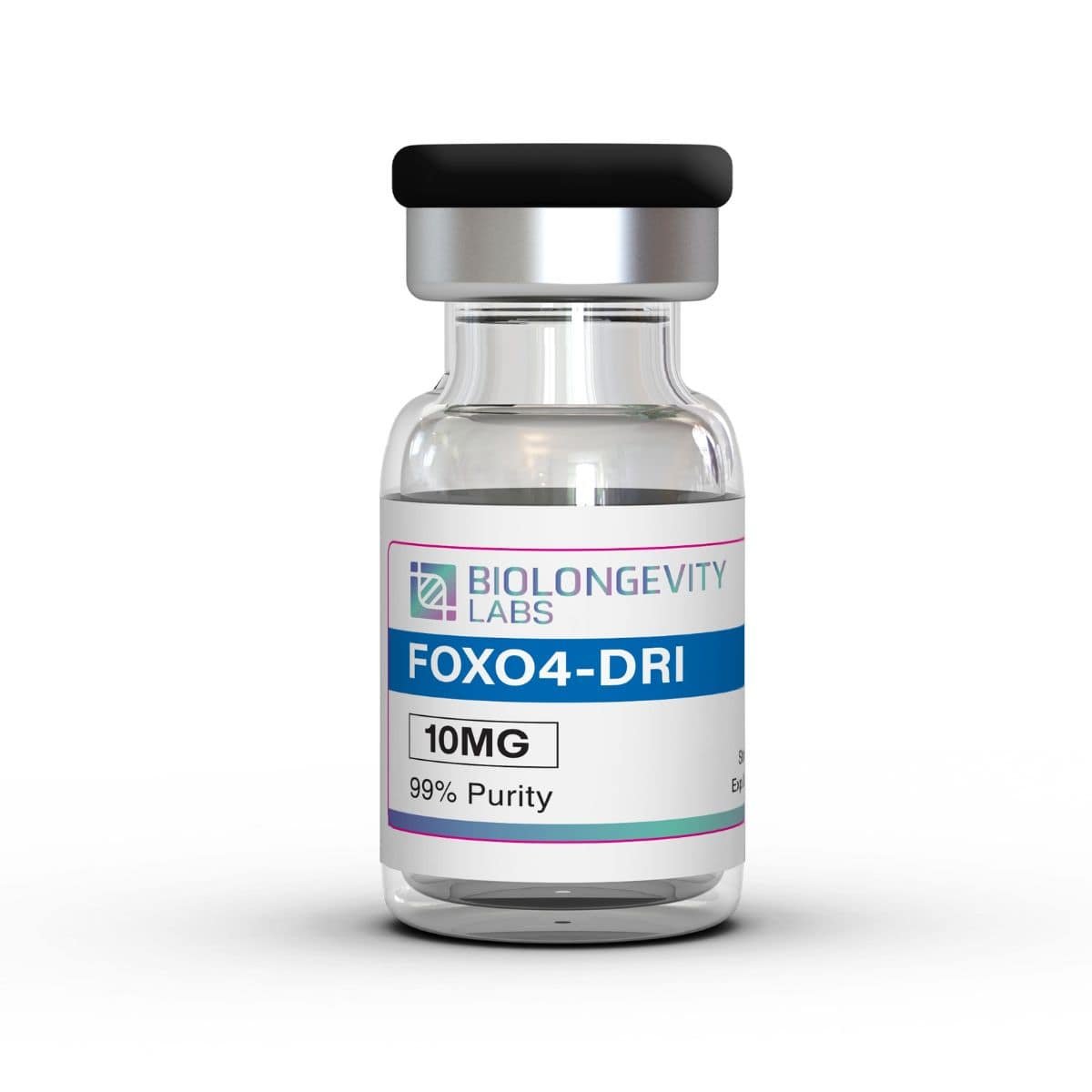
FOXO4-DRI Peptide Product Description
FOXO4-DRI is a synthetic retro-inverso peptide derived from a functional segment of the FOXO4 transcription factor protein. It is designed to mimic a specific interaction domain of FOXO4 while incorporating D-amino acids in a reversed sequence configuration. This structural modification increases peptide stability and resistance to enzymatic degradation compared to its naturally occurring L-amino acid counterpart.
FOXO4 is a member of the Forkhead box O (FOXO) family of transcription factors, which includes FOXO1, FOXO3, FOXO4, and FOXO6. These proteins play essential roles in regulating cellular processes such as growth, stress response, insulin signaling, apoptosis, and cell cycle control.
Mechanism of Action (Research Overview)
FOXO4-DRI is primarily studied for its ability to interfere with the interaction between FOXO4 and the tumor suppressor protein p53. Under normal conditions, FOXO4 can bind to p53 in senescent cells, potentially preventing p53 from initiating apoptosis (programmed cell death).
Research suggests that FOXO4-DRI may:
- Disrupt FOXO4–p53 binding interactions
- Restore p53 transcriptional activity in senescent cells
- Promote apoptosis of dysfunctional or senescent cells
- Support clearance of senescence-associated cell populations
This mechanism has led to significant interest in FOXO4-DRI as a tool for studying cellular aging and senescence biology.
Potential Research Applications
FOXO4-DRI has been investigated in preclinical models across several biological and disease areas.
Cellular Senescence Research
FOXO4-DRI is widely studied for its potential to selectively induce apoptosis in senescent cells. These cells accumulate with age and are associated with inflammation, tissue dysfunction, and age-related decline. Research suggests that removing senescent cells may improve tissue function and regenerative capacity in experimental models.
Aging and Longevity Studies
Preclinical findings indicate FOXO4-DRI may influence aging-related pathways by reducing senescent cell burden. In animal models, this has been associated with improved physiological function, including organ performance and tissue integrity.
Cancer Research
FOXO4-DRI has been explored for its potential to affect tumor microenvironments by targeting senescent stromal cells that contribute to treatment resistance. Studies suggest it may enhance sensitivity to therapies such as radiotherapy in certain cancer models.
Pulmonary Fibrosis Research
Experimental models of pulmonary fibrosis show that FOXO4-DRI may reduce senescence-associated secretory phenotype (SASP) factors, potentially decreasing fibrosis progression and collagen deposition in lung tissue.
Endocrine and Reproductive Research
FOXO4-DRI has been studied in senescent Leydig cell models, where it may support improved cellular function and restore hormone-producing capacity by clearing dysfunctional cells.
Cartilage and Tissue Regeneration Studies
Research indicates FOXO4-DRI may reduce senescent cell accumulation in chondrocytes, although its full impact on cartilage regeneration and functional tissue restoration remains under investigation.
FOXO4-DRI Peptide Effects
Across laboratory and animal studies, FOXO4-DRI has been associated with several observed effects:
- Selective induction of apoptosis in senescent cells
- Reduction of senescence-associated secretory phenotype (SASP) signaling
- Improved tissue microenvironment in aging models
- Enhanced cellular turnover and regeneration markers
- Increased sensitivity of senescent cell populations to apoptotic signaling
- Modulation of FOXO4–p53 regulatory pathways
- Potential improvement in organ-level function in aged animal models
Molecular and Structural Features
- Peptide Sequence: D-retro-inverso FOXO4 interaction fragment
- Molecular Formula: C228H388N86O64
- Molecular Weight: ~5358.05 g/mol
- Type: Synthetic retro-inverso D-amino acid peptide
- Classification: FOXO transcription factor-derived research peptide
FOXO4-DRI Peptide Benefits
FOXO4-DRI is studied mainly as a senolytic research peptide, meaning its primary interest lies in how it may help the body clear senescent (aged or dysfunctional) cells in preclinical models.
1. Senescent cell clearance (core mechanism)
FOXO4-DRI has been shown in laboratory and animal studies to promote apoptosis (programmed cell death) in senescent cells. These are cells that no longer divide properly and tend to accumulate with age.
2. Supports healthier tissue function in aging models
By reducing senescent cell burden, research suggests FOXO4-DRI may help improve tissue environment and function in aged animal models, potentially supporting overall organ performance.
3. Modulation of aging-related pathways
Studies indicate it may influence the FOXO4–p53 pathway, which plays a role in:
- Cell cycle regulation
- DNA damage response
- Cellular aging and survival balance
4. Reduces senescence-associated inflammatory signaling (SASP)
FOXO4-DRI has been associated with lowering the senescence-associated secretory phenotype (SASP), which is linked to chronic inflammation and tissue degradation in aging research models.
5. Potential support for regenerative processes
By clearing non-functional cells, research suggests FOXO4-DRI may indirectly allow healthier cell populations to proliferate and support tissue renewal in experimental systems.
6. Cardiovascular and organ function research interest
Preclinical studies suggest improvements in tissue integrity and function in aged animal models, including effects on kidney and cardiovascular-related markers.
7. Cancer microenvironment research
FOXO4-DRI has been explored for its ability to target senescent cells that contribute to tumor resistance, potentially improving response to treatments like radiotherapy in experimental cancer models.
8. Pulmonary fibrosis research
Studies suggest it may reduce fibrosis-related markers by decreasing senescent cell accumulation and inflammatory signaling in lung tissue models.
FOXO4-DRI Peptide Dosage
FOXO4-DRI has no clinically approved human dosage, but multiple research and community protocols use a similar experimental range.
Common FOXO4-DRI Dosage Range (10 mg vial protocols)
Standard research range
- 250 mcg to 500 mcg per day
- Administered subcutaneously (SC)
- Typically done as a daily injection during a cycle
Typical 10 mg vial reconstitution (most common protocol)
- Add 3.0 mL bacteriostatic water
- Concentration becomes ~3.33 mg/mL
- On a U-100 insulin syringe:
- 1 unit ≈ 33 mcg
- 10 units ≈ 333 mcg
- 15 units ≈ 500 mcg
Example dosing schedule (gradual titration model)
- Weeks 1–4: 250 mcg daily
- Weeks 5–8: 375 mcg daily
- Weeks 9–16: 500 mcg daily
Cycle structure (common approach)
- Duration: 8–16 weeks
- Frequency: once daily SC injection
- Goal: gradual increase from lower dose → 500 mcg maintenance range
Alternative “hit-and-run” protocol (less common)
Some experimental guides use a different structure:
- 3–6 injections per cycle
- Given every other day
- Cycles repeated 1–3 times per year