Description
Epithalon Peptide Description
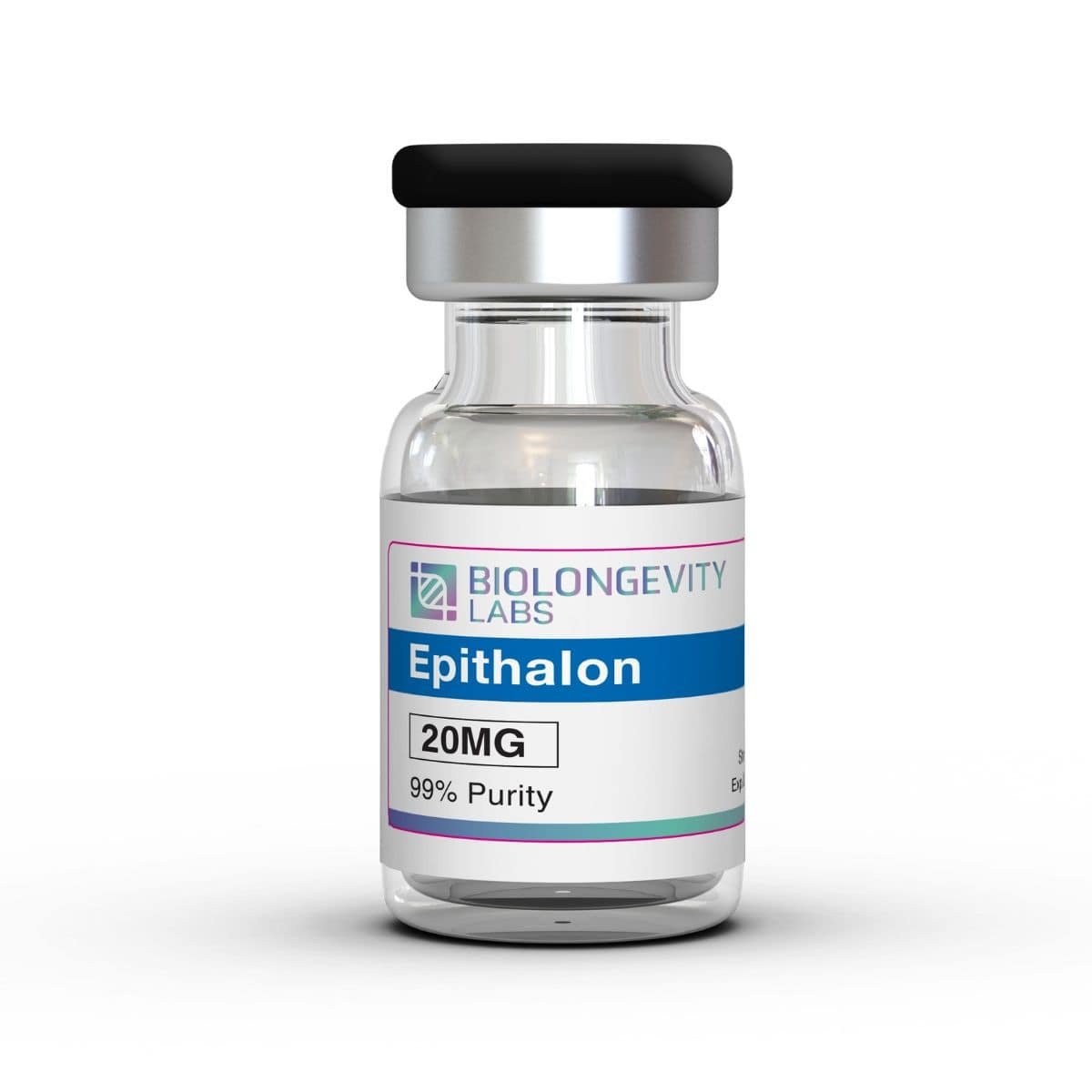
Epithalon (also known as Epitalon) is a synthetic tetrapeptide composed of four amino acids: alanine, glutamic acid, aspartic acid, and glycine (Ala-Glu-Asp-Gly). It was developed as a synthetic analogue of epithalamin, a naturally occurring peptide complex derived from the pineal gland that has been extensively studied for its role in cellular regulation and healthy aging.
Epithalon has become one of the most researched peptides in longevity science due to its potential influence on telomerase activity, cellular aging, oxidative stress, circadian rhythm regulation, and mitochondrial function. Laboratory studies suggest that the peptide may help regulate gene expression associated with cellular repair while supporting normal cellular function during aging.
One of the primary areas of Epithalon research involves its potential ability to activate telomerase, an enzyme responsible for maintaining telomere length. Telomeres protect chromosomes during cell division, and their gradual shortening is closely associated with cellular aging. Experimental studies indicate that Epithalon may promote telomerase activity, helping preserve telomere integrity and extend the lifespan of healthy cells in laboratory models.
Research has also explored Epithalon’s antioxidant properties. Studies suggest it may reduce oxidative stress by lowering intracellular reactive oxygen species (ROS), supporting mitochondrial health, and protecting cells from age-related damage. These mechanisms have made Epithalon an important subject in investigations involving healthy aging, tissue regeneration, and cellular resilience.
Beyond cellular longevity, Epithalon has been investigated for its potential effects on the pineal gland, where it may help regulate melatonin production and circadian rhythm. Experimental findings indicate that supporting normal melatonin secretion may contribute to improved sleep quality, healthier biological rhythms, and overall physiological balance.
Additional laboratory studies have examined Epithalon’s role in supporting immune function, retinal health, cardiovascular health, hormonal balance, DNA stability, and healthy gene expression. While these findings remain under investigation, they continue to position Epithalon as one of the most promising peptides in modern longevity and regenerative research.
Epithalon Peptide Benefits
Research suggests Epithalon may support:
- Cellular longevity and healthy aging
- Telomerase activation and telomere maintenance
- Healthy melatonin production and circadian rhythm regulation
- Improved sleep quality and recovery
- Reduced oxidative stress and free radical damage
- Mitochondrial health and cellular energy production
- DNA protection and chromosomal stability
- Cellular repair and regeneration
- Healthy immune system function
- Eye and retinal health
- Cognitive performance and neurological health
- Overall cellular resilience during aging
Epithalon Peptide Dosage
General research protocols commonly reference:
- Dosage: 5–10 mg daily
- Administration: Subcutaneous injection
- Cycle Length: 10–20 consecutive days
- Frequency: One cycle every 3–6 months is commonly referenced in research settings.
Epithalon Peptide Information
Peptide Sequence: Ala-Glu-Asp-Gly
Molecular Formula: C14H22N4O9
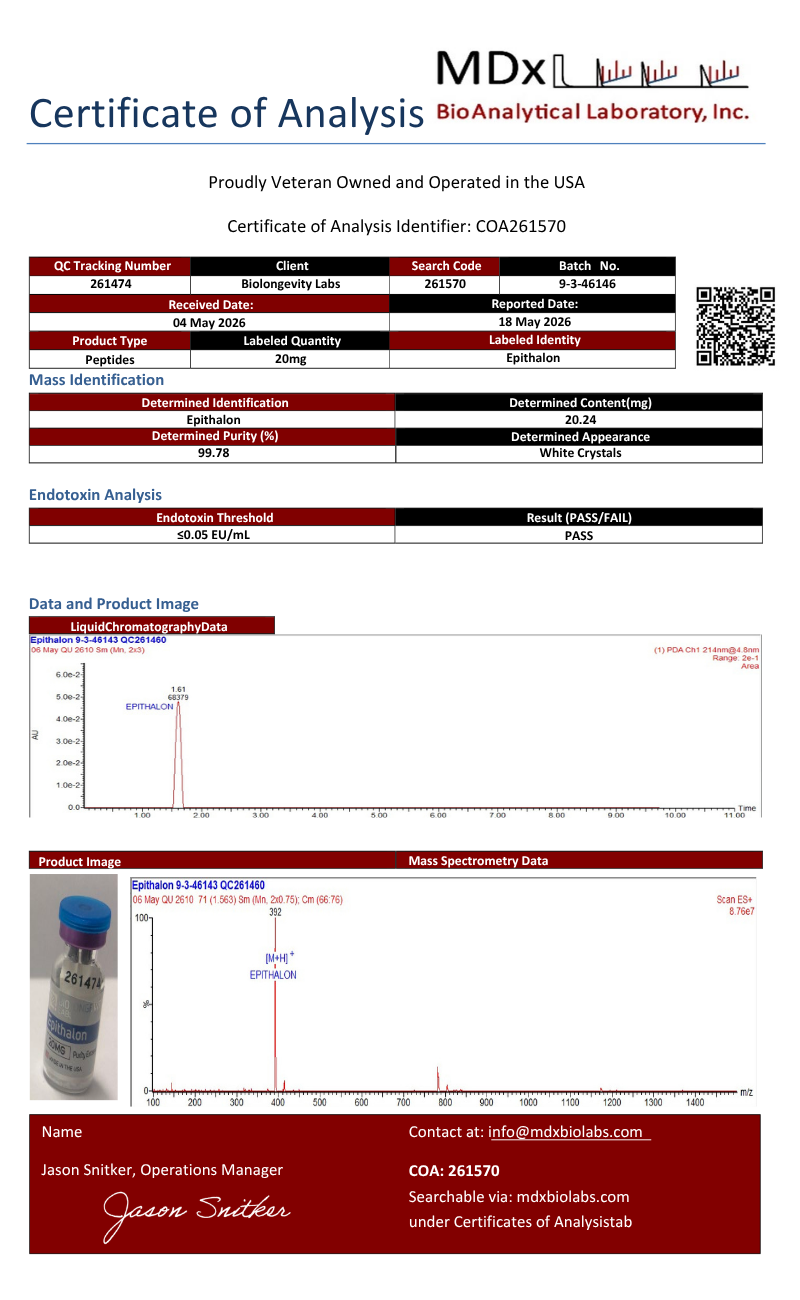
Molecular Weight: 390.35 g/mol
CAS Number: 307297-39-8
Synonyms: Epitalon, AEDG Peptide, Ala-Glu-Asp-Gly, Epithalone