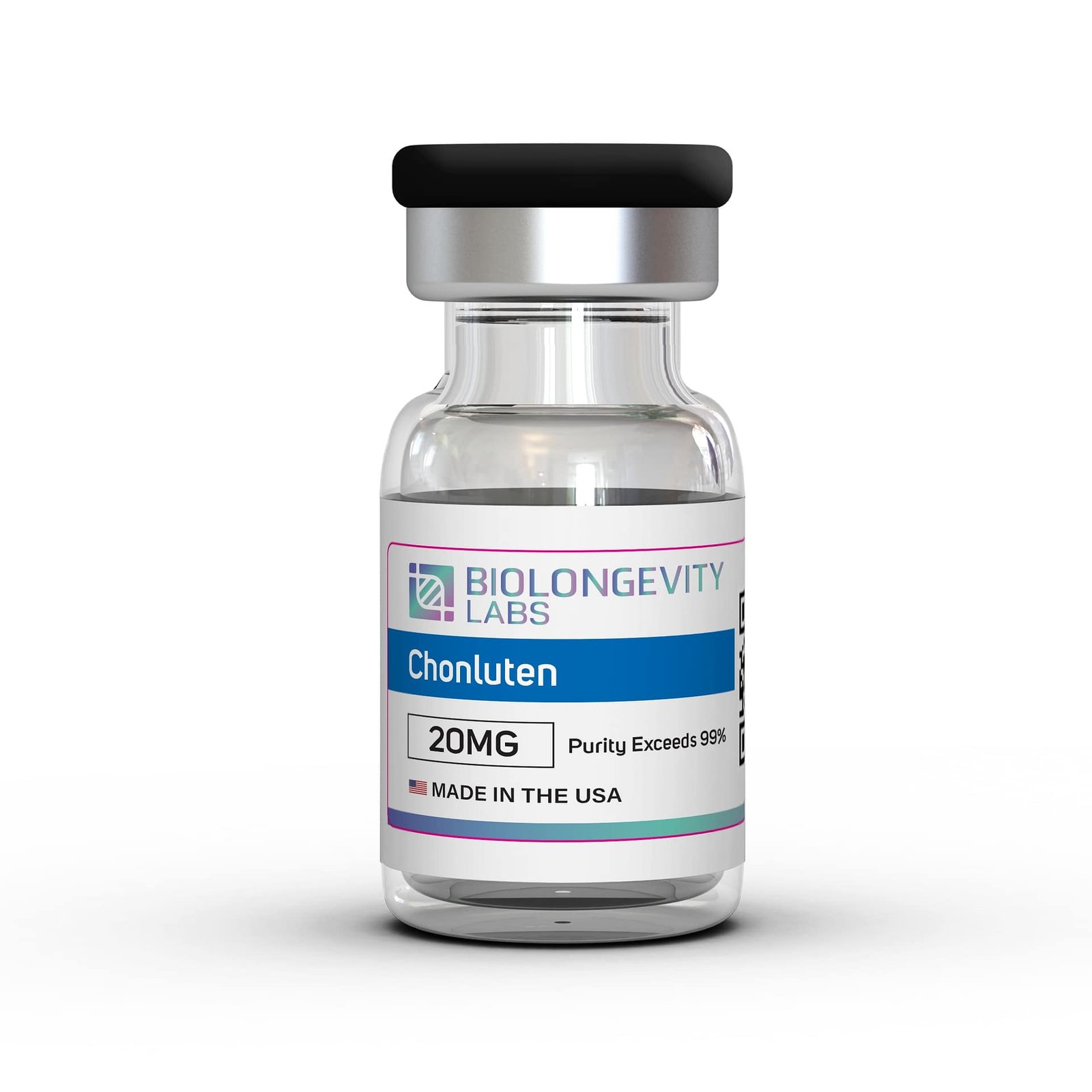
Description
Chonluten Peptide Product Description
Chonluten peptide is a synthetic tripeptide bioregulator composed of the amino acid sequence Glu-Asp-Gly (EDG). As a member of the Khavinson peptide family, Chonluten has been investigated for its potential role in regulating gene expression associated with respiratory tissue, cellular repair, and inflammatory signaling. Current research focuses on its interaction with lung and bronchial epithelial cells, making it an important peptide for studies involving respiratory biology and tissue regeneration.
Unlike larger peptide complexes extracted from biological tissues, Chonluten is a precisely synthesized peptide designed to replicate the biologically active region responsible for tissue-specific regulatory activity. Laboratory investigations suggest it may influence cellular homeostasis by supporting protein synthesis, antioxidant defenses, and the expression of genes involved in tissue maintenance.
Chonluten Research
Scientific interest in Chonluten has expanded due to its potential effects on respiratory tissues and inflammatory pathways. Preclinical research suggests the peptide may regulate molecular signals involved in oxidative stress, epithelial cell function, and tissue remodeling.
Areas currently being explored include:
- Respiratory tissue regeneration
- Bronchial epithelial cell function
- Cellular repair mechanisms
- Oxidative stress regulation
- Inflammatory cytokine signaling
- Gene expression and peptide bioregulation
- Lung tissue homeostasis
- Fibroblast and epithelial cell activity
- Healthy mucus membrane function
- Protein synthesis and cellular maintenance
Research also indicates Chonluten may influence proteins such as HSP70 and c-Fos, which are associated with cell survival, proliferation, and stress adaptation. Experimental models have additionally examined its potential effects on inflammatory mediators including TNF-α and IL-6, making it an area of ongoing investigation in respiratory research.
Chonluten Peptide Specifications
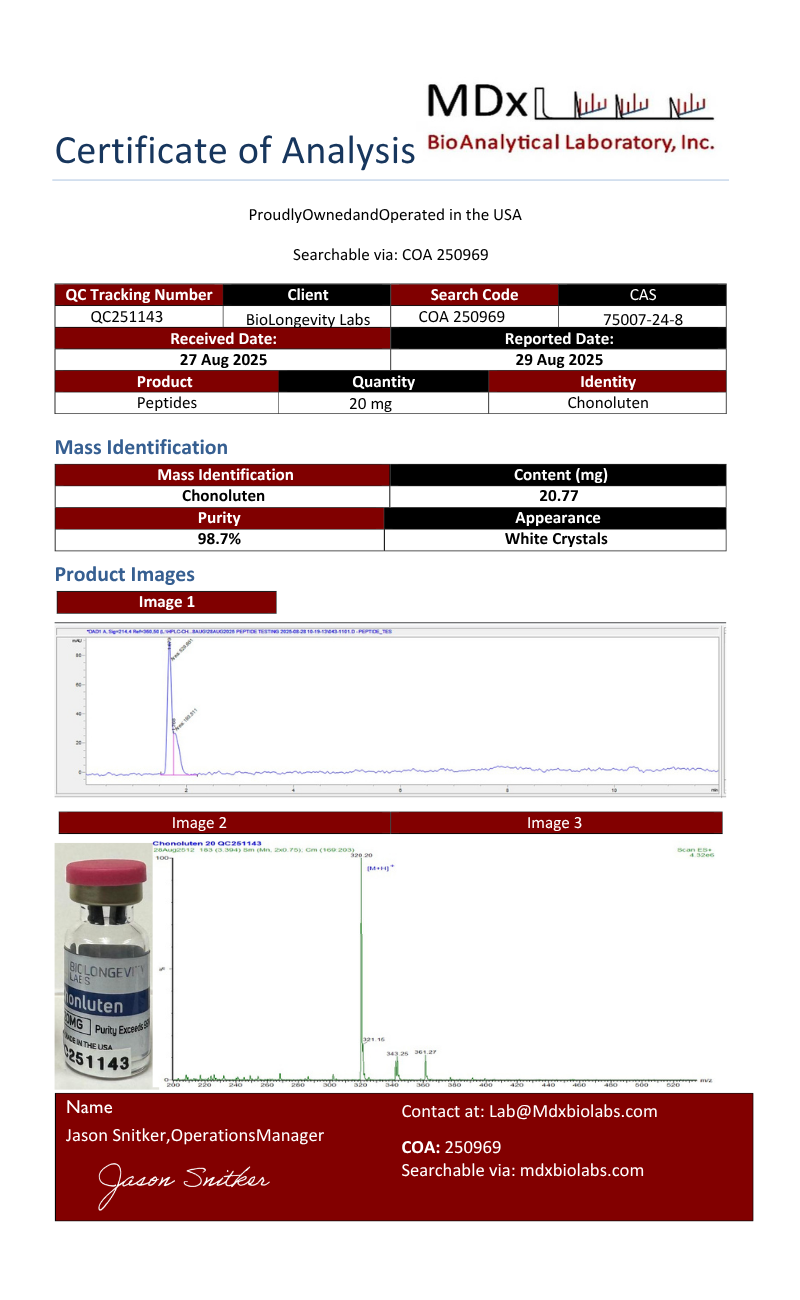
Sequence: Glu-Asp-Gly (EDG)
Molecular Formula: C11H17N3O8
Molecular Weight: 319.27 g/mol
CAS Number: 75007-24-8
Synonyms: Glutamyl-Aspartyl-Glycine, T-34, H-Glu-Asp-Gly-OH
The Chonluten Peptide Benefits
- May support healthy lung and bronchial tissue function.
- May promote respiratory epithelial cell repair and regeneration.
- May help regulate inflammatory signaling pathways.
- May reduce oxidative stress at the cellular level.
- May support normal mucus membrane integrity within the respiratory tract.
- May encourage healthy fibroblast and epithelial cell activity.
- May assist in maintaining normal cellular protein synthesis.
- May support tissue recovery following cellular stress.
- May help regulate genes involved in respiratory tissue homeostasis.
- May contribute to overall respiratory cellular health in laboratory models.
Chonluten Peptide Effects
- Investigated for modulation of inflammatory cytokines, including TNF-α and IL-6.
- Studied for regulation of heat shock proteins (HSP70) involved in cellular protection.
- May influence c-Fos protein expression associated with cell proliferation and differentiation.
- Researched for its role in antioxidant defense mechanisms.
- May promote tissue remodeling and repair following experimental injury.
- Investigated for maintaining extracellular matrix structure in lung tissue.
- May support balanced epithelial cell growth and differentiation.
- Studied for its potential to normalize molecular pathways involved in chronic respiratory inflammation.
- Research suggests potential regulation of oxidative stress-related gene expression.
- Investigated as a peptide bioregulator for respiratory tissue maintenance and healthy cellular function.
Chonluten Peptide Dosage
- Administration: Subcutaneous injection
- Frequency: Once daily
- Typical Daily Dose: 250 mcg to 4 mg, gradually increased over time.
- Suggested Titration Schedule:
- Weeks 1–2: 250 mcg daily
- Weeks 3–4: 500 mcg daily
- Weeks 5–6: 1 mg daily
- Weeks 7–8: 1.5 mg daily
- Weeks 9–10: 2 mg daily
- Weeks 11–12: 3 mg daily
- Weeks 13–16: 4 mg daily
- Cycle Length: Typically 8–16 weeks, depending on the research protocol.
Reconstitution
- Reconstitute one 20 mg vial with 3 mL of bacteriostatic water, resulting in a concentration of approximately 6.67 mg/mL.
- At this concentration, 1 unit (0.01 mL) on a U-100 insulin syringe contains approximately 66.7 mcg of Chonluten, allowing for precise dose measurements.