Description
Cagrilintide Peptide Product Description
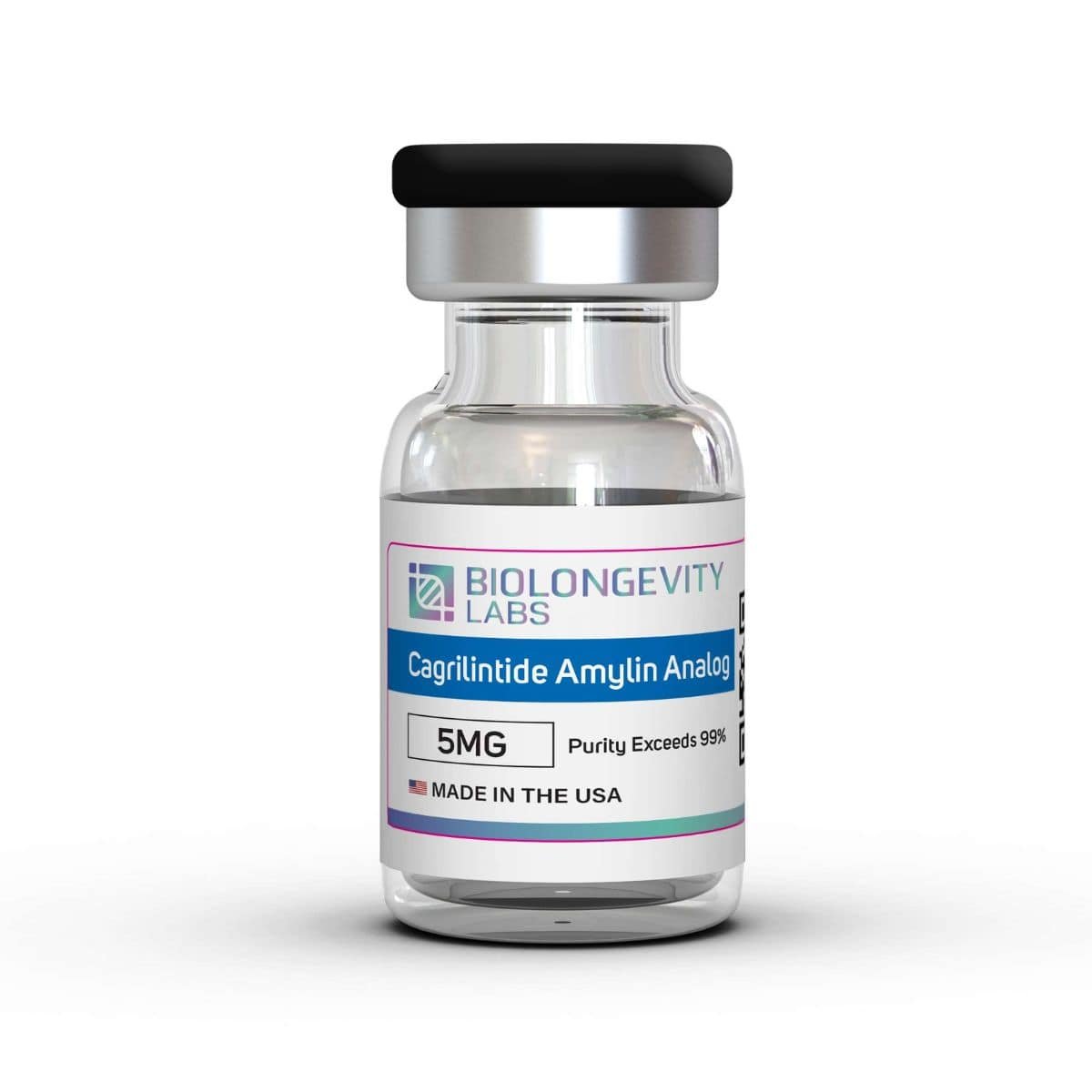
Cagrilintide is a next-generation long-acting synthetic amylin analog designed for advanced metabolic and endocrinology research. Engineered with N-terminal lipidation, Cagrilintide binds to albumin in circulation, significantly extending its half-life and biological activity compared to earlier amylin analogs such as pramlintide.
This structural enhancement allows Cagrilintide to provide sustained activity across multiple metabolic pathways, including appetite regulation, gastric emptying, and energy homeostasis. It is widely studied for its synergistic potential when combined with GLP-1 receptor agonists in obesity and glucose regulation research models.
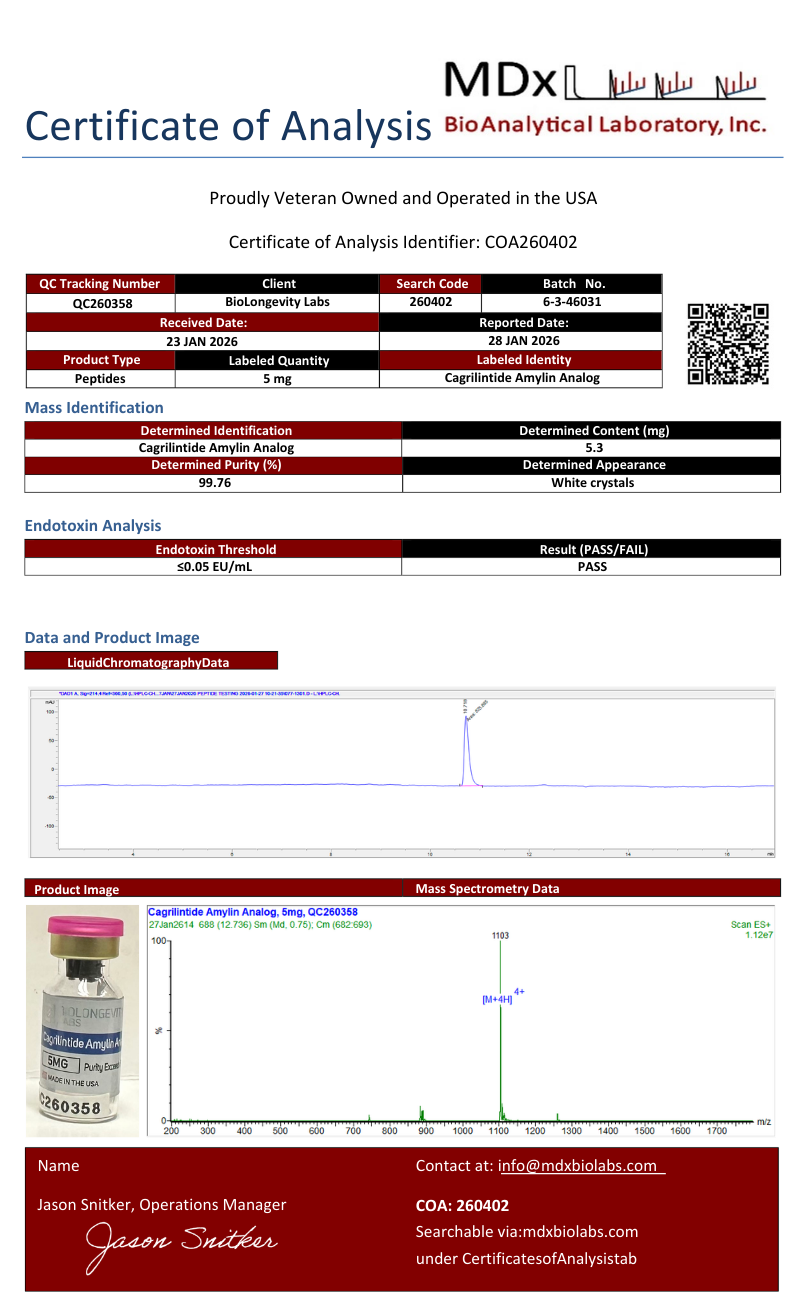
This product is supplied as a lyophilized (freeze-dried) powder to preserve stability, purity, and long-term integrity.
Cagrilintide Peptide Information
| Property | Value |
|---|---|
| Peptide Sequence | XKCNTATCATQRLAEFLRHSSNNFGPILPPTNVGSNTP |
| Molecular Formula | C194H312N54O59S2 |
| Molecular Weight | 4409 g/mol |
| CAS Number | 1415456-99-3 |
| Synonyms | Cagrilintide, Cagrilintide [INN], AO43BIF1U8 |
Cagrilintide Peptide Benefits
Current clinical and preclinical studies suggest Cagrilintide may be associated with:
- Reduced appetite and caloric intake
- Improved weight management outcomes
- Enhanced satiety signaling
- Slower gastric emptying
- Improved glycemic control
- Reduced post-meal glucose spikes
- Synergistic effects with GLP-1 analogs (e.g., semaglutide)
- Improved insulin sensitivity markers
- Support for metabolic regulation pathways
- Potential cardiovascular risk modulation in metabolic disorders
Cagrilintide Peptide Effects
Based on experimental and clinical findings, Cagrilintide may demonstrate:
- Activation of amylin receptor pathways
- Suppression of hunger signaling in the central nervous system
- Modulation of both homeostatic and hedonic appetite control
- Increased satiety hormone signaling
- Reduction in food reward-driven eating behavior
- Improved HbA1c levels in diabetic models
- Enhanced energy balance regulation
- Extended duration of metabolic activity due to albumin binding
- Potential anti-inflammatory metabolic effects
- Improved lipid and glucose metabolism markers
Cagrilintide Peptide Dosage
For laboratory research use only
Reported experimental ranges include:
- Dose Range: 0.3 mg – 2.4 mg (study-dependent)
- Administration Route: Subcutaneous injection (research models)
- Frequency: Once daily or titrated dosing in combination studies
- Cycle Length: 4–32 weeks depending on study design
Why Researchers Study Cagrilintide
Researchers focus on Cagrilintide because it offers:
- Long-acting amylin receptor activation
- Strong appetite suppression profile
- Extended half-life via lipidation and albumin binding
- High synergy with GLP-1 receptor agonists
- Promising results in obesity and type 2 diabetes research
- Improved metabolic stability over earlier amylin analogs
- Multi-pathway energy regulation effects