
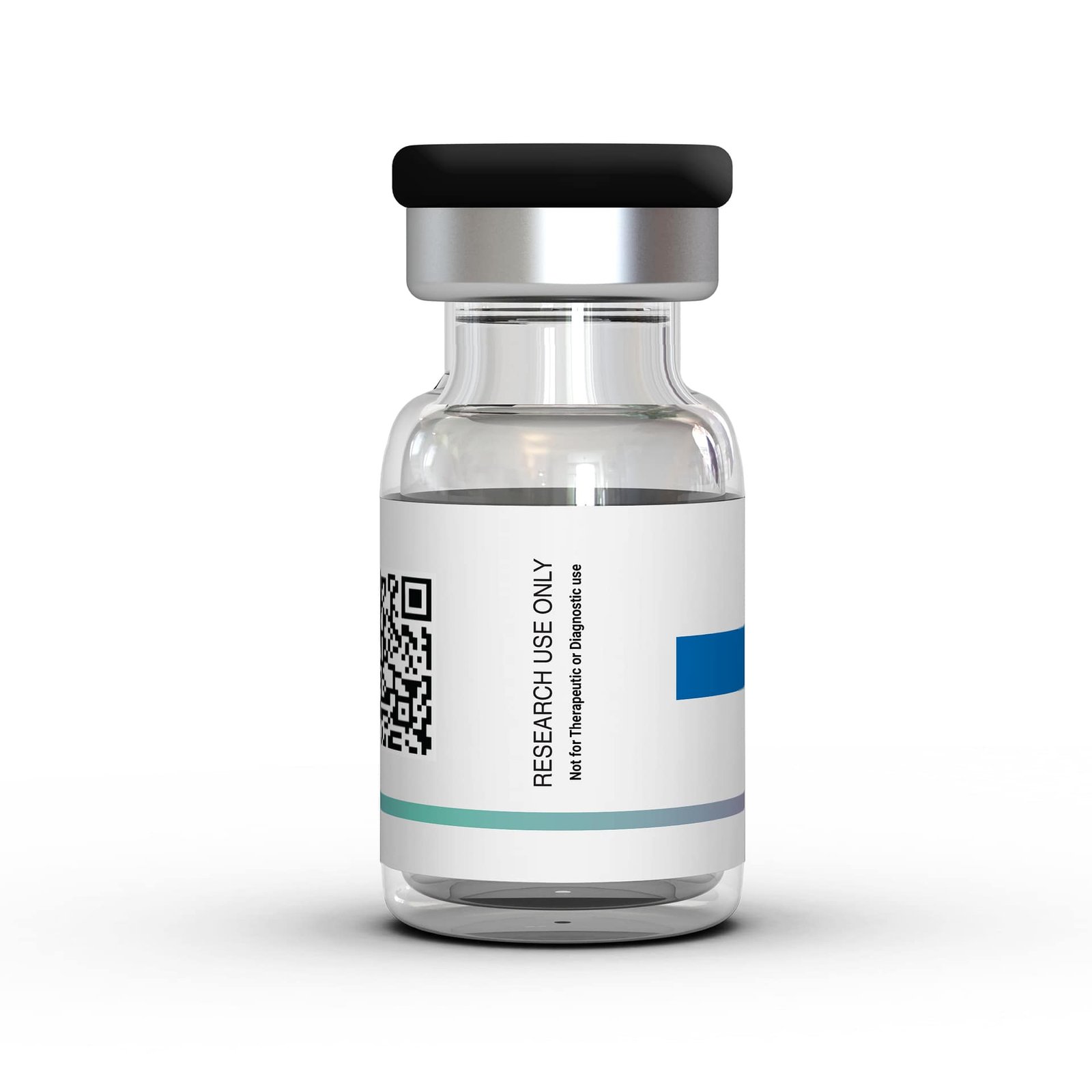
Description
BioAmplify Peptide(Elamipretide) Product Description
BioAmplify, also known as Elamipretide, is a research-grade mitochondria-targeting tetrapeptide developed to investigate mitochondrial function, cellular energy production, and oxidative stress. As a member of the Szeto-Schiller (SS) peptide family, Elamipretide has been extensively studied for its unique ability to selectively penetrate cell membranes and localize within the inner mitochondrial membrane.
Unlike many peptides that interact with cell surface receptors, BioAmplify directly targets the mitochondria—the energy-producing organelles responsible for ATP generation and overall cellular metabolism. Laboratory research suggests that Elamipretide binds to cardiolipin, a phospholipid essential for maintaining mitochondrial membrane integrity and efficient electron transport chain function. By stabilizing cardiolipin, researchers continue to investigate BioAmplify’s potential role in supporting mitochondrial bioenergetics, reducing oxidative stress, and improving cellular resilience under metabolic stress.
BioAmplify has become an increasingly valuable research peptide in studies involving aging, skeletal muscle performance, cardiovascular biology, neurological disorders, kidney function, and metabolic disease. Its unique mitochondrial targeting mechanism distinguishes it from conventional research peptides focused primarily on hormonal or growth factor pathways.
How BioAmplify Peptide (Elamipretide) Works
Mitochondria generate the majority of the body’s cellular energy through oxidative phosphorylation. Damage to the inner mitochondrial membrane can impair ATP production, increase reactive oxygen species (ROS), and contribute to cellular dysfunction.
BioAmplify (Elamipretide) has been developed to investigate these processes by selectively binding to cardiolipin within the inner mitochondrial membrane. Research suggests this interaction may help stabilize mitochondrial membrane structure, support electron transport chain efficiency, reduce excessive free radical production, and preserve mitochondrial function during periods of cellular stress.
Unlike antioxidants that simply neutralize free radicals, Elamipretide is being investigated for its ability to improve the overall efficiency of mitochondrial energy production while protecting mitochondrial architecture.
BioAmplify Peptide(Elamipretide) Benefits
Current laboratory research continues to explore BioAmplify across numerous scientific fields.
Supports Mitochondrial Function Research
BioAmplify is primarily studied for its potential ability to maintain healthy mitochondrial structure and improve ATP production by supporting cardiolipin stability.
Investigated for Cellular Energy Production
Research suggests Elamipretide may enhance mitochondrial efficiency, making it valuable for studies involving fatigue, muscle metabolism, and cellular bioenergetics.
Studied for Oxidative Stress
Researchers continue investigating BioAmplify’s potential role in reducing reactive oxygen species (ROS) generated during mitochondrial respiration.
Research into Healthy Aging
Age-related mitochondrial dysfunction is a growing field of study. BioAmplify is being investigated for its possible ability to preserve mitochondrial performance during aging.
Supports Cardiovascular Research
Laboratory studies are evaluating Elamipretide’s effects on cardiac muscle energetics, mitochondrial preservation, and oxidative stress within cardiovascular tissues.
Investigated for Neurological Research
Because neurons rely heavily on mitochondrial energy production, BioAmplify has become an important research peptide in studies involving neurodegenerative disorders and cognitive health.
Muscle Performance and Recovery Research
Researchers continue studying Elamipretide for its potential effects on skeletal muscle energy production, exercise recovery, and mitochondrial adaptation.
Kidney and Metabolic Research
BioAmplify has also been investigated in experimental models examining kidney health, insulin sensitivity, metabolic dysfunction, and mitochondrial-related disorders.
Research Applications
BioAmplify (Elamipretide) is commonly investigated in laboratory studies involving:
- Mitochondrial dysfunction
- ATP production
- Cardiolipin stabilization
- Oxidative stress
- Healthy aging
- Exercise physiology
- Skeletal muscle metabolism
- Cardiovascular function
- Kidney biology
- Neurodegenerative disease research
- Metabolic disorders
- Cellular bioenergetics
- Inflammation research
- Tissue recovery mechanisms
BioAmplify Peptide (Elamipretide) Specifications
| Property | Value |
|---|---|
| Peptide Name | BioAmplify (Elamipretide) |
| Peptide Family | Szeto-Schiller (SS) Peptide |
| Sequence | D-Arg-Tyr(2,6-diMe)-Lys-Phe |
| Molecular Formula | C₃₂H₄₉N₉O₅ |
| Molecular Weight | 639.8 g/mol |
| CAS Number | 736992-21-5 |
| Synonyms | Elamipretide, Bendavia, SS-31, BioAmplify |
Why Choose BioAmplify Peptide?
BioAmplify offers researchers a highly specialized approach to mitochondrial biology. Its ability to selectively accumulate within mitochondria has made it one of the most widely investigated mitochondrial-targeting peptides available today.
Whether studying aging, metabolic regulation, cardiovascular biology, neurological health, or mitochondrial dysfunction, BioAmplify provides researchers with an advanced tool for exploring cellular energy production and mitochondrial protection.