
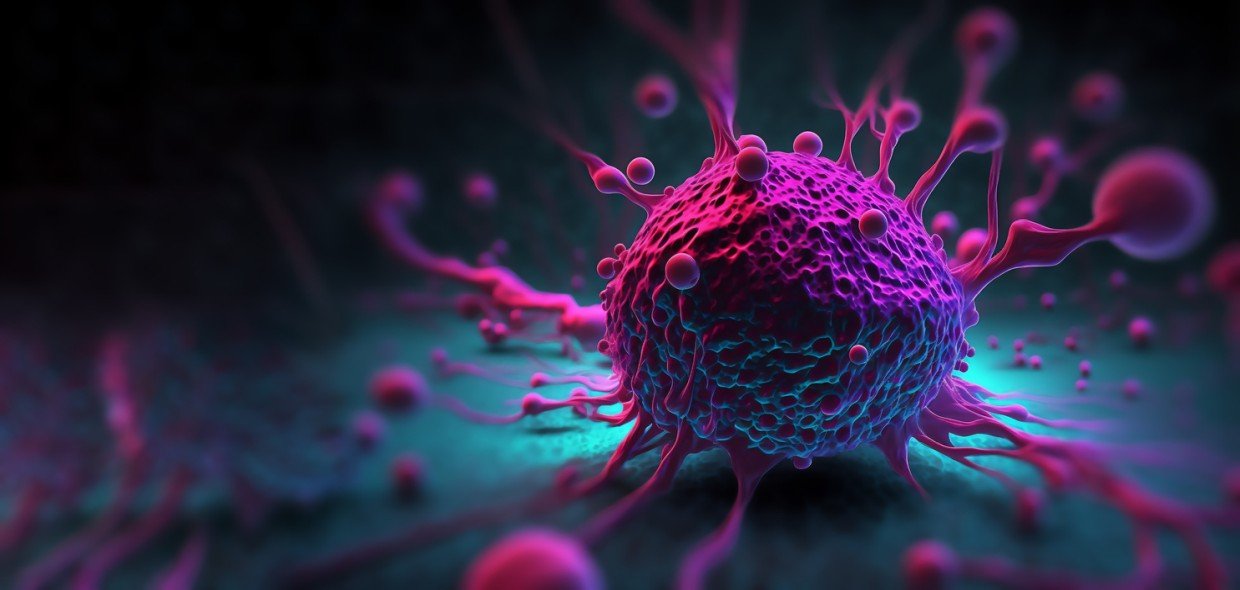
PNC-27 is a synthetic 32-amino acid research peptide engineered from two functional domains. Its N-terminal region contains a p53-derived HDM-2-binding sequence (residues 12-26 of the p53 protein), while its C-terminal region consists of a membrane residency peptide (MRP) designed to facilitate membrane interaction.
Laboratory investigations suggest that PNC-27 selectively binds to HDM-2 proteins expressed on the plasma membrane of transformed tumor cells. Following membrane binding, the peptide has been reported to promote transmembrane pore formation, resulting in rapid membrane disruption and necrosis-like cell death through mechanisms that appear to operate independently of p53. More recent studies have also explored its potential interactions with mitochondrial membranes after intracellular entry.
As a research tool, PNC-27 is widely investigated for studying HDM-2 localization, membrane-targeted anticancer mechanisms, mitochondrial membrane disruption, and selective tumor cell necrosis.
PNC-27 Peptide Binding to HDM-2
Current research indicates that the primary mechanism of PNC-27 involves its interaction with the HDM-2 (human double minute 2) oncoprotein. Under normal physiological conditions, HDM-2 negatively regulates the tumor suppressor protein p53. However, several laboratory studies have identified membrane-associated HDM-2 on numerous transformed cancer cell lines, providing a unique experimental target for PNC-27.
Fluorescence imaging studies demonstrate that PNC-27 selectively associates with HDM-2 located on tumor cell membranes. In contrast, cells lacking membrane-bound HDM-2 exhibit minimal peptide retention and significantly reduced susceptibility to membrane disruption.
Experimental findings further suggest that intact HDM-2 containing the p53-binding domain is required for efficient peptide docking. Once attached to the membrane, PNC-27 maintains its amphipathic helix-loop-helix structure, allowing it to integrate into the lipid bilayer and promote pore formation. This membrane disruption is consistently associated with lactate dehydrogenase (LDH) release, loss of membrane integrity, and necrosis-like cell death without activation of classical apoptotic pathways.
Mitochondrial Membrane Research
Recent investigations suggest that PNC-27 activity may extend beyond the plasma membrane.
Following initial membrane permeabilization, researchers have observed intracellular localization of PNC-27 within mitochondrial membranes. Experimental studies using mitochondrial-selective dyes and immunoelectron microscopy report reduced mitochondrial membrane integrity and impaired mitochondrial function after peptide exposure.
Laboratory models propose a two-stage mechanism in which PNC-27 first binds membrane-associated HDM-2 to initiate pore formation before accumulating within mitochondria, where additional membrane disruption may amplify bioenergetic failure and cellular necrosis.
PNC-27 Research in Tumor Cell Lines
PNC-27 has been evaluated across multiple experimental tumor cell models.
Research involving K562 leukemia cells demonstrates strong membrane co-localization between PNC-27 and HDM-2, followed by rapid LDH release and substantial reductions in cell viability. Importantly, investigators observed little to no activation of caspase-3 or other apoptotic markers, supporting a membrane-mediated necrosis mechanism rather than programmed cell death.
Additional laboratory studies involving U937, OCI-AML3, and HL-60 leukemia cell lines have reported similar findings. These transformed cells express elevated levels of membrane-associated HDM-2 and exhibit concentration-dependent susceptibility to PNC-27-induced membrane disruption.
In contrast, normal hematopoietic cells generally display minimal surface HDM-2 expression and demonstrate significantly lower sensitivity under comparable laboratory conditions.
Selectivity Toward Transformed Cells
One of the most actively investigated aspects of PNC-27 research is its apparent selectivity for transformed cells expressing membrane-bound HDM-2.
Current laboratory evidence suggests that susceptibility correlates closely with HDM-2 localization at the plasma membrane rather than intracellular HDM-2 expression alone. Experimental models in which membrane-localized HDM-2 is artificially introduced into previously resistant cells have demonstrated increased sensitivity to PNC-27, supporting the importance of membrane-associated HDM-2 as the primary docking target.
Researchers continue investigating whether certain non-tumor cell populations—including endothelial cells, stromal cells, and regenerating epithelial tissues—may express sufficient membrane HDM-2 under specific conditions to influence peptide selectivity. Additional studies are needed to further characterize these mechanisms across a broader range of normal and transformed cell types.
Research Applications
PNC-27 is commonly utilized in laboratory investigations involving:
- HDM-2 receptor localization studies
- Tumor cell membrane biology
- Membrane pore formation mechanisms
- Necrosis-related cellular signaling
- Mitochondrial membrane disruption
- Cancer cell selectivity research
- p53-independent cell death pathways
- Experimental oncology and tumor biology
- Membrane-targeted peptide therapeutics
- Cellular membrane permeability studies
For laboratory research use only. PNC-27 is intended exclusively for scientific investigation and is not approved for human or veterinary use.
.


2 Comments
Harold Johnson
Donec rutrum nibh quis molestie blandit. Suspendisse id nisi at enim imperdiet convallis. Donec sodales tellus et leo sagittis, eu consectetur turpis porta. Phasellus diam quam, ullamcorper ut mattis varius, interdum vitae augue. Vestibulum pulvinar massa libero. Praesent ultrices dignissim tortor quis tincidunt. Vestibulum ac dignissim nibh.
Charlie Green
Donec id blandit felis. Aenean placerat sodales commodo. In sed odio at sapien consequat semper ac a elit. Nunc consequat ac tortor quis dignissim. Integer ac commodo elit. Donec finibus cursus tortor, et bibendum turpis interdum non. Nam mattis enim in metus interdum, vel suscipit arcu porttitor. Cras vitae nisi et dui efficitur fringilla ut vitae sapien.