Description
LL-37 Peptide Description
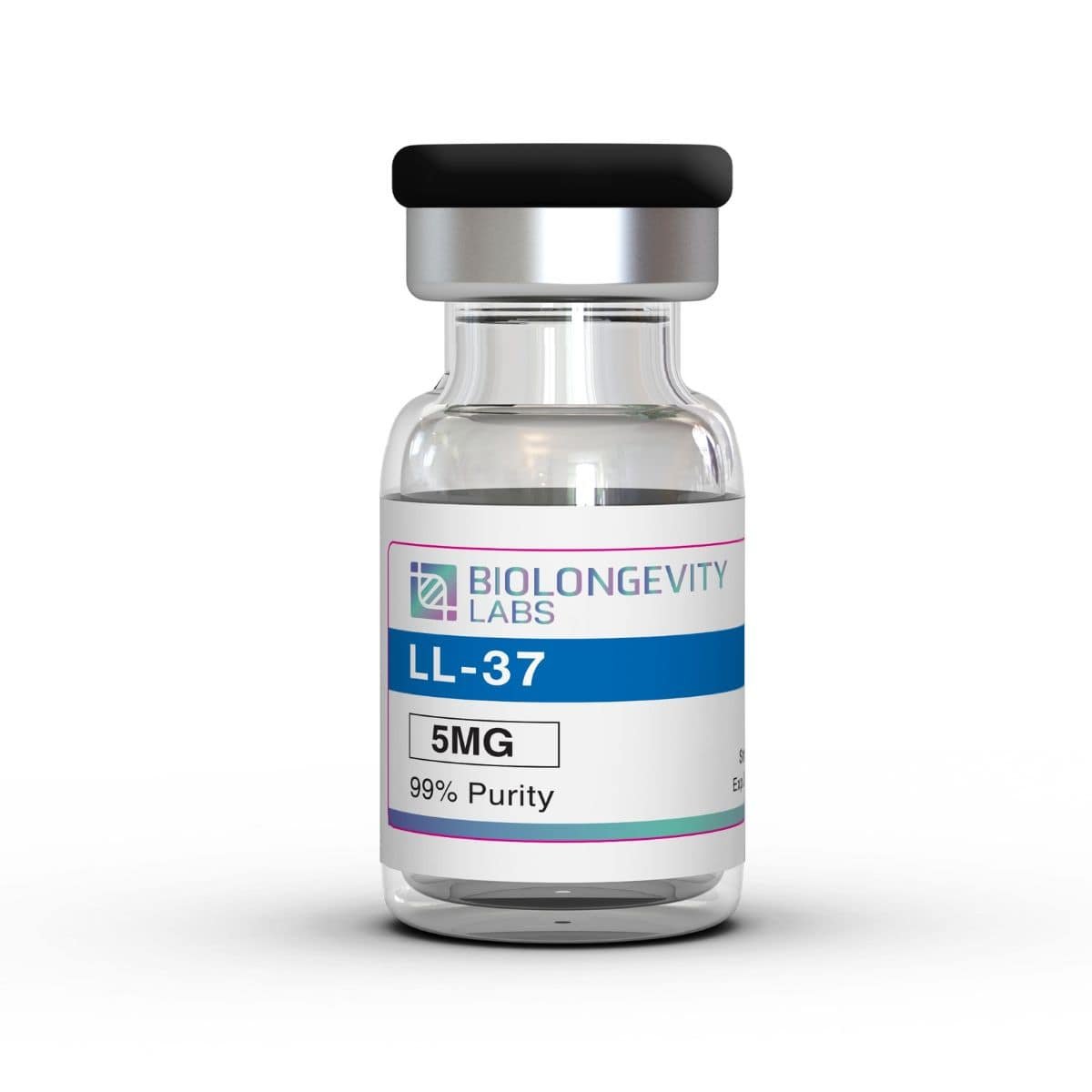
LL-37 Peptide, also known as Cathelicidin, is a synthetic version of the naturally occurring human antimicrobial peptide composed of 37 amino acids. It is derived from the C-terminal region of the human cathelicidin antimicrobial protein (hCAP18) and plays a significant role in innate immune system research. LL-37 has attracted considerable scientific interest due to its broad biological activity involving antimicrobial defense, immune regulation, tissue repair, angiogenesis, and inflammatory signaling.
Laboratory studies suggest that LL-37 interacts with bacterial, fungal, and viral membranes through electrostatic binding, potentially disrupting microbial membrane integrity and reducing pathogen survival. Unlike many conventional antimicrobial agents, LL-37 has been investigated for mechanisms that may make microbial resistance less likely because it targets membrane structure rather than specific metabolic pathways.
Beyond its antimicrobial properties, LL-37 is widely studied for its ability to regulate immune responses. Research indicates the peptide may influence cytokine production, Toll-like receptor (TLR) signaling, chemotaxis, and inflammatory pathways involved in both innate and adaptive immunity. Scientists also investigate its role in cellular communication during infection, tissue injury, and inflammatory conditions.
LL-37 has demonstrated promising activity in experimental models of wound healing and tissue regeneration. Research suggests it may stimulate endothelial cell proliferation, fibroblast migration, collagen remodeling, and angiogenesis, all of which are essential processes involved in tissue repair. These regenerative properties have made LL-37 an important research tool in studies involving skin repair, connective tissue healing, and vascular biology.
Current investigations also explore LL-37’s potential role in gastrointestinal barrier function, autoimmune disorders, inflammatory diseases, and oncology research. Laboratory studies continue to examine how the peptide influences epithelial integrity, immune cell activation, cellular proliferation, and host defense mechanisms across multiple biological systems.
LL-37 Peptide Benefits
Research continues to investigate LL-37 for its potential role in:
- Supporting innate immune system function
- Antimicrobial activity against bacteria, fungi, and selected viruses
- Modulating inflammatory and immune signaling pathways
- Promoting wound healing and tissue regeneration
- Stimulating angiogenesis and blood vessel formation
- Supporting collagen production and extracellular matrix remodeling
- Enhancing endothelial cell proliferation and migration
- Investigating gastrointestinal barrier integrity and mucosal repair
- Studying autoimmune and inflammatory disease mechanisms
- Exploring host defense and antimicrobial peptide biology
- Supporting skin regeneration and epithelial repair research
- Investigating cellular communication and cytokine regulation
LL-37 Peptide Effects
Experimental studies suggest LL-37 may:
- Promote the formation of new blood vessels during tissue repair
- Support fibroblast activity and collagen remodeling
- Enhance wound closure and re-epithelialization
- Regulate cytokine expression during immune responses
- Influence Toll-like receptor (TLR) signaling pathways
- Improve migration and proliferation of endothelial cells
- Support gastrointestinal mucosal protection
- Modulate inflammatory responses following tissue injury
- Interact with microbial membranes to reduce pathogen viability
- Assist researchers in understanding immune defense and regenerative biology
Research Applications
The LL-37 Peptide is commonly utilized in laboratory investigations involving:
- Innate immunity research
- Antimicrobial peptide biology
- Wound healing and regenerative medicine
- Angiogenesis studies
- Dermatology and skin regeneration
- Gastrointestinal research
- Autoimmune disease models
- Inflammation and cytokine signaling
- Vascular biology
- Oncology and immunotherapy research
LL-37 Peptide Dosage
LL-37 is commonly investigated in short research cycles due to its potent immunomodulatory activity. Research protocols vary depending on the objective of the study, and there is no standardized or FDA-approved dosing regimen for LL-37. Most laboratory investigations use conservative dosing to evaluate its effects on immune function, tissue repair, and antimicrobial activity.
Common Research Protocol
- Typical daily dose: 100–200 mcg
- Administration: Subcutaneous (SQ) injection
- Frequency: Once daily, 5 days per week
- Research cycle: 2–4 weeks, followed by a minimum 2-week washout period before beginning another research cycle.
Some advanced laboratory protocols have investigated doses of up to 500 mcg per day. However, higher exposure may increase the likelihood of localized injection site irritation and excessive immune stimulation.
Administration Guidelines
Researchers commonly administer LL-37 using:
- A 29–31G insulin syringe for subcutaneous injection.
- Injection sites such as the lower abdomen or upper thigh.
- Rotation of injection sites to minimize localized redness or irritation.
- Proper peptide reconstitution using bacteriostatic water, followed by refrigerated storage according to laboratory protocols.
Goal-Based Research Protocols
Tissue Repair and Skin Regeneration
- 100–200 mcg daily
- Subcutaneous administration for 2–3 weeks
- Some research protocols investigate localized administration near the area of interest when appropriate.
Gastrointestinal Research
- 100 mcg of LL-37 daily
- Frequently studied alongside BPC-157 in gastrointestinal and mucosal healing research.
- Typical research duration is 3–4 weeks.
Immune Function Research
- 200 mcg daily
- Commonly investigated over 5–10 days in laboratory models evaluating immune response and antimicrobial activity.
Research Use Only: LL-37 Peptide is intended exclusively for laboratory and scientific research. It is not approved for human or veterinary use, and there are no established clinical dosing guidelines for this peptide.
.