Description
Bronchogen Peptide Product Description
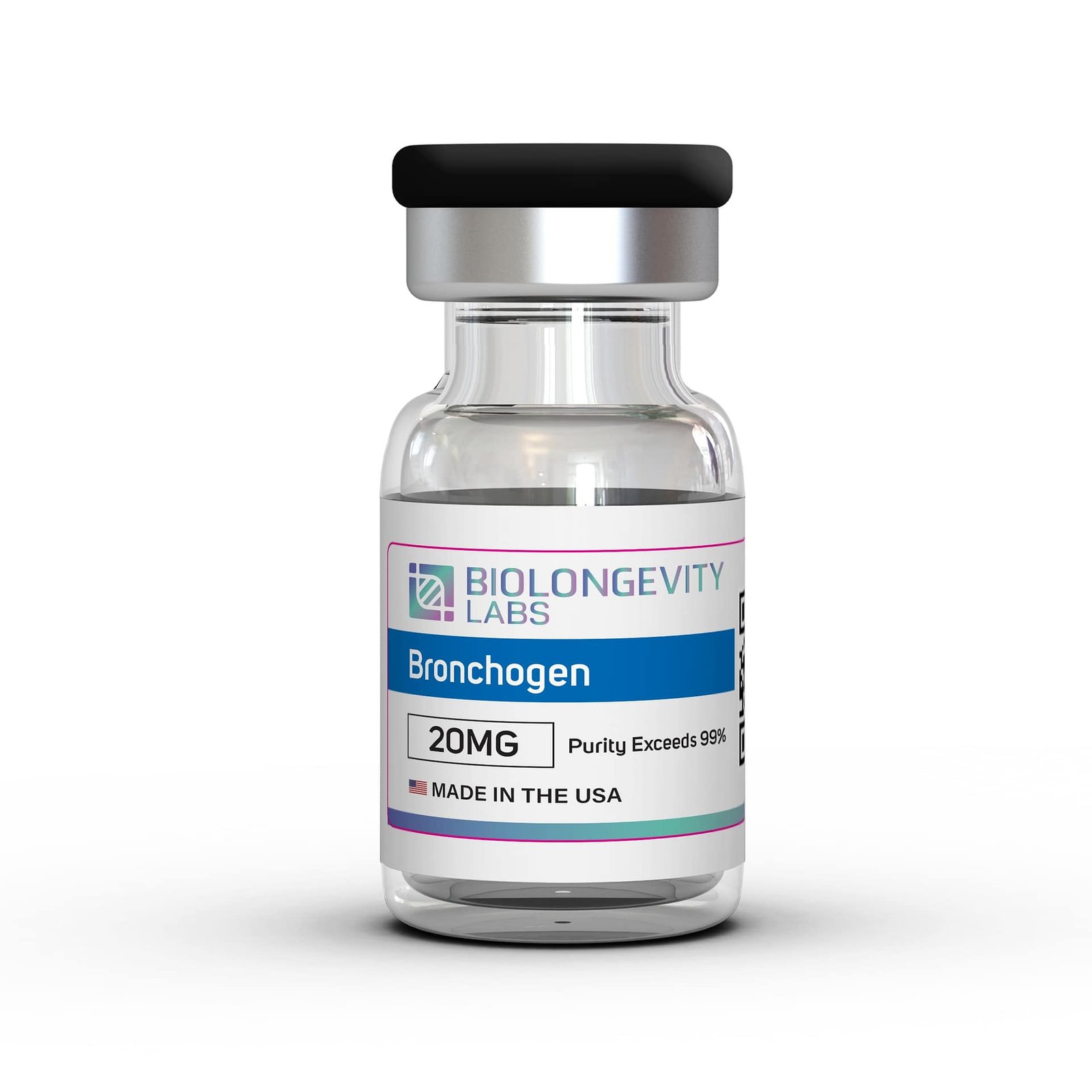
Bronchogen is a tetrapeptide made up of four amino acids (Ala-Glu-Asp-Leu) known for its DNA-stabilizing properties and its role as a bioregulator with a focus on lung tissue. It is primarily associated with supporting reduced inflammation in the lungs, enhancing epithelial cell activity, and promoting increased surfactant production.
Bronchogen Peptide Benefits
- Reduced lung inflammation
May help modulate inflammatory responses in lung tissue, supporting calmer airway function. - Support for epithelial cell function
Often described as helping maintain or improve the health of the respiratory tract lining (epithelium), which is important for barrier protection and repair. - Enhanced surfactant production
Surfactant helps keep the lungs expanded and improves gas exchange efficiency, so increased production may support easier breathing mechanics. - DNA-stabilizing activity (theoretical/bioregulatory claim)
- General respiratory system support
Sometimes used in discussions around helping recovery or resilience in lung tissue under stress (environmental irritants, inflammation, etc.).
The Bronchogen Peptide Specifications
| Property | Value |
|---|---|
| Peptide Sequence | Ala-Glu-Asp-Leu |
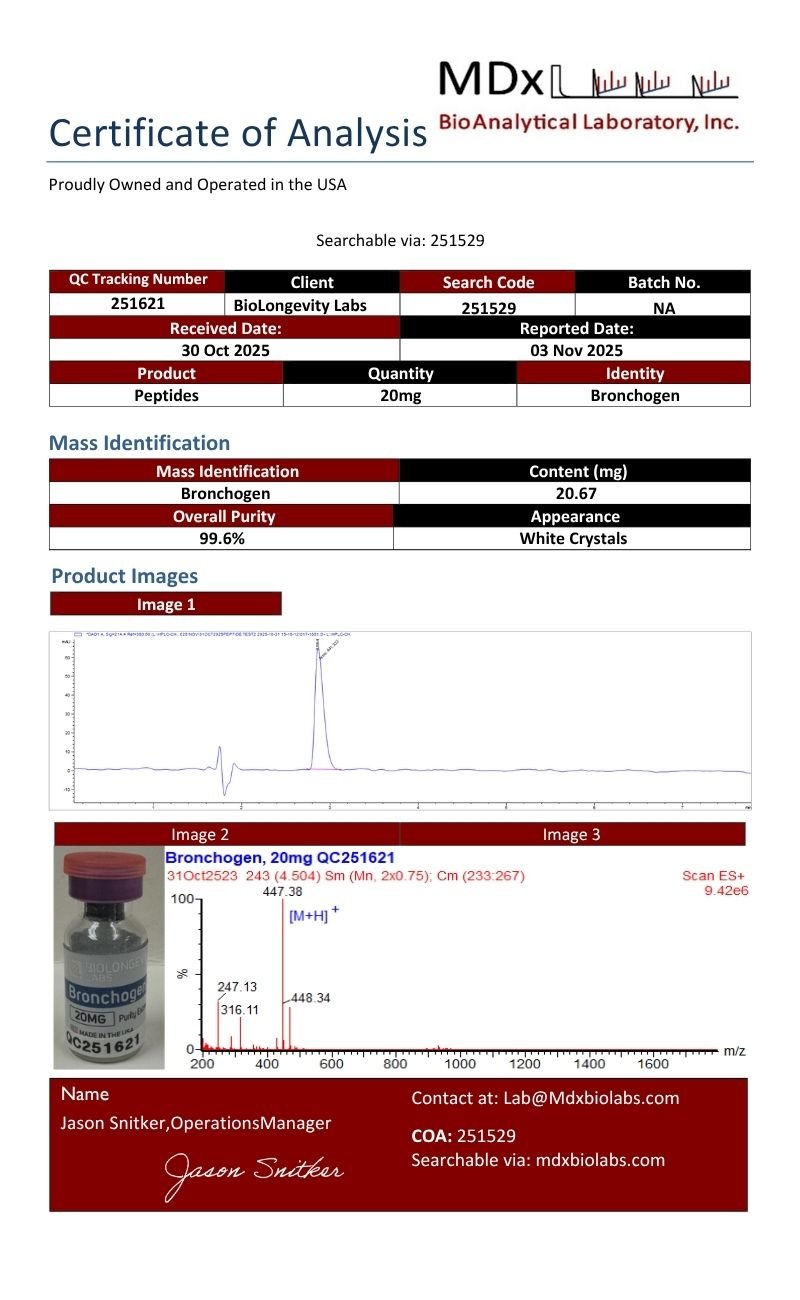
| Molecular Formula | C18H30N4O9 |
| Molecular Weight | 446.45 g/mol |
| Synonyms | Peptide AEDL |
Bronchogen Peptide Dosage
It is a bioregulatory research peptide, and most dosing information comes from practitioner protocols, experimental use, or regional peptide literature rather than controlled clinical trials.
That said, commonly circulated informational (non-clinical) usage ranges in peptide communities are:
- Typical cycle length: ~10–20 days
- Route: usually subcutaneous injection (in research settings)
- Frequency: often described as once daily or every other day
- Cycle repetition: some protocols suggest repeating after a break (commonly 2–4 weeks)
Some sources loosely group Bronchogen with other short bioregulatory tetrapeptides and treat it as a low-dose, short-cycle compound, but exact standardized dosing does not exist.