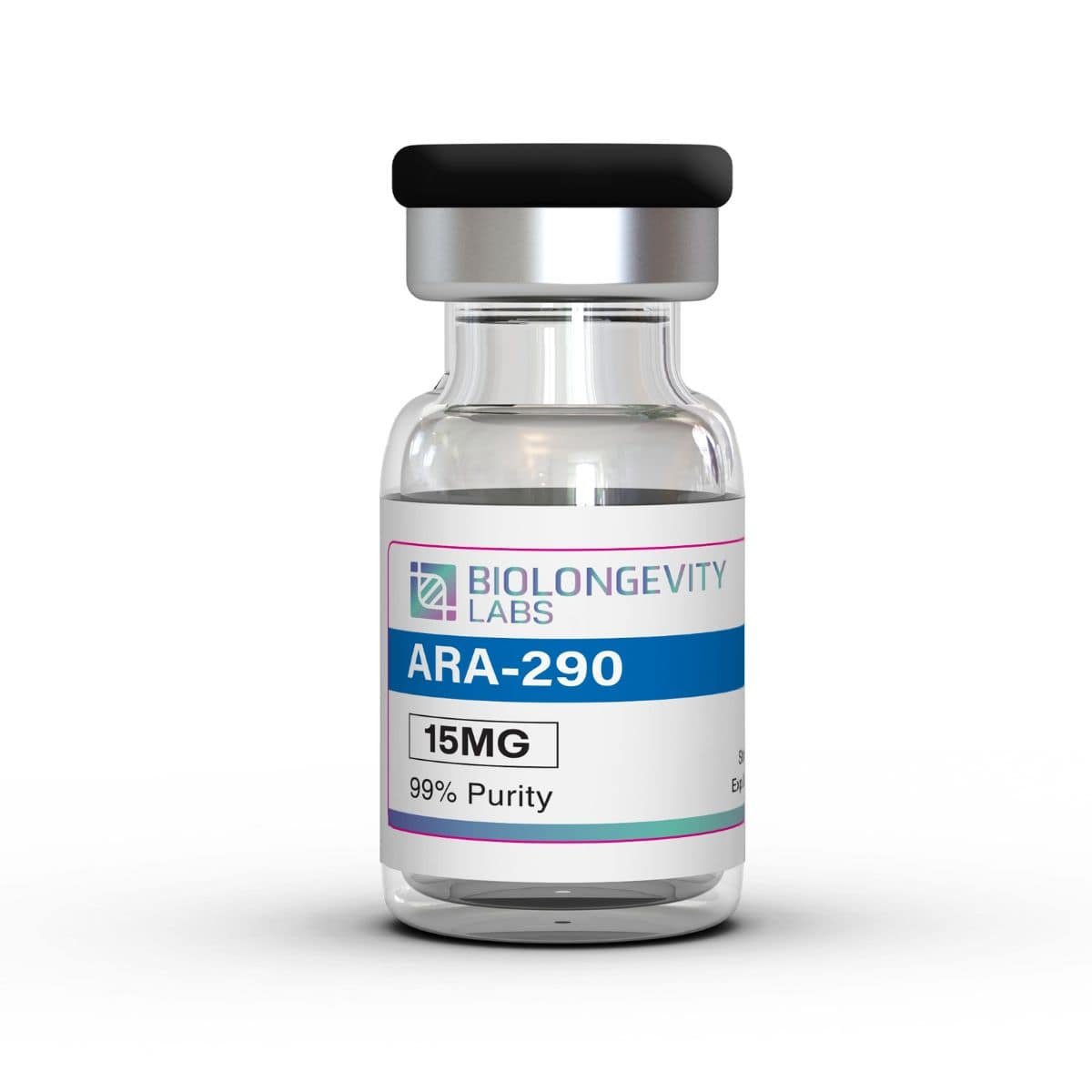
Description
ARA-290 Peptide Product Description
ARA-290 peptide, also known as Cibinetide or Helix B Surface Peptide (HBSP), is a synthetic 11-amino acid peptide derived from the tissue-protective region of erythropoietin (EPO). Unlike EPO, ARA-290 is engineered to activate the Innate Repair Receptor (IRR) without stimulating red blood cell production, making it a valuable research peptide for investigating tissue repair, inflammatory signaling, nerve regeneration, and immune modulation.
Its selective mechanism has attracted significant interest in studies involving neuropathy, metabolic disorders, retinal injury, autoimmune diseases, and tissue recovery. Rather than acting through erythropoietic pathways, ARA-290 primarily targets cellular repair mechanisms associated with injured or inflamed tissues.
Research Use Only. Not intended for human consumption or therapeutic use.
How ARA-290 Works
ARA-290 selectively binds to the Innate Repair Receptor (IRR), a receptor complex composed of the erythropoietin receptor (EPOR) and CD131. This receptor becomes highly expressed following tissue injury or inflammation.
Activation of the IRR has been investigated for its ability to regulate inflammatory pathways while supporting cellular survival, tissue protection, and regeneration. Unlike erythropoietin, ARA-290 does not significantly activate pathways responsible for erythropoiesis, allowing researchers to study tissue-protective effects independently of red blood cell production.
Preclinical investigations suggest activation of signaling pathways including:
- PI3K/Akt
- JAK2/STAT5
- NF-κB modulation
- Anti-apoptotic signaling
- Cytoprotective cellular responses
ARA-290 Peptide Benefits
Current laboratory research suggests ARA-290 may support investigations involving:
- Tissue protection following cellular injury
- Healthy inflammatory response regulation
- Nerve repair and regeneration
- Neuropathic pain signaling
- Immune system modulation
- Cellular survival under oxidative stress
- Endothelial and vascular repair
- Retinal vascular regeneration
- Improved wound healing models
- Reduced fibrosis research
- Islet cell transplantation studies
- Organ and graft protection
- Metabolic health research
- Autoimmune disease models
- Neuroprotection and neuroinflammation
ARA-290 Peptide Effect
Experimental studies have associated ARA-290 with several biological effects, including:
Anti-Inflammatory Activity
Research indicates ARA-290 may reduce production of inflammatory cytokines including:
- TNF-α
- IL-1β
- IL-6
- IL-12
This reduction may help preserve healthy tissue following inflammatory injury.
Tissue Repair
Activation of the innate repair receptor has been associated with:
- Improved cellular survival
- Reduced apoptosis
- Enhanced regeneration
- Faster tissue recovery
- Reduced scar formation in experimental models
Neurological Support
ARA-290 has been widely investigated for:
- Small fiber neuropathy
- Peripheral nerve repair
- Pain signaling modulation
- Neuroprotective mechanisms
- Sensory nerve regeneration
Several studies also reported improvements in corneal nerve fiber density in neuropathy research.
Blood Vessel Regeneration
Research involving retinal ischemia suggests ARA-290 may:
- Support endothelial colony-forming cells (ECFCs)
- Promote vascular repair
- Improve retinal blood vessel regeneration
- Preserve blood-retinal barrier integrity
- Reduce retinal inflammation
Immune Modulation
Rather than suppressing immunity broadly, ARA-290 appears to regulate immune signaling by:
- Modulating macrophage activation
- Supporting adaptive immune balance
- Influencing dendritic cell function
- Promoting healthy tissue repair responses
Metabolic Research
Experimental investigations have explored ARA-290’s potential role in:
- Glucose metabolism
- Insulin sensitivity
- Pancreatic islet preservation
- Diabetes-related complications
- Metabolic inflammation
Research Applications
ARA-290 continues to be investigated across numerous scientific fields, including:
- Neuropathy research
- Diabetes complications
- Tissue regeneration
- Retinal ischemia
- Autoimmune disorders
- Organ transplantation
- Pain signaling
- Alzheimer’s disease
- Critical limb ischemia
- Inflammatory disorders
- Endothelial biology
- Wound healing
- Neurodegenerative disease models
Product Specifications
Peptide Name: ARA-290
Alternative Names: Cibinetide, HBSP, PHBSP
Peptide Sequence:
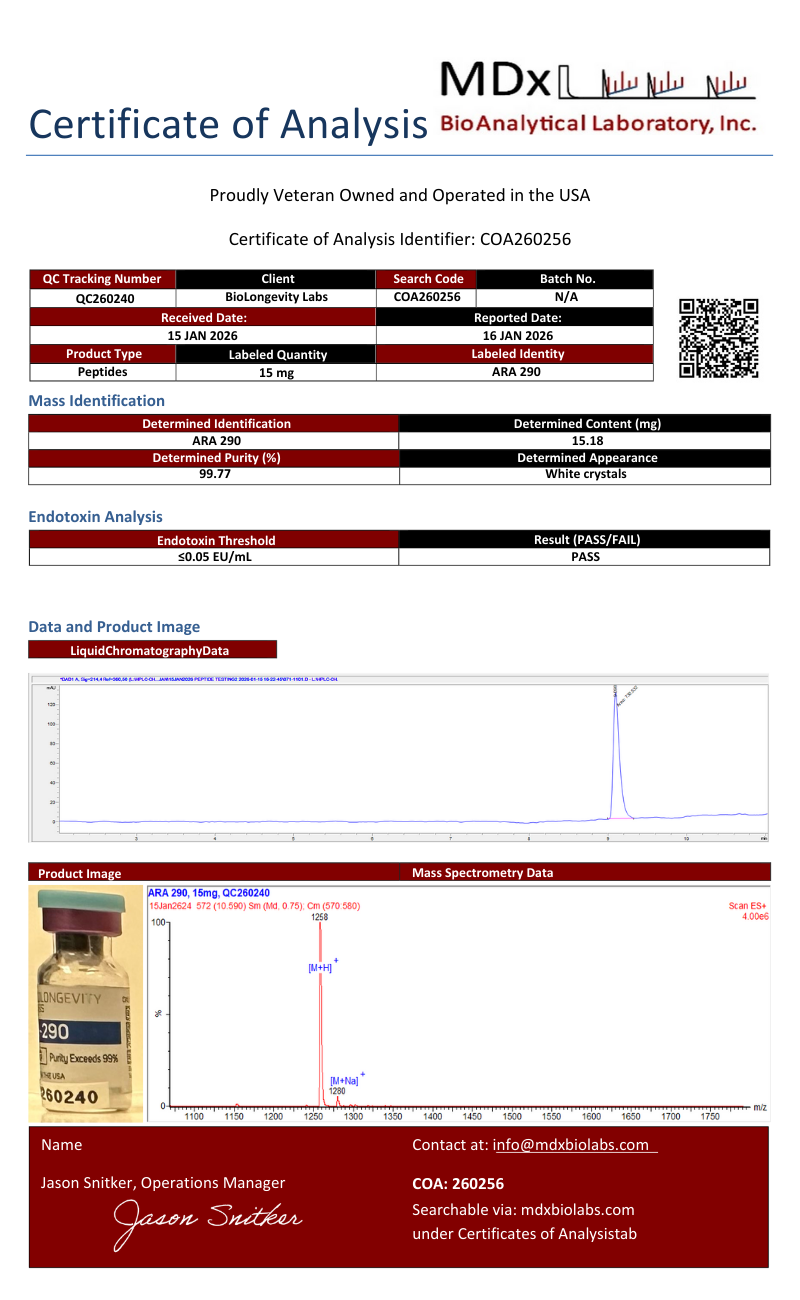
pGlu-Glu-Gln-Leu-Glu-Arg-Ala-Leu-Asn-Ser-Ser
Molecular Formula:
C₅₁H₈₄N₁₆O₂₁
Molecular Weight:
1257.3 g/mol
CAS Number:
1208243-50-8
Storage
- Store lyophilized peptide refrigerated or frozen.
- Protect from heat, moisture, and direct sunlight.
- After reconstitution, refrigerate at 2–8°C and avoid repeated freeze-thaw cycles.
ARA-290 Peptide Dosage Chart and Protocol Guide
Based on clinical trial data, here are the validated ARA-290 protocols.
| Protocol | Dose | Frequency | Route | Duration | Evidence Base |
| Standard Neuropathy | 4 mg | Daily | Subcutaneous | 28 days | Phase II diabetic neuropathy trial; strongest evidence base |
| Conservative | 2 mg | Daily | Subcutaneous | 28 days | Sarcoidosis trial lower range; reasonable starting point |
| Extended Tapered | ~0.03 mg/kg (~2.7 mg for 200 lb) | Every 2 days (weeks 1–2), then weekly (weeks 3–15) | Subcutaneous | 15 weeks | Longest validated protocol available |
| High-End (Not Recommended) | 8 mg | Daily | Subcutaneous | 28 days | Tested in trials; no superiority over 4 mg |